





This article is about Pliny the Elder and how his work helped shape early knowledge of plants, medicine, and the natural world.
“Long before science had laboratories, it had observers—and knowledge grew wherever curiosity was written down.” — The Economic Botanist
Pliny the Elder lived nearly two thousand years ago, yet if you enjoy reading about plants, herbal medicine, or the history of science, you are still walking paths he helped clear. His massive work, Naturalis Historiae, gathered information about plants, animals, minerals, and medicine into one place. It was not perfect, and it was not modern science—but it was a major step toward organizing knowledge in a way that ordinary people could use. In this article, we’ll explore who Pliny was, why his work mattered, what he said about plants, and why his ideas still matter to you today.
- Pliny the Elder and the World He Lived In
- Plants in Antiquity: How Romans Understood the Green World
- Medicinal Plants in Ancient Rome
- Roman Pharmacology: Between Medicine and Belief
- Ancient Plant Uses Beyond Medicine
- Accuracy, Errors, and Why They Still Matter
- Pliny the Elder and the History of Botany
- Why Pliny the Elder Still Matters Today
- The Bottom Line
Pliny the Elder and the World He Lived In
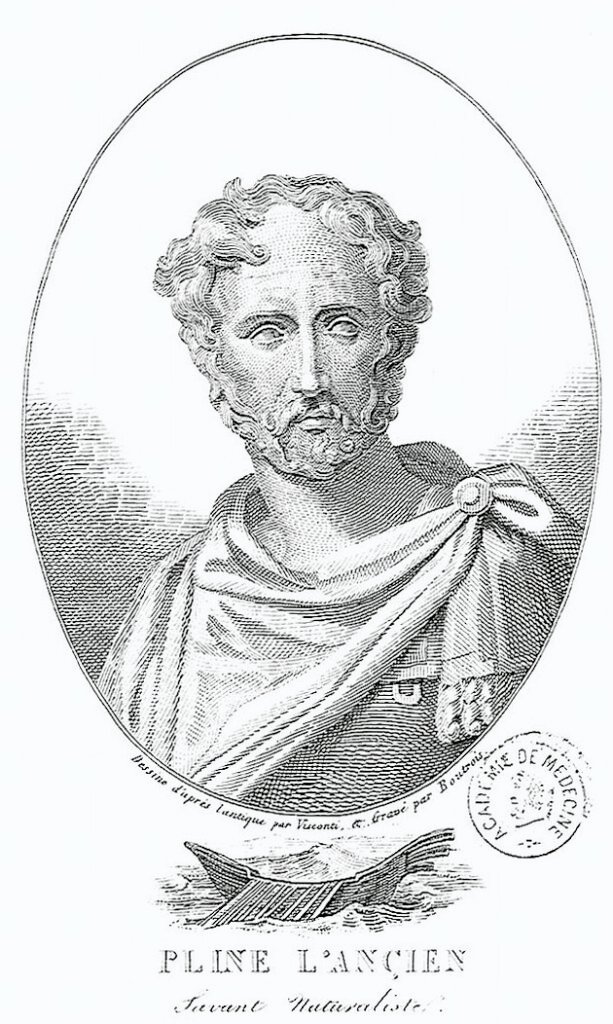
Pliny the Elder, born Caius Plinius Secundus in 23 CE, lived during the height of the Roman Empire. This was a time when roads connected continents, trade brought new plants and spices into Europe, and written knowledge could travel farther than ever before. Rome valued practical knowledge—anything that could help improve farming, medicine, or daily life was worth recording.
Pliny was not a full-time scholar in the modern sense. He worked as a military officer, administrator, and advisor to emperors. But he was also deeply curious. He read constantly, took notes obsessively, and asked questions about everything from volcanoes to vegetables. You might say he had a lifelong habit of wondering how the world worked and how humans could use it better.
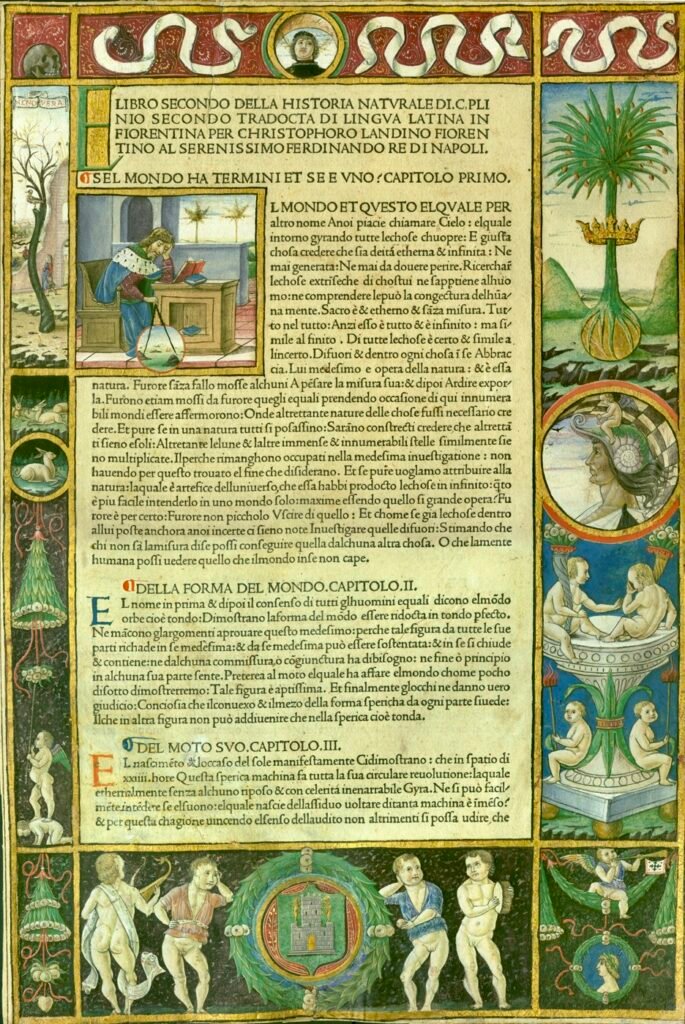
That curiosity led him to write Naturalis Historiae, one of the most ambitious early encyclopedic works in history. It covered 37 books and attempted to explain the entire natural world as Romans understood it. Naturalis Historia: An Early Encyclopedia of the Natural World.
When we talk about early encyclopedias, Naturalis Historiae stands out. Written in the first century CE, it brought together knowledge from more than 100 earlier authors, along with Pliny’s own observations. For its time, this was a remarkable achievement.
Unlike modern encyclopedias, Pliny’s work was not organized for quick reference. Instead, it read more like a guided tour through nature. Plants played a major role, especially in the sections on medicine and agriculture. Pliny believed that nature existed to support human life, and plants were central to that idea.
“The work of Pliny is one of the most precious monuments that have come down to us from ancient times” – Georges Cuvier (1769-1832)
He wrote about where plants grew, how they were cultivated, and how they were used to treat illness. This makes Naturalis Historiae one of the most important sources we have for understanding ancient botany and medicinal plants in ancient Rome.
Plants in Antiquity: How Romans Understood the Green World
Ancient botany was very different from modern plant science. There were no microscopes, no genetics, and no standardized naming system. Instead, plants were understood through use. Romans classified plants based on what they did: Did they heal wounds? Flavor food? Dye cloth? Poison enemies?
Pliny described hundreds of plants, both wild and cultivated. Some were familiar—like garlic, onions, olives, and grapes. Others came from distant regions of the empire and beyond, brought through trade routes stretching into Africa and Asia.
Plants in antiquity were not just background scenery. They were food, medicine, tools, and symbols. Knowing how to use plants meant survival, health, and economic stability. Pliny’s writing captured that deep relationship between people and plants.
Fun Fact
Pliny believed that some plants worked better if harvested at specific phases of the moon—a reminder that ancient botany often mixed observation with belief.
Medicinal Plants in Ancient Rome
One of the most valuable parts of Naturalis Historiae is its discussion of ancient herbal medicine. Pliny recorded remedies for everything from stomach aches to snake bites. Some of these treatments sound strange today, but others are surprisingly familiar.
Garlic was used as a general health tonic. Aloe was applied to burns and skin problems. Fennel was recommended for digestion. Poppy extracts were used to ease pain and promote sleep. These examples show that Roman pharmacology was grounded in real plant effects, even if the explanations were not always scientific by modern standards.
Medicinal plants in ancient Rome were often prepared simply. Leaves might be crushed into poultices, roots boiled into teas, or resins mixed with wine. Medicine was not separate from daily life. If you lived in Rome, you probably knew at least a few plant remedies.
Pliny did not claim all these treatments worked perfectly. He often reported multiple opinions and admitted uncertainty. In that way, his work feels surprisingly honest.
Roman Pharmacology: Between Medicine and Belief
Roman science existed in a space between observation and tradition. Some plant uses were based on generations of experience. Others were tied to superstition or symbolic thinking. Pliny included both, believing it was better to preserve knowledge than discard it.
For example, he recorded plants said to cure diseases simply by being carried on the body. While these ideas do not hold up scientifically, they tell us how Romans thought about health and healing. They also remind us that early medical systems were cultural as much as biological.
Still, many Roman plant remedies align with modern research. Garlic’s antibacterial properties, aloe’s soothing effects, and poppy’s pain-relieving compounds are now well understood. This shows that traditional plant medicine often contained real insight, even when wrapped in myth.
Ancient Plant Uses Beyond Medicine
Plants in ancient Rome were not only used to treat illness. They were essential to food, industry, and trade. Pliny described plants used to make dyes, perfumes, oils, and building materials. He explained how flax became linen and how certain woods were chosen for ships. One can even venture to say Pliny was one of the first true economic botanist!
Spices and herbs were especially valuable. Pepper, cinnamon, and frankincense traveled long distances and were worth their weight in silver. These plants connected Rome to a global network of trade, making botany an economic force.
Ancient plant uses also shaped landscapes. Farming methods, irrigation, and selective cultivation changed ecosystems. Pliny noted these changes, sometimes with concern. He worried that overuse of land could exhaust nature’s generosity—a surprisingly modern idea.
Accuracy, Errors, and Why They Still Matter
Pliny the Elder was not always right. He believed some plants could heal simply through touch or smell. He repeated stories that sound more like folklore than fact. But judging his work by modern standards misses the point.
What matters is that Pliny tried to collect, organize, and preserve knowledge. He understood that information could be lost if it was not written down. His work became a foundation for later scholars, even when they corrected his mistakes.
During the Middle Ages and Renaissance, Naturalis Historiae was one of the most widely read scientific texts in Europe. Herbalists, doctors, and naturalists relied on it as a guide. In this way, Pliny’s influence lasted far beyond his lifetime.
Fun Fact
Pliny’s Naturalis Historiae was copied and studied for over 1,500 years, making it one of the most influential scientific books ever written.
Pliny the Elder and the History of Botany
When we look at the history of botany, Pliny stands at an important crossroads. He did not invent plant science, but he helped organize it. He brought together Greek botanical ideas and Roman practicality, creating a bridge between cultures.
His work helped shape how people thought about plants—not as isolated wonders, but as part of a connected natural system. This idea would later influence medieval herbal books and, eventually, modern botanical studies.
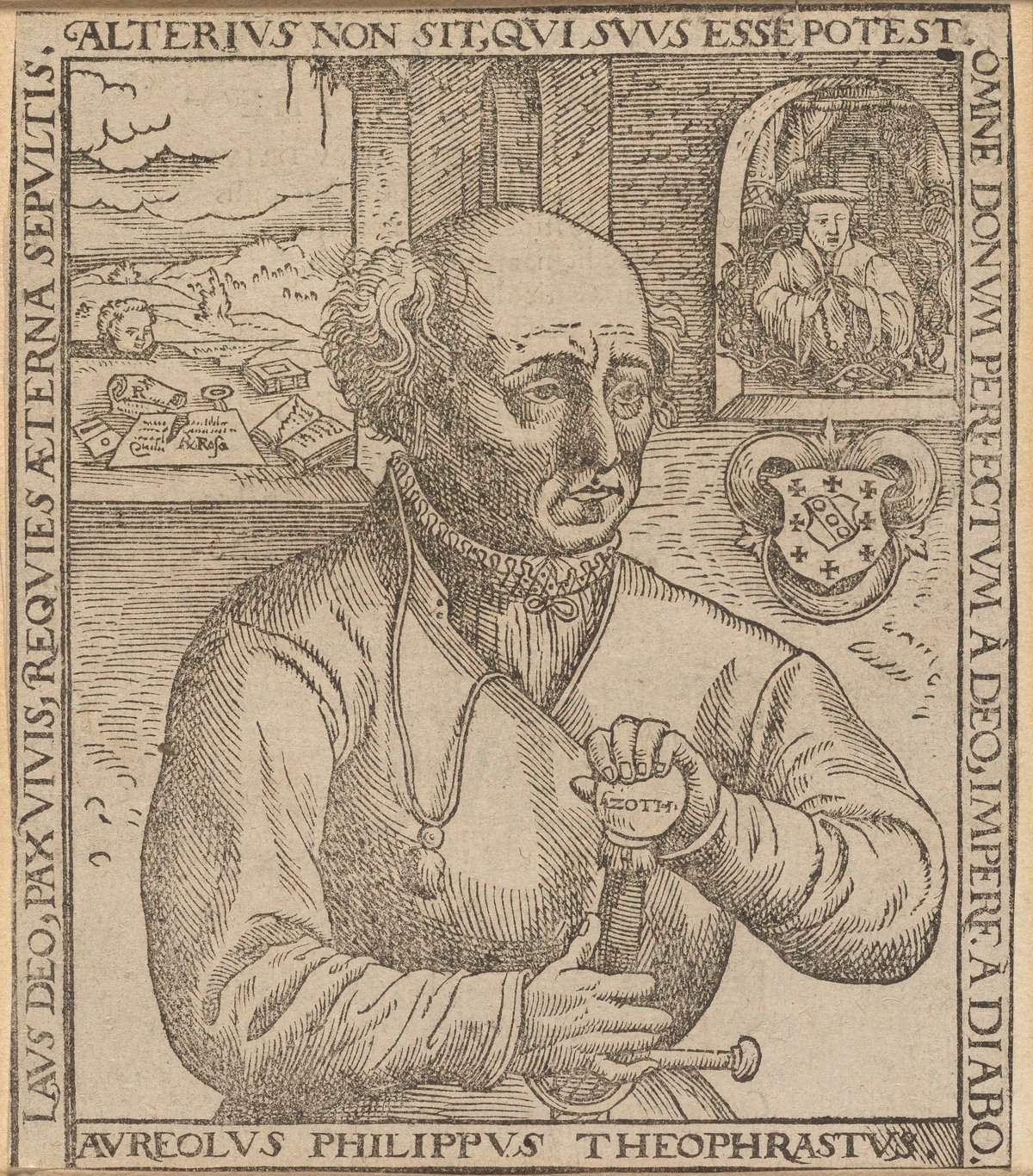
Pliny is often compared to earlier Greek thinkers like Theophrastus, who focused more on classification. Pliny, by contrast, focused on use. Together, these approaches helped form the roots of botanical knowledge history.
Why Pliny the Elder Still Matters Today
You might wonder why someone who lived two thousand years ago still deserves attention. The answer is simple: Pliny shows us how knowledge grows. It begins with curiosity, builds through sharing, and improves through questioning.
Modern science stands on layers of earlier ideas. Even when those ideas were flawed, they moved thinking forward. Pliny reminds us that learning is a long conversation across time.
If you are interested in herbal medicine, environmental history, or the origins of science, Pliny’s work offers a valuable perspective. He helps us see how humans have always tried to understand and work with nature.
The Bottom Line
Pliny the Elder did not have modern tools, but he had something just as important: attention. By carefully observing the world and collecting what others had learned, he created one of the earliest encyclopedic works describing plants and their uses. His writings on ancient botany, medicinal plants in ancient Rome, and natural history helped preserve knowledge that might otherwise have been lost. While not everything he wrote was correct, his effort to document, organize, and share information laid groundwork that science still benefits from today.
********************
If this article sparked your curiosity, consider exploring more about ancient herbal medicine or how traditional plant knowledge continues to shape modern science. History still has a lot to teach us—if we take the time to listen.