


Scientific name: Aloe vera (L.) Burm.
Family: Asphodelaceae
You’ve probably seen this spiky green plant in homes, skincare ads, or the grocery store, but there’s a whole universe behind its gel-filled leaves. In this Plant Compendium entry, we’ll explore the history, botany, growing tips, culinary and health perks, and so much more. Whether you’re a green-thumb newbie or a seasoned gardener, there’s something here for you!
History of Aloe vera
Aloe vera has been around for thousands of years—like seriously ancient. Ancient Egyptians called it “the plant of immortality.” Cleopatra is said to have used it as part of her beauty routine. The Greeks and Romans used it for skin wounds and digestive issues. Then, across Asia and Africa, it spread its roots—literally and metaphorically—finding roles in traditional medicine and rituals. By the 19th century, aloe gel had made its way into Western skincare and pharmaceuticals.
What’s neat is that people kept experimenting with it—using it for burn relief, digestion support, hydration, and even gel-based drinks. Today, Aloe vera is tied to skincare products like lotions, gels, and even face masks. You’ll also see it sold in health-food stores as juice or supplements. So yeah, this plant’s been around the block—and it’s still a superstar.
Botanical Description
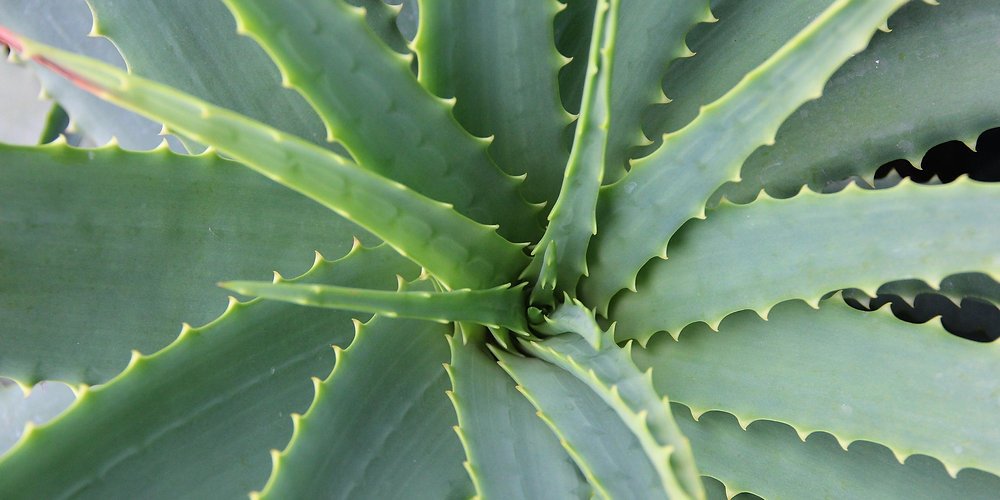
Aloe vera is a herbaceous perennial succulent plant with thick, fleshy leaves filled with a mucilaginous gel.
Roots: Aloe vera has a shallow, fibrous root system—no deep taproot here. Think fine, hair-like roots that spread wide more than deep. This setup helps it soak up water quickly after a rare rain—perfect for its arid desert origins.
Stems: It’s technically stemless—or what we call acaulescent. The leaves all sprout from a central rosette at ground-level. (Some aloe species have short stems, but not vera.)
Leaves: Here’s the part you probably know best! Aloe vera’s leaves are thick, succulent, and fleshy—holding a powerhouse of gel inside. They’re green to grey-green, sometimes with speckles or faint strips, edged with small soft teeth. Each rosette usually has 8–12 leaves that fan out around the center.
Flowers: When it’s in bloom, Aloe vera sends up a tall flower spike (called an inflorescence) with tubular yellow to orange blossoms that hang down. The flowers are small, about 1.5–2 cm, grouped densely along the spike. They’re really pretty and attract hummingbirds and bees.
Fruits: After blooming, the flowers can produce a small, dry capsule that splits open when mature. It’s not juicy like a fruit—more like a dry seed pod with a few seeds inside.
Seeds: Inside those capsules, you’ll find 2–6 tiny, black seeds—kind of tear-drop shaped. They’re lightweight and rely on wind or gravity to spread, though it’s rare to grow aloe from seed compared to using pups (offshoots).
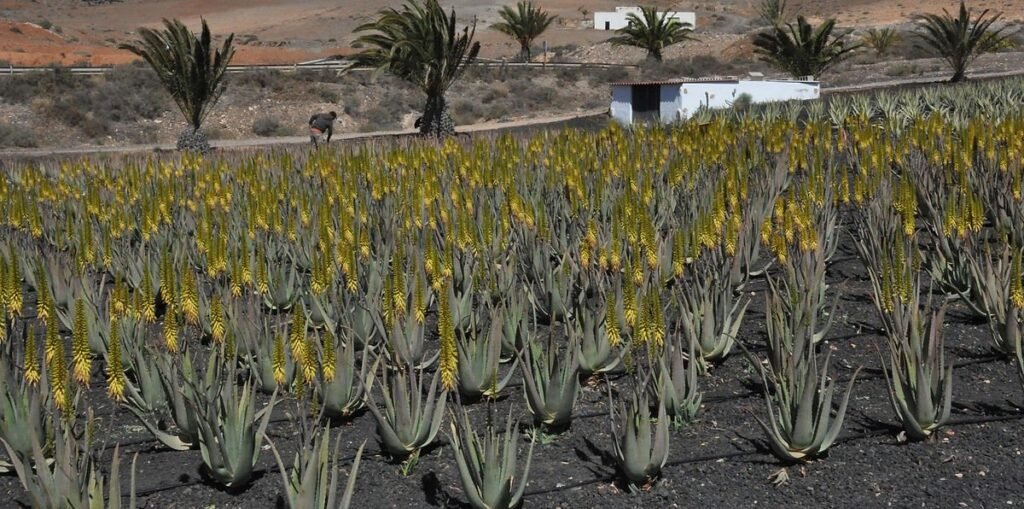
Growing Instructions
Here’s everything you need to know to get Aloe vera off to a great start:
Sunlight: Aloe vera loves bright light. Give it at least six hours of indirect to direct sunlight daily. Indoors, place it near a south- or west-facing window. Outside, provide morning sun and light afternoon shade—especially in hot summer regions to prevent sunburn.
Soil: Well-draining soil is a must. Cactus or succulent potting mix is perfect. Or make your own: 2 parts potting soil, 1 part coarse sand or perlite, and optional compost. Good drainage keeps the roots from rotting.
Temperature: Aloes thrive in 20–30 °C (68–86 °F). They don’t like the cold—anything below 10 °C (50 °F) can stress them. In cooler climates, bring your aloe indoors or provide protection during winter.
Watering: Water sparingly—just when the soil is dry several centimeters down. In warm months, that’s every 2–3 weeks; in cooler months, once a month or less. Overwatering is the top mistake, leading to root rot. Let the top soil dry completely before watering again.
Spacing: If planting outdoors, space your aloe about 60 cm (2 ft) apart to allow room for pups. In pots, choose one that’s only slightly larger than the root system—avoiding oversized pots helps prevent excess moisture and encourages pups to grow around the edges.
Pruning: You don’t need much pruning. Remove old, dried, or damaged leaves with clean scissors. Doing so helps new leaves get air and light—plus, those old leaves can be used for harvesting gel.
Support: Aloes don’t need staking or support. Just ensure they’re in a stable pot or ground spot that won’t tip over as they grow.
Life Cycle: Aloe vera follows a typical life cycle consisting of:
Germination: Seeds sprout in 2–4 weeks (if greenhouse conditions are warm and humid).
Vegetative Growth: The rosette develops actively in warm months. Leaves fill out and pups may appear.
Flowering: Mature plants (3–4 years old) send up flower spikes, usually in spring or summer.
Fruit Set: Tiny seed capsules follow the flowers.
End of Season: Growth slows or stops in cooler months, but the plant typically doesn’t die back completely in mild climates.
Harvesting and Foraging
Harvesting
Here’s how you can collect aloe gel at home:
Use sharp, clean scissors or a knife.
Cut an outer, healthy leaf close to the base.
Let yellow sap (aloin) drain—this is bitter and may be mildly irritating.
Slice off leaf edges and remove the green skin.
Spoon or scrape the clear gel inside.
You can use it fresh on skin, blend it into smoothies, or store in an airtight container with a bit of vitamin C powder in the fridge for up to a week.
Foraging
While aloe isn’t wild in many places, it’s often found growing in warm, dry areas—especially around old homes or ruins in places like the Mediterranean or desert regions. But since it’s widely planted, foraging it is uncommon. Still, if you stumble upon volunteer plants, follow these harvesting guidelines and respect local regulations.
Plant Companions
Aloe vera pairs well with other succulents and drought-tolerant plants. Here are some natural buddies:
Agave: Similar care, dramatic rosettes.
Sedum: Low-growing and colorful.
Echeveria: Pretty rosettes that complement aloe’s shape.
Lavender: Loves full sun and dry soil—adds fragrance.
Rosemary: Hardy, sun-loving herb that meshes well in landscaping.
Common Pests and Diseases
Aloe is generally low-maintenance, but you might encounter:
Mealybugs & Scale: White cottony clusters or crusty brown spots—wipe with rubbing alcohol or insecticidal soap.
Aphids: Tiny sap-suckers—wash off or spray with neem oil.
Root rot: Overwatering leads to mushy roots and yellowing leaves—remove damaged roots and repot in fresh soil.
Leaf spot fungus: Brown patches can appear in overly humid conditions—trim and reduce moisture.
Shopping Tips
Looking for a healthy aloe plant? Keep these pointers in mind:
Leaves: Firm, plump, and upright. Avoid plants with soft, wrinkled, or yellowing leaves.
Soil: Should be well-draining. A mix with sand, perlite, or pumice is perfect.
Pot: Terra cotta or clay is ideal—they “breathe” and help the soil dry faster.
Pups: Bonus! A mature plant with 2–4 pups means you can grow multiple plants.
Storage
Aloe gel is pretty delicate. Here’s how to store it:
Short-term (1 week): Keep in an airtight container in the refrigerator. Adding a pinch of vitamin C powder or a few drops of grapefruit-seed extract helps preserve it.
Long-term (months): Freeze the gel in ice cube trays for an easy way to pop out single servings.
Pre-made gel: Choose preservative-free, cold-processed, with minimal additives. Store refrigerated and check the expiry date.
Culinary Uses
Alright, this is where it gets fun! Aloe vera gel is edible and used in drinks, foods, and recipes—just be sure to prep it correctly. Here are some tasty ways to enjoy it:
Aloe Water & Smoothies: Add 1–2 tbsp of fresh aloe gel to a glass of water, cucumber, honey, and lime. Blend with fruit like berries, coconut water, or spinach for a nutrient-packed smoothie.
Salads: Dice the gel into cubes and toss with cucumber, tomato, mint, olive oil, lemon juice, salt, and pepper for a refreshing dish.
Desserts & Jellies: Cook aloe gel with sugar and water until slightly thickened. Chill to make aloe jelly. Use it as a topping for yogurt, fruit bowls, or pancakes.
Ice Cubes & Popsicles: Freeze gel in cubes or add fruit juice for a cooling, healthy popsicle. Great for hot days and mild sunburn relief.

Health Benefits
There’s a reason aloe vera is a staple in health and skincare:
Skin Soothing: Aloe gel is naturally cooling and anti-inflammatory—great for sunburns, minor cuts, insect bites, eczema, and general redness. It’s packed with vitamins A, C, E, and polysaccharides that promote skin repair.
Wound Healing: Aloe promotes collagen production and cell regeneration, helping wounds heal faster. Research shows it may reduce healing time for burns and ulcers.
Hydration: Topically, aloe hydrates skin without clogging pores. Internally, its high water content helps with mild hydration if taken as juice or smoothie ingredient.
Digestion Support: Aloe juice may soothe digestive ulcers and help nutrient absorption. It has mild laxative properties—use carefully and in moderation.
Nutrient Boost: Gel contains vitamins (A, C, E, B vitamins like folate), minerals (calcium, magnesium, zinc), amino acids, and enzymes. While concentrations vary, it’s still a natural vitamin/mineral boost.
Toxicity and Safety
Aloe vera is generally safe, but a few cautions:
· Aloin (yellow sap): If eating, always cut away yellow sap and rinse the gel. Those yellow parts contain aloin, which can be bitter and may cause digestive upset in large amounts.
Allergic reactions: Rare, but some people may experience redness or irritation—do a patch test first.
Pregnancy and medications: High doses of aloe latex (from the rind) may affect uterine contractions. If pregnant or on medication, especially for digestion, diabetes, or kidneys, check with a healthcare provider.
Children and pets: Don’t let them ingest raw aloe latex—you can use processed gel or store-bought products instead.
Topical: Generally safe; if irritation appears, stop use.
Environmental Impact
Aloe vera is a low-impact, eco-friendly plant:
Water-wise: Thrives on minimal water.
Fast-growing: Produces pups—great for propagation and reducing plant waste.
Soil resilience: Grows well in dry, poor soils, reducing need for fertilization.
Air quality: Like most plants, it helps improve indoor air as it absorbs some VOCs.
Biodegradable: If using whole leaf gel for food or skincare, nothing goes to plastic— only the plant and minimal packaging.