








Scientific name: Punica granatum L.
Family: Lythraceae
You probably know pomegranate as that jewel-like fruit bursting with juicy seeds—often enjoyed fresh, juiced, or sprinkled on salads—but it’s much more than just a tasty snack. Pomegranate is a striking deciduous shrub or small tree with a rich history, vibrant cultural significance, and impressive nutritional profile.
In this Plant Compendium entry, we’re exploring everything pomegranate: how to grow it, how to enjoy it in the kitchen, its health perks, and why it’s a beautiful and practical addition to your garden or orchard. Let’s dive into the world of pomegranate—your next garden treasure.
History of Pomegranate
Ancient Origins
Pomegranate has been cultivated since ancient times in the Middle East and South Asia, with evidence dating back over 5,000 years. The name “pomegranate” derives from the Latin pomum (apple) and granatum (seeded), reflecting the fruit’s many ruby-red seeds.
Classical Cultures
In Greek mythology, pomegranates symbolized fertility and life, playing a key role in the story of Persephone. The fruit was revered in ancient Egypt, Persia, and Rome for its beauty, flavor, and supposed medicinal powers.
Medieval and Renaissance Europe
During the Middle Ages, pomegranate seeds and extracts were used in medicine and cooking, symbolizing prosperity and fertility in art and literature. It was introduced to Europe through Moorish influence in Spain and later spread to the Americas with Spanish colonists.
Global Spread
Today, pomegranate is grown worldwide in Mediterranean, subtropical, and tropical climates, prized both for its ornamental appeal and nutrient-rich fruit.
Botanical Description
Pomegranate is a deciduous shrub or small tree that typically reaches heights of 3–5 meters (10–16 feet), though in optimal conditions it can grow taller. Native to the region extending from Iran to northern India, it thrives in semi-arid climates and is widely cultivated in Mediterranean regions, parts of Asia, and the Americas. Pomegranate is especially prized for its ornamental qualities and nutrient-rich fruit.
Roots: Pomegranate develops a deep and extensive root system, making it well-adapted to arid and drought-prone environments. The roots are woody and fibrous, anchoring the plant firmly and enabling access to moisture and nutrients in well-drained, sandy or loamy soils. The root system also contributes to the plant’s resilience and longevity, with some trees living and bearing fruit for over 200 years.
Stems: The plant generally has a bushy, multi-stemmed growth habit with slender, angled branches. The bark is smooth when young, developing a grayish-brown tone and becoming slightly rough with age. Branches often bear sharp spines or thorn-like tips, especially on wild or uncultivated varieties, which can aid in natural defense against herbivores.
Leaves: Leaves are simple, glossy, and narrowly lanceolate (spear-shaped), typically measuring 3–7 cm in length. They are arranged oppositely or in whorls of five or more, depending on the shoot type. Their bright green coloration deepens in maturity, and in autumn, they may turn yellow before shedding. The foliage is dense and contributes to the pomegranate’s use as a hedging plant in some landscapes.
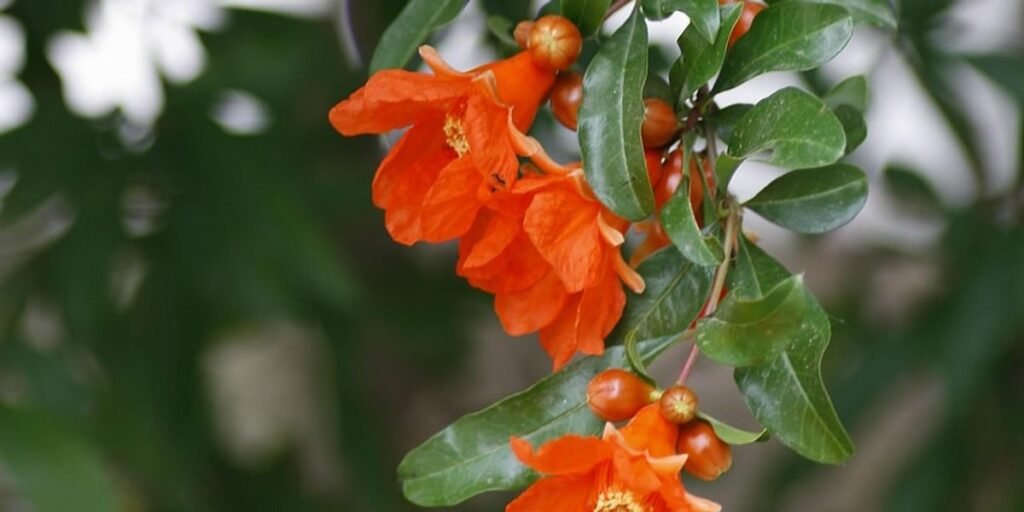
Flowers: Pomegranate flowers are highly ornamental and appear singly or in clusters at the branch tips. Each flower is funnel-shaped, about 3–4 cm in diameter, with five to seven crinkled petals that are bright orange-red to deep scarlet in color. The calyx is thick and tubular, often persistent on the fruit. Flowers bloom from late spring to early summer and are bisexual or functionally male, depending on cultivar and environmental conditions. Their vivid color and nectar attract bees, hummingbirds, and other pollinators.
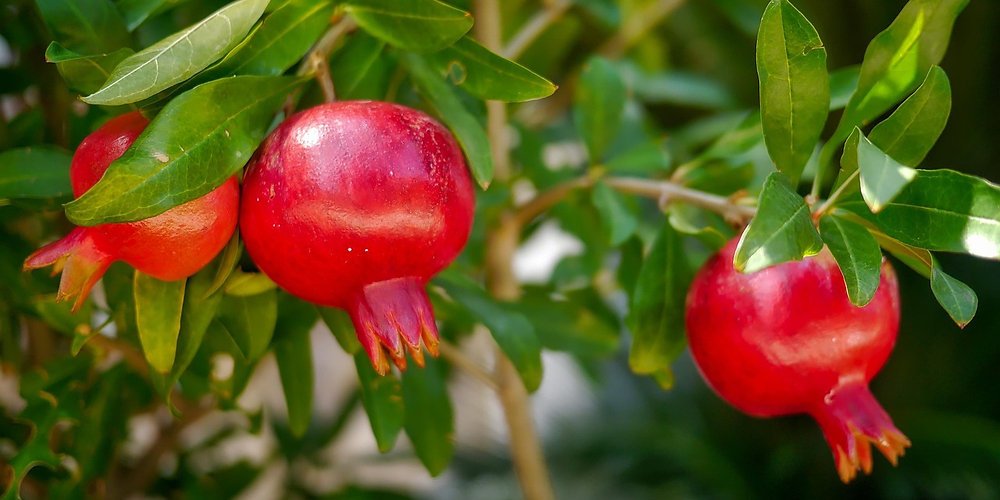
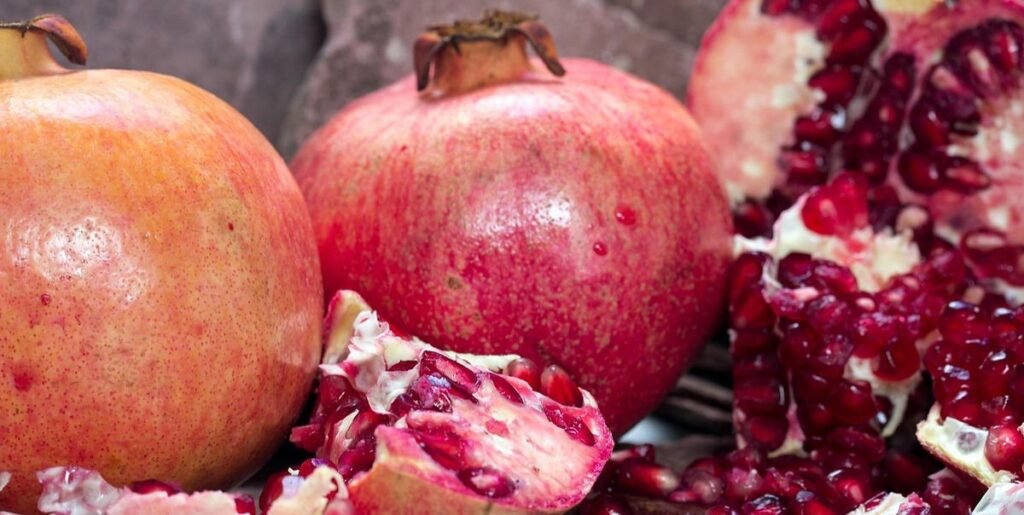
Fruit: The pomegranate fruit is a distinctive, nearly spherical berry measuring 5–12 cm in diameter, with a leathery, reddish rind that can range from pink to deep crimson. The outer skin is tough and protective, while the interior is partitioned into chambers filled with numerous seeds, each encased in a juicy, translucent red aril. These arils are sweet-tart and rich in antioxidants, making them highly valued for both consumption and medicinal use. The fruit matures in late summer to early fall and typically takes 5–7 months to ripen after flowering.
Aroma: Ripe pomegranate fruit emits a subtle, sweet-tart aroma that becomes more pronounced when the fruit is cut open. The arils have a mildly fruity fragrance, while the leaves and flowers possess a faint floral scent, especially noticeable during warm, sunny weather. The delicate fragrance contributes to the plant’s appeal in ornamental gardens and landscapes.
Seeds: Each aril within the pomegranate fruit encases a single seed, which varies in hardness depending on the variety. The seeds are angular, ranging in color from creamy white to pale pink, and are surrounded by the juicy, translucent red pulp of the aril. They are technically the true reproductive units of the plant and are typically 5–12 mm in length. Pomegranate seeds are edible and add a crunchy texture when eaten along with the arils, though some cultivars—especially those bred for juicing—have softer seeds that are more palatable. In contrast, wild or ornamental varieties often produce harder, woodier seeds. Each fruit can contain several hundred seeds, contributing to the species’ reproductive success and its cultural symbolism of fertility and abundance.
Growing Instructions
Pomegranate is a hardy, drought-tolerant plant that flourishes in warm climates but can adapt to various conditions.
Sunlight: Full sun is essential for fruit production. Aim for 6–8 hours daily.
Soil: Prefers well-drained loamy or sandy soils, tolerates alkaline and poor soils but dislikes waterlogging.
Temperature: Thrives in hot summers and cool winters; hardy to about -12 °C (10 °F), but young plants need protection in colder zones.
Watering: Water regularly during fruit development but reduce in dormancy. Avoid overwatering to prevent root rot.
Spacing: Plant trees 3–4.5 m (10–15 ft) apart to allow ample growth and airflow.
Pruning: Prune in late winter to shape and remove weak or crossing branches, encouraging new growth and airflow.
Support: Self-supporting with a naturally bushy habit; older trees develop a multi-trunked form.
Life Cycle:
Germination: When dried and cleaned, the seeds can be used for propagation, germinating in 2-6 weeks. Under suitable conditions, they germinate readily, although plants grown from seed may not be true to the parent variety and often take several years to bear fruit. Propagation is usually by cuttings or grafting.
Vegetative Growth: Vigorous in first 1–3 years.
Flowering: Flowers appear in spring to early summer.
Fruit Development: Matures in 5–7 months, usually harvested in late summer to fall.
Dormancy: Loses leaves in winter, entering a rest period.
Harvesting and Foraging
Harvesting
Fruit is ready when the skin turns deep red or yellow (depending on variety) and emits a metallic sound when tapped.
Pick carefully to avoid bruising.
Frequent harvesting isn’t needed—usually once per season.
Foraging
Wild pomegranates are rare but can be found in warm, arid regions.
Confirm identification before harvesting wild plants due to possible look-alikes.
Plant Companions
Good Companions:
Herbs like basil and dill improve pest resistance.
Legumes enrich soil nitrogen.
Citrus trees share similar cultural needs.
Avoid Planting With:
Water-loving plants that compete for moisture.
Dense shade-casting trees that reduce sunlight.
Common Pests and Diseases
Aphids: Can be controlled with water sprays or insecticidal soap.
Leaf-footed bugs: Feed on fruit and cause blemishes; handpick or use traps.
Fungal diseases: Leaf spots and fruit rot appear in humid climates; improve air circulation and remove infected debris.
Root rot: Due to poor drainage—ensure soil drains well.
Shopping Tips
Seeds: Can be grown but slow to mature.
Nursery Plants: Select healthy, vigorous young trees with no signs of pests or diseases.
Varieties to Try:
‘Wonderful’ – Most common, large deep red fruit.
‘Angel Red’ – Sweeter, less tart flavor.
‘Parfianka’ – Juicy with a balance of sweet and tart.
‘Wonderful’ – Most common, large deep red fruit.
‘Angel Red’ – Sweeter, less tart flavor.
‘Parfianka’ – Juicy with a balance of sweet and tart.
Storage
Fresh: Store whole fruit in a cool, dry place for up to a month; refrigerate to extend freshness.
Seeds (Arils): Keep refrigerated in airtight containers for up to 5 days.
Freezing: Freeze seeds for long-term storage; juice can also be frozen or canned.
Drying: Seeds can be dried but lose juiciness.
Culinary Uses
Pomegranate brings bright, tart, and sweet flavors plus a jewel-like crunch to many dishes. Its versatility makes it a favorite in kitchens around the world, adding both visual appeal and a burst of refreshing taste. Whether used fresh, juiced, or as a concentrated syrup, pomegranate can elevate everything from casual snacks to gourmet meals.
Savory:
Salads and Grain Bowls: The ruby-red arils add a vibrant pop of color and a delightful crunch to leafy green salads, quinoa bowls, couscous, and rice dishes. Their tartness balances rich cheeses like feta or goat cheese and pairs beautifully with nuts and fresh herbs like mint and parsley.
Glazes and Marinades: Pomegranate molasses or fresh juice can be reduced into a thick, tangy glaze perfect for brushing over grilled or roasted meats such as lamb, chicken, and pork. The natural acidity tenderizes meat while imparting a complex sweet-sour flavor profile.
Sauces and Chutneys: Incorporate pomegranate seeds or juice into sauces and chutneys to complement spicy, smoky, or rich dishes. The fruit’s brightness cuts through heavy stews, tagines, or barbecued fare, adding balance and freshness.
Sweet:
Desserts: Use pomegranate arils as a garnish on creamy desserts like yogurt, panna cotta, ice cream, or custards to add texture and a burst of tartness. They’re equally stunning on cakes, tarts, and fruit salads, offering a jewel-like sparkle that enhances presentation.
Juices and Syrups: Pomegranate juice is a classic ingredient in syrups and reductions that sweeten and flavor cocktails, mocktails, and sodas. Its rich color and bold flavor make it an ideal base for grenadine, a staple in many mixed drinks and desserts.
Drinks:
Fresh Juice: Pomegranate juice is celebrated for its refreshing, tangy taste and is commonly enjoyed on its own, often chilled or with a splash of sparkling water. It also blends smoothly into smoothies, combining well with berries, citrus, and greens for a nutrient-packed boost.
Infusions: Beyond the seeds, pomegranate peel and rind can be used to infuse teas and flavored waters, adding subtle bitterness and complex aromatic notes. Warm or iced, these infusions make comforting, healthful beverages. The fruit is also used in some traditional fermented drinks and punches around the world.
No matter how you use it, pomegranate’s unique flavor and striking appearance make it a versatile and delicious ingredient in countless culinary creations.
Health Benefits
Pomegranate is a nutritional powerhouse with multiple health-promoting properties:
Antioxidant-rich: Contains punicalagins and anthocyanins, powerful antioxidants.
Heart Health: May reduce blood pressure and cholesterol levels.
Anti-inflammatory: Supports reduction of chronic inflammation.
Cancer Research: Some compounds show potential in cancer prevention studies.
Digestive Health: High fiber content aids digestion.
Immune Support: Rich in vitamin C and other nutrients.
Toxicity and Safety
Generally Safe: Widely consumed worldwide with minimal adverse effects.
Allergies: Rare, but possible in sensitive individuals.
Seeds: Edible and safe; however, excessive consumption may cause digestive discomfort.
Pets: Non-toxic to dogs and cats.
Environmental Impact
Pollinator-Friendly: Flowers attract bees and beneficial insects.
Drought-Tolerant: Ideal for xeriscaping and water-wise gardens.
Soil Improvement: Deep roots help stabilize soil and improve aeration.
Biodiversity: Provides habitat and food for various wildlife.