




Scientific name: Beta vulgaris subsp. vulgaris
Family: Amaranthaceae
You may have walked past those rainbow-bright stalks at the farmers’ market and wondered—what exactly is Swiss chard? Is it spinach? Is it rhubarb? Is it beetroot in disguise?
Well, Swiss chard is actually a leafy green that packs a serious nutritional punch and brings color, texture, and a mild, earthy flavor to your kitchen. And despite the name, it didn’t originate in Switzerland (more on that in a minute). This plant is as useful in the garden as it is in the pan.
In this Plant Compendium entry, we’ll explore everything you need to know about Swiss chard—from its curious history and botany to how to grow, harvest, and enjoy it. Ready? Let’s dig in.
History of Swiss Chard
Despite the name, Swiss chard isn’t Swiss at all—it’s Mediterranean through and through. The “Swiss” label came from the botanist who classified it in the 19th century to distinguish it from other types of Beta vulgaris (like beets).
Chard has been cultivated since ancient Greek and Roman times, and has long been loved for its edible leaves and stalks. It’s part of the same species as beetroot, but bred for leafy greens rather than roots. Over the centuries, it’s made its way across gardens, kitchens, and continents—valued for its resilience, yield, and eye-catching appearance.
Botanical Description
Swiss chard is a leafy biennial grown as an annual in most gardens. It belongs to the beet family, and it’s bred for its large, nutritious leaves and thick, colorful stems.
Roots: Chard forms a fibrous, shallow root system rather than the fat taproot of its beet cousins. It doesn’t store much energy underground but focuses it all above.
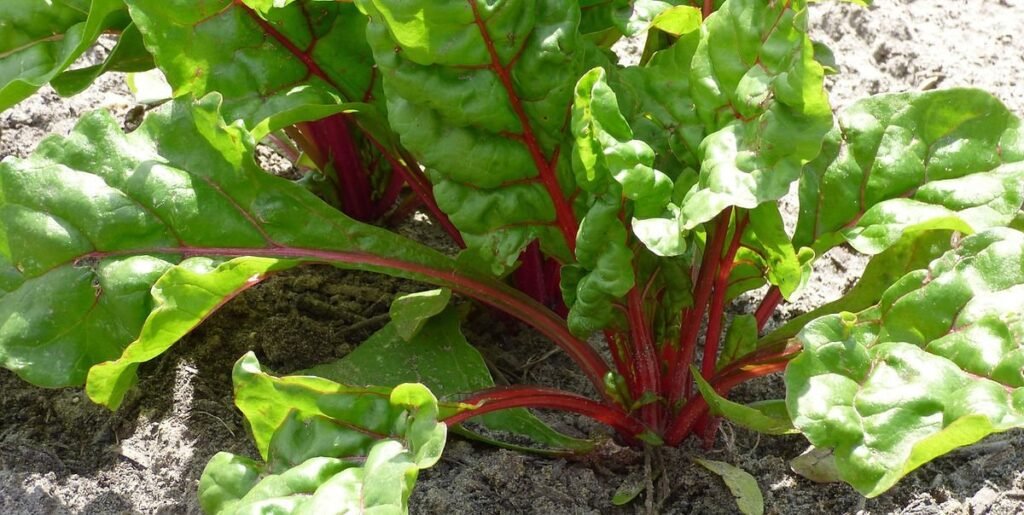
Stems: The stalks (or petioles) can be white, red, yellow, pink, or orange—depending on variety. These ribs are thick, crunchy, and edible. You’ll often see varieties labeled as “Rainbow chard,” a mix of colors in one bunch.
Leaves: Leaves are large, crinkled, and glossy with prominent veins. They range in color from deep green to almost bluish, and they grow in a loose, upright rosette.
Flowers: In its second year (if allowed), Swiss chard will send up a tall flowering stalk. The small, greenish flowers are wind-pollinated and develop into seeds—though most gardeners harvest before this happens.
Seeds: Seeds are clustered and corky, resembling those of beets. They germinate best in warm, moist soil.
Growing Instructions
Swiss chard is beginner-friendly and forgiving. Here’s how to set it up for success:
Sunlight: Full sun is best, but it tolerates partial shade—especially in hot climates.
Soil: Well-drained, fertile soil rich in organic matter is ideal. Slightly acidic to neutral pH (6.0–7.0) works best.
Temperature: Chard thrives in cool to mild temperatures—ideally between 10–24 °C (50–75 °F). It tolerates light frost and heat, making it a season extender in both spring and fall.
Watering: Keep soil consistently moist, especially during dry spells. Avoid waterlogging—good drainage is key.
Spacing: Space plants 20–30 cm (8–12 in) apart to give leaves room to spread.
Pruning: Harvest outer leaves regularly to encourage continued growth from the center.
Support: No staking needed—sturdy on its own.
Life Cycle:
Germination: Seeds sprout in 7–14 days in warm soil. Soaking seeds overnight can speed things up.
Growth: Plants grow rapidly, producing leaves steadily over several months.
Flowering: In the second year (if overwintered), chard bolts and produces seeds.
Harvesting and Foraging
Harvesting
Start picking leaves when they’re about 15 cm (6 in) long. Cut or snap the outer leaves first, leaving the center intact. The plant will keep producing new growth.
You can also harvest the whole plant by cutting it an inch above the soil—it may regrow, especially in cooler weather.
Foraging
Swiss chard is almost always cultivated rather than wild, so foraging isn’t common. But if you spot an escapee near a garden plot, be sure it’s not ornamental beet or rhubarb before harvesting.
Plant Companions
Swiss chard gets along with lots of garden neighbors.
Good Companions:
Onions, garlic, and leeks – help deter pests.
Carrots and radishes – shallow-rooted friends that don’t compete much.
Bush beans – provide nitrogen to support leafy growth.
Not-So-Great Neighbors:
Potatoes and corn – can crowd out chard or compete for nutrients.
Beets– too closely related; they’ll compete for space and resources.
Common Pests and Diseases
Chard is pretty resilient, but keep an eye out for:
Leaf miners: Tiny larvae that tunnel inside leaves. Remove affected leaves and consider row covers.
Aphids: Can cluster under leaves. Spray with water or use neem oil.
Slugs and snails: Love tender young leaves. Use barriers, traps, or nighttime hand-picking.
Downy mildew: Fuzzy gray mold under leaves in damp weather. Space plants well and water early in the day.
Shopping Tips
Buying seeds or transplants? Here’s what to know:
Seeds: Choose varieties like ‘Bright Lights,’ ‘Fordhook Giant,’ or ‘Rhubarb’ chard depending on your taste and color preference.
Seedlings: Look for sturdy, upright plants with unblemished leaves and no signs of yellowing or pests.
Storage
Store chard like most leafy greens:
Fresh leaves: Wrap in a damp paper towel and store in a loose plastic or cloth bag in the fridge. Best within 3–5 days.
Stems: Store attached or separate, but use sooner—they soften over time.
Freezing: Blanch leaves for 2–3 minutes, cool, and freeze in airtight bags. Great for soups and sautés.
Culinary Uses
Swiss chard is a highly versatile leafy green vegetable valued in cuisines around the world. Known for its large, tender leaves and colorful, crisp stalks, Swiss chard is commonly used in Mediterranean, Middle Eastern, and European dishes, and has gained popularity in vegetarian and health-conscious cooking.
Edible Parts
Both the leaves and stems of Swiss chard are edible. The leaves have a mild, slightly earthy flavor, similar to spinach, while the stems—ranging in color from white and yellow to vivid pink and red—are slightly more fibrous and have a mild beet-like sweetness.
Common Culinary Preparations
1. Sautéed or Stir-Fried
Swiss chard is frequently sautéed with olive oil, garlic, onions, or herbs as a simple side dish. The leaves cook down quickly and absorb flavors well. Often, the stems are cooked slightly longer or added earlier due to their firmer texture.
2. Soups and Stews
Chopped Swiss chard adds color, texture, and nutrition to soups and stews. It is commonly found in Italian minestrone, Turkish and Greek vegetable soups, and Middle Eastern lentil stews.
3. Stuffed or Wrapped
Large chard leaves can be used similarly to grape or cabbage leaves to make stuffed rolls, filled with rice, grains, or minced meat mixtures, and then baked or simmered.
4. Baked Dishes
Swiss chard is frequently incorporated into casseroles, gratins, and savory pies. Classic examples include:
Tourte de blettes (a Swiss chard tart from the French Riviera)
Spanakopita (Greek savory pastries, where chard may be substituted for or combined with spinach)
5. Egg Dishes
It pairs well with eggs, making it a popular addition to omelets, frittatas, and quiches. When cooked with eggs, the leaves offer a tender texture and a hearty, slightly tangy green flavor.
6. Salads
Young Swiss chard leaves, especially from the baby chard variety, are tender enough to eat raw and are often used in salads for their mild taste and vibrant colors. Mature chard leaves are more commonly blanched before being added to cold dishes.
7. Pasta and Grains
Chard complements pasta, polenta, couscous, and risotto well. It is often combined with ingredients like cheese, nuts, raisins, or citrus to create balanced dishes.
Flavor Pairings
Swiss chard pairs well with:
Aromatics: garlic, onions, shallots
Fats: olive oil, butter, cream, cheeses (especially ricotta, feta, and parmesan)
Acid: lemon juice, vinegar
Nuts and dried fruits: pine nuts, raisins, currants
Proteins: eggs, beans, poultry, cured meats (e.g., pancetta, bacon)
Culinary Tips
Stems and leaves cook at different rates, so separate and stagger their cooking times for best results.
To reduce bitterness in mature leaves, blanch briefly before further preparation.
Chard can be used as a spinach substitute in most cooked dishes.
Swiss chard’s adaptability, visual appeal, and robust nutritional profile make it a favorite ingredient among chefs and home cooks alike. From rustic country fare to refined modern plates, its presence enhances both the flavor and appearance of a wide array of dishes.
Health Benefits
Swiss chard is more than just a pretty leaf:
Vitamins & Minerals: Rich in vitamins K, A, and C, plus magnesium, potassium, and iron.
Antioxidants: Contains betalains and polyphenols that help fight inflammation and oxidative stress.
Blood Sugar Support: Certain compounds in chard may help regulate glucose metabolism—early studies look promising.
Heart Health: High in fiber and potassium, both key to supporting cardiovascular function.
Toxicity and Safety
Generally safe for most people, but a couple of cautions:
Oxalates: Chard contains natural oxalates, which can contribute to kidney stone formation in sensitive individuals. Cooking reduces oxalate levels.
Medication Interactions: Because it’s high in vitamin K, people on blood thinners like warfarin should moderate intake and consult a doctor.
Environmental Impact
Chard is a low-impact crop with benefits for sustainable gardens:
Low input: Requires minimal fertilizer and water once established.
Pollinator support: If allowed to flower, it attracts beneficial insects.
Long harvest season: One planting can yield greens for months, reducing the need for repeated sowing.