






Scientific name: Myristica fragrans Houtt.
Family: Myristicaceae
Nutmeg is one of those spices you probably recognize instantly, even if you don’t think about it very often. Warm, slightly sweet, and deeply aromatic, nutmeg shows up in everything from holiday baking and creamy sauces to traditional medicine systems that go back centuries. It’s the kind of ingredient that quietly does a lot of heavy lifting in your kitchen—adding depth rather than stealing the spotlight.
What many people don’t realize is that nutmeg is more than just a powder you shake from a jar. It comes from the seed of a tropical evergreen tree, and it has a long, fascinating history tied to global trade, colonialism, cuisine, and medicine. Nutmeg is also unique because a single fruit gives us two valuable spices: nutmeg itself and mace.
In this Plant Compendium entry, you’ll get a full picture of nutmeg—from where it comes from and how it grows, to how you can use it safely and effectively in cooking and for health. Think of this as science and history translated into everyday language, so you can really understand what you’re sprinkling into your food.
History of Nutmeg
Nutmeg has one of the most dramatic backstories of any spice. For centuries, it was rare, mysterious, and wildly valuable—so much so that entire wars were fought over it.
Nutmeg is native to the Banda Islands, a small group of volcanic islands in what is now Indonesia. For a long time, these islands were the only place on Earth where nutmeg trees grew naturally. Ancient traders from Southeast Asia were using nutmeg thousands of years ago, but they kept its source a closely guarded secret.
By the Middle Ages, nutmeg had reached Europe through complex trade routes controlled by Arab merchants. Europeans believed nutmeg could protect against the plague, cure digestive problems, and even ward off evil spirits. Because supply was so limited, nutmeg was worth more than its weight in gold.
Things escalated in the 16th and 17th centuries when European colonial powers—especially the Portuguese, Dutch, and British—began fighting for control of the Banda Islands. The Dutch eventually took control and enforced a brutal monopoly, destroying nutmeg trees elsewhere to keep prices high.
That monopoly ended when nutmeg trees were eventually smuggled out and planted in other tropical regions, including the Caribbean (notably Grenada), India, and Sri Lanka. Today, nutmeg is widely available, but its history still echoes in global cuisine and trade.
Botanical Description
Nutmeg is a tropical evergreen tree.
Roots: Nutmeg trees have a shallow but spreading root system. These roots anchor the tree in loose, tropical soils and allow it to absorb moisture efficiently. Because the roots don’t go very deep, the tree is sensitive to drought and strong winds.
Stems: The nutmeg tree has a straight, sturdy trunk with smooth gray-brown bark. Mature trees can grow 30 to 60 feet tall, making them a significant presence in tropical landscapes.
Leaves: The leaves are dark green, glossy, and oval-shaped, with a leathery texture. They grow alternately along the branches and release a subtle spicy aroma when crushed—your first hint that this tree is something special.
Flowers: Nutmeg trees are usually dioecious, meaning male and female flowers grow on separate trees. The flowers are small, pale yellow, and waxy, with a delicate fragrance. This separation is one reason nutmeg cultivation requires patience and planning.
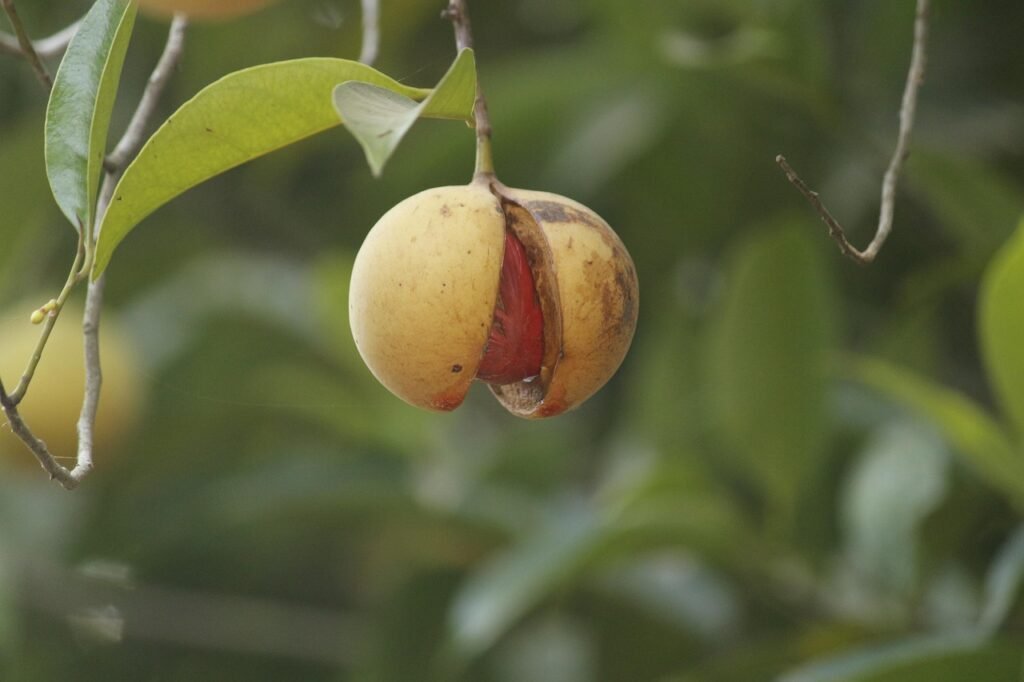
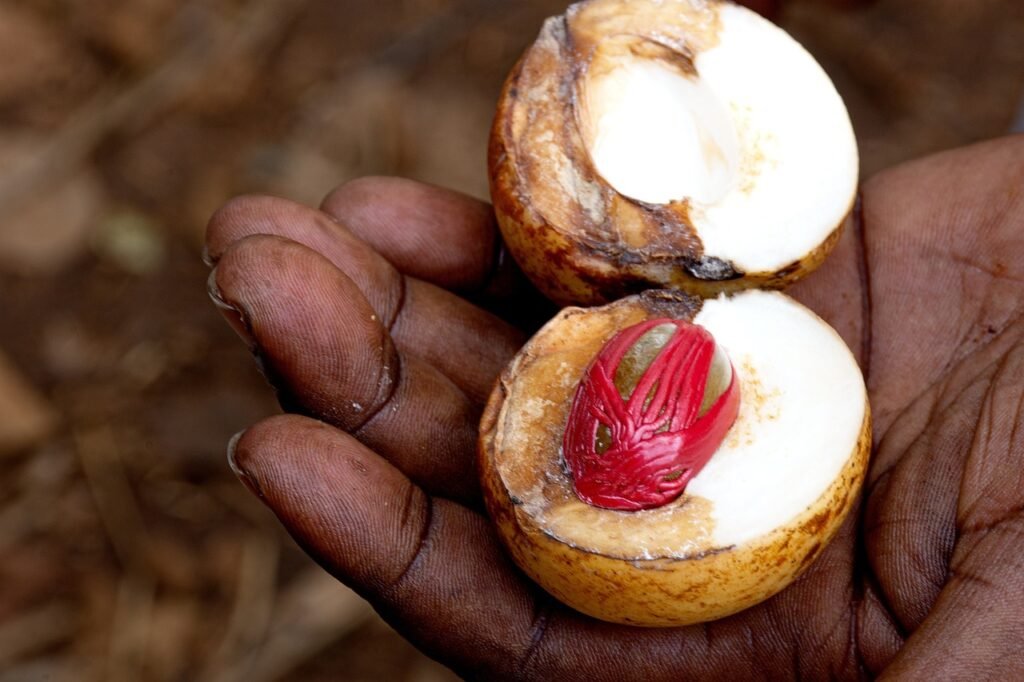
Fruits: The fruit looks a bit like a small apricot or peach. When ripe, it splits open to reveal a shiny brown seed wrapped in a bright red, lacy covering.
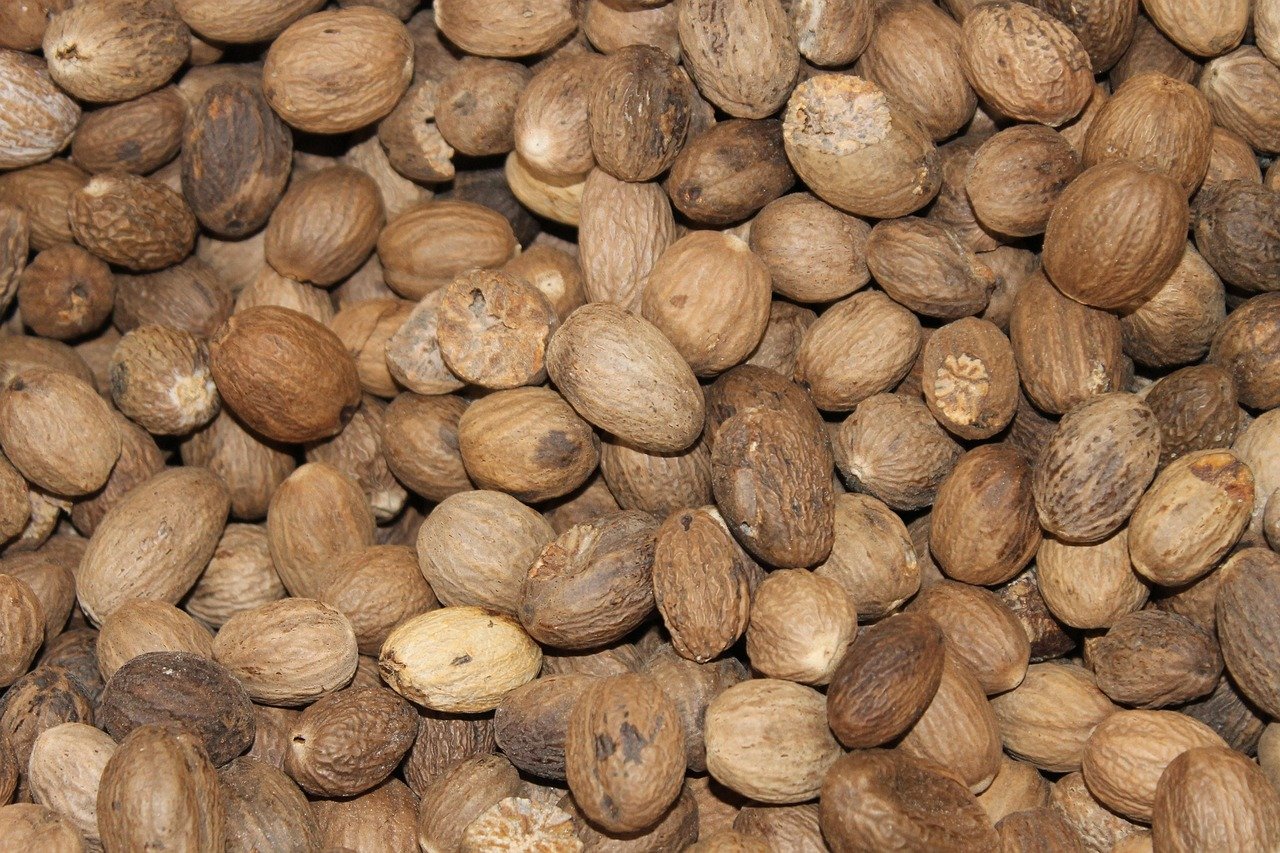
Seeds: The seed is what we know as nutmeg once it’s dried. The red covering around the seed is mace, another valuable spice with a slightly more delicate flavor.
Growing Instructions
Growing nutmeg is a long-term commitment, but if you live in the right climate, it can be deeply rewarding. Here’s everything you need to know to get nutmeg off to a great start:
Sunlight: Nutmeg trees prefer partial shade when young and full sun as they mature. Too much direct sun early on can stress seedlings.
Soil: Rich, well-draining soil with plenty of organic matter is ideal. Nutmeg does not tolerate waterlogged soil.
Temperature: Nutmeg thrives in warm, humid climates with temperatures between 77–95°F (25–35°C). Frost is a deal-breaker.
Watering: Consistent moisture is key. The soil should stay evenly moist but never soggy.
Spacing: Trees should be spaced at least 25–30 feet apart to allow for full growth and airflow.
Pruning: Light pruning helps shape the tree and remove dead or diseased branches, but heavy pruning is not recommended.
Support: Young trees may need staking to protect them from wind damage.
Life Cycle: Nutmeg follows a typical life cycle consisting of:
- Germination: Fresh seeds germinate in 4–8 weeks under warm, moist conditions.
- Vegetative Growth: The tree focuses on leaf and branch development for several years.
- Flowering: Flowering can begin anywhere from 5–9 years after planting.
- Fruit Set: Only female trees produce fruit, and successful pollination is required.
- End of Season: Nutmeg trees are evergreen and can produce fruit year-round once mature.
Harvesting and Foraging
Harvesting
Nutmeg fruits are harvested when they naturally split open on the tree. This is a key sign of ripeness. The fruit is opened, the mace is carefully removed and dried, and the nutmeg seed is dried slowly over several weeks. Proper drying is critical. It prevents mold, concentrates flavor, and ensures long-term storage.
Foraging
Foraging nutmeg in the wild is rare unless you live in a region where nutmeg trees grow naturally or have escaped cultivation. Always be absolutely certain of identification, as some tropical seeds can be toxic.
Plant Companions
Nutmeg trees benefit from being grown alongside other tropical plants that provide light shade and wind protection.
Good companion plants include:
- Banana trees
- Coconut palms
- Cacao
- Leguminous cover crops that enrich the soil
These companions help create a stable microclimate and improve overall soil health.
Common Pests and Diseases
Nutmeg trees can be affected by:
- Scale insects
- Mealybugs
- Fruit rot
- Leaf spot diseases
Good airflow, proper spacing, and avoiding overwatering go a long way in preventing problems. Organic pest control methods are often effective when issues are caught early.
Shopping Tips
When buying nutmeg, whole nutmeg seeds are your best option. They stay fresh longer and have a much stronger aroma than pre-ground nutmeg.
Look for:
- Heavy, firm seeds
- A strong, warm scent
- No visible cracks or mold
If buying ground nutmeg, choose reputable brands and check expiration dates carefully.
Storage
Whole nutmeg should be stored in an airtight container in a cool, dark place. Properly stored, it can last several years without significant loss of flavor.
Ground nutmeg is more delicate and should be used within 6–12 months for best quality.
Culinary Uses
This is where nutmeg really shines—and where many people fall in love with it all over again. It’s not a loud spice, but it’s a powerful one. Nutmeg works in the background, quietly rounding out flavors and adding warmth in a way that’s hard to replace once you notice it.
Nutmeg has a warm, slightly sweet, nutty flavor with gentle notes of clove and pepper. When freshly grated, it’s noticeably more aromatic and complex than pre-ground nutmeg, releasing essential oils that fade quickly once the spice is milled. You don’t need much—often just a pinch is enough to transform a dish.
Sweet Dishes
Nutmeg is a familiar favorite in sweet cooking, especially in recipes built around dairy, eggs, or fruit. It adds depth without overpowering sweetness and helps other spices taste more “complete.”
Nutmeg is commonly used in:
- Baked goods like cakes, cookies, quick breads, and pies
- Custards, puddings, rice pudding, and crème-based desserts
- Pumpkin spice blends and holiday baking mixes
- Eggnog, mulled wine, hot cider, and spiced milk
Savory Dishes
Nutmeg often surprises people in savory cooking, but in many traditional cuisines, it’s considered essential rather than optional. Its warmth enhances creamy, cheesy, and vegetable-based dishes without making them taste overtly spiced.
Nutmeg is commonly used in:
- Cream sauces like béchamel and cheese sauces
- Mashed potatoes and root vegetable purées
- Spinach, chard, kale, and other leafy greens
- Cheese-based dishes, including gratins and soufflés
- Sausages, meatballs, and slow-cooked meat stews
In European cuisines—especially French, Italian, and German—nutmeg is a classic seasoning for dairy-heavy recipes. It helps soften sharp flavors, balance richness, and add subtle warmth.
Spices That Pair Well With Nutmeg
Nutmeg blends beautifully with a wide range of spices, both sweet and savory. Knowing which spices complement it can help you build more balanced and layered flavors.
Classic sweet pairings include:
- Cinnamon: Enhances nutmeg’s warmth and sweetness
- Cloves: Adds depth and intensity; use sparingly
- Ginger: Brings brightness and gentle heat
- Allspice: Reinforces nutmeg’s natural flavor profile
- Vanilla: Softens and rounds out nutmeg in desserts
- Cardamom: Adds a floral, citrusy lift
Savory-friendly pairings include:
- Black pepper: Highlights nutmeg’s subtle spice notes
- White pepper: Common in cream sauces and béchamel
- Bay leaf: Adds background depth in stews and sauces
- Thyme: Balances nutmeg’s warmth with herbal notes
- Sage: Especially good in sausage and meat dishes
- Garlic: Grounds nutmeg in savory, dairy-based recipes
Nutmeg often works best as a supporting spice rather than the star. When paired thoughtfully, it helps other flavors taste richer and more connected, giving dishes a warm, finished quality.
Tips for Using Nutmeg Well
- Grate whole nutmeg fresh whenever possible for the best flavor.
- Start small; nutmeg is potent, and a little goes a long way.
- Add nutmeg toward the end of cooking to preserve its aroma.
- Use it to enhance rather than dominate—the goal is warmth, not heat.
Used thoughtfully, nutmeg has a way of making food taste more comforting, more balanced, and more complete—even when you can’t quite identify why.my flavors.
How to Use It Well
- Always start with a small amount—you can add more, but you can’t take it out.
- Grate whole nutmeg fresh when possible.
- Add nutmeg toward the end of cooking to preserve its aroma.

Health Benefits
Nutmeg has a long history in traditional medicine systems, including Ayurveda and traditional Chinese medicine. Modern research has begun to explore some of these traditional uses.
Digestive Support
Nutmeg has been traditionally used to help:
- Reduce bloating
- Support digestion
- Calm stomach discomfort
Its essential oils may help stimulate digestive enzymes.
Anti-Inflammatory Properties
Compounds in nutmeg, such as myristicin and eugenol, have shown anti-inflammatory activity in laboratory studies. This may help explain its traditional use for joint and muscle discomfort.
Sleep and Relaxation
In small amounts, nutmeg has been used as a natural sleep aid. Warm milk with a pinch of nutmeg is a classic folk remedy for restlessness.
Brain and Mood Support
Some studies suggest nutmeg compounds may have neuroprotective and mood-supporting effects, though this research is still emerging and focused on small doses.
Antioxidant Content
Nutmeg contains antioxidants that help neutralize free radicals, supporting overall cellular health.
It’s important to remember that nutmeg is used in very small amounts. More is not better when it comes to health benefits.
Toxicity and Safety
Nutmeg is safe when used in normal culinary amounts. However, consuming large quantities can be dangerous. High doses of nutmeg contain compounds that can cause:
- Nausea and vomiting
- Dizziness and confusion
- Heart palpitations
- Hallucinations in extreme cases
Nutmeg toxicity usually occurs when people ingest several teaspoons or more at once, far beyond normal cooking use. Nutmeg should never be used recreationally or in medicinal doses without professional guidance.
Pregnant individuals should use nutmeg in normal food amounts only and avoid medicinal use.
Environmental Impact
Nutmeg cultivation can have both positive and negative environmental effects.
On the positive side:
- Nutmeg trees are long-lived and evergreen
- They can be grown in mixed agroforestry systems
- They help prevent soil erosion in tropical regions
On the negative side:
- Monoculture plantations can reduce biodiversity
- Poor farming practices may lead to soil depletion
Sustainably grown nutmeg, especially from small-scale farms and agroforestry systems, helps support both the environment and local communities.