






Scientific name: Cymbopogon citratus (hort. ex DC.) Stapf
Family: Poaceae
Lemongrass is one of those plants that seems to do a little bit of everything. It smells amazing, tastes bright and citrusy in food, grows beautifully in the garden, and has been used in traditional medicine for centuries. If you enjoy Southeast Asian cooking, herbal teas, or fragrant plants in the garden, chances are you already know and love lemongrass—even if you didn’t realize it.
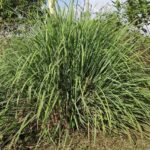
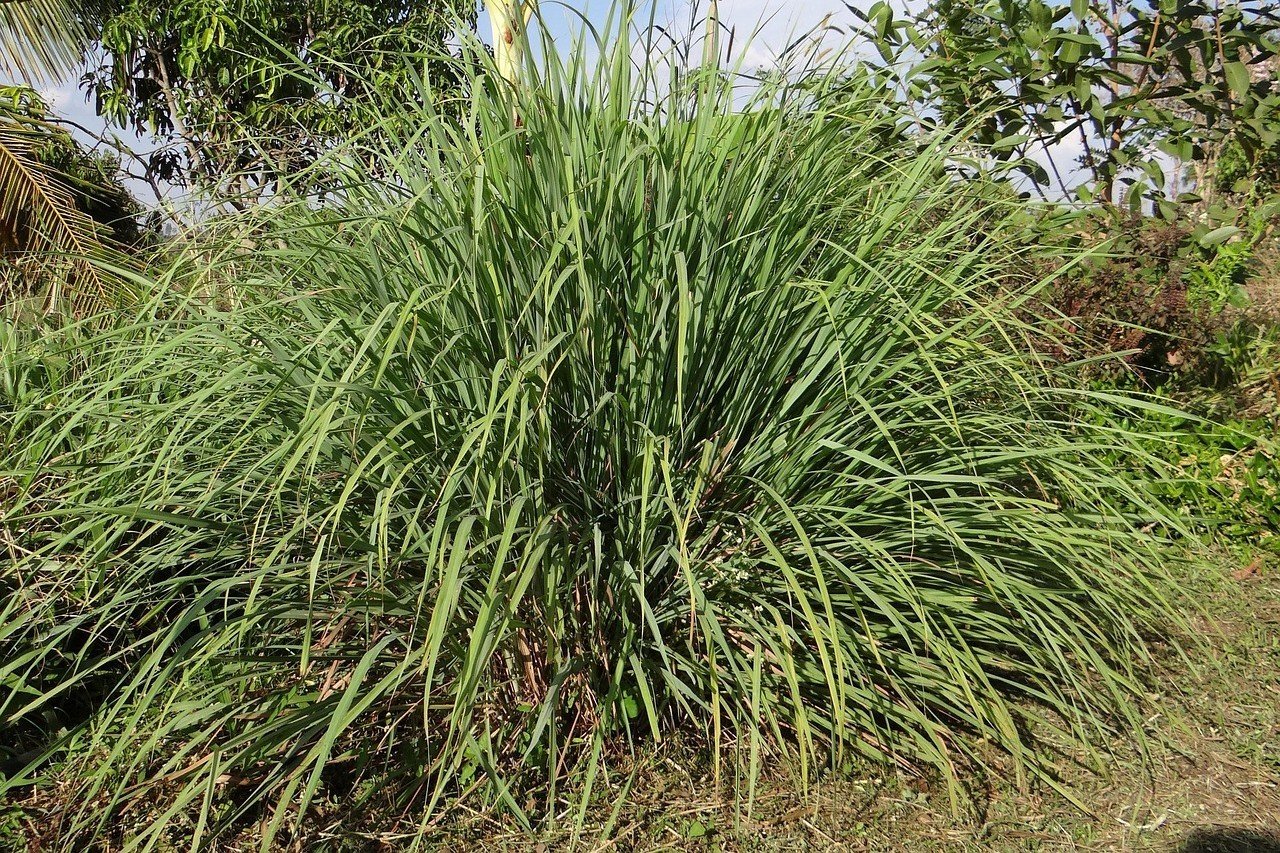
Lemongrass is a tropical grass native to South and Southeast Asia. Its long, arching leaves grow in dense clumps, and the base of the stalk forms the tender, flavorful part most commonly used in cooking. When you cut into fresh lemongrass, you’ll immediately notice its unmistakable aroma: bright lemon, slightly sweet, and lightly herbal.
For gardeners, lemongrass is a surprisingly easy plant to grow. It thrives in warm conditions, grows quickly during the summer, and can even be grown in containers if you live in a cooler climate. For cooks, it adds a fresh citrus note that’s hard to replicate with any other ingredient. And for herbal enthusiasts, lemongrass tea has long been used as a soothing digestive and calming tonic.
In this Plant Compendium entry, we’ll take a close look at everything you need to know about lemongrass—from its botanical structure and growing requirements to its culinary uses, health benefits, and ecological role. Think of it as a friendly tour of a fascinating plant that deserves a place in both your kitchen and your garden.
History of Lemongrass
Lemongrass has been cultivated for thousands of years, particularly throughout tropical regions of Asia. Its story begins in areas such as India, Sri Lanka, Thailand, and Malaysia, where the plant grows naturally in warm climates.
In these regions, lemongrass became deeply integrated into everyday life. It was used in traditional cooking, herbal medicine, religious ceremonies, and even as a natural insect repellent. In Ayurvedic medicine in India, lemongrass tea has long been used to support digestion and reduce fever. In traditional Chinese medicine, it was often used to promote circulation and relieve pain.
Culinary traditions across Southeast Asia helped spread the popularity of lemongrass. In Thai cuisine, it is a key ingredient in soups like tom yum and tom kha. In Vietnamese cooking, it appears in marinades, stir-fries, and grilled meat dishes. In Indonesian cuisine, it adds fragrance to curries and rice dishes.
European traders encountered lemongrass during the spice trade and eventually brought it to other parts of the world. By the 18th and 19th centuries, the plant was being cultivated in tropical regions across Africa, Central America, and South America.
Today, lemongrass is grown commercially in many countries, including India, Guatemala, Madagascar, and Brazil. It is cultivated not only for culinary use but also for its essential oil. Lemongrass oil is widely used in perfumes, soaps, cleaning products, and aromatherapy.
Despite its global spread, lemongrass still remains closely tied to the cuisines and cultural traditions of Southeast Asia, where it continues to be an everyday ingredient.
Botanical Description
Lemongrass belongs to the grass family, Poaceae—the same family that includes wheat, rice, and corn. However, unlike those crops, lemongrass is grown primarily for its aromatic leaves and stalks rather than its grains.
Roots: Lemongrass develops a dense fibrous root system. These roots spread outward rather than deeply downward, helping the plant form thick clumps over time. The root system anchors the plant firmly in the soil and allows it to absorb nutrients efficiently in warm, tropical environments. As the plant matures, the roots continually produce new shoots that expand the clump.
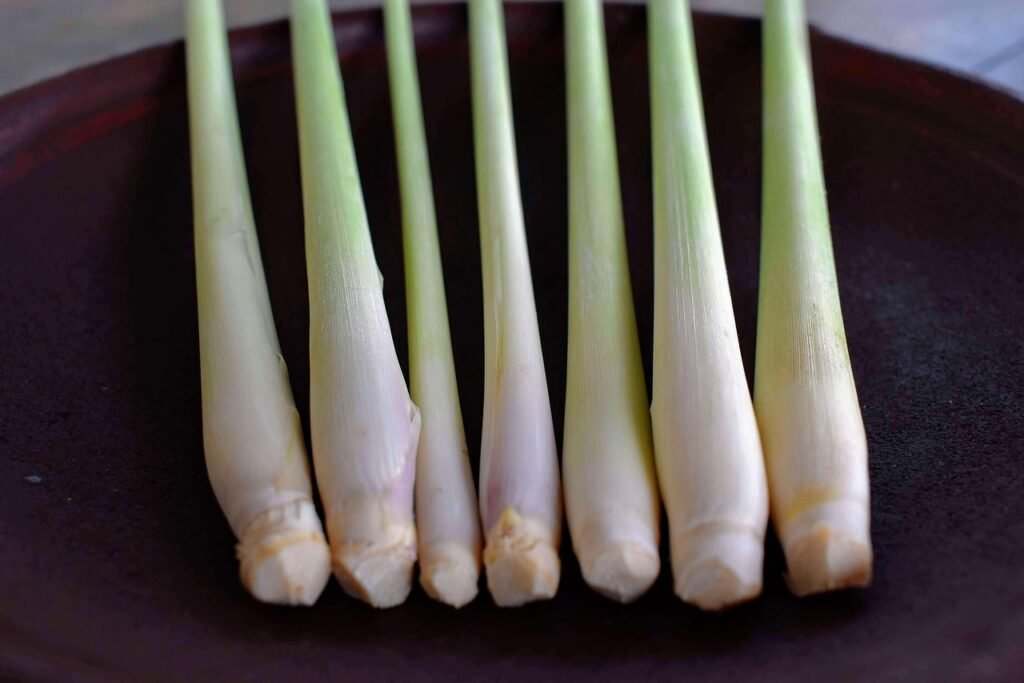
Stems: The stems of lemongrass form tight clusters at the base of the plant. Each stem is actually a tightly packed series of leaf sheaths that form a bulb-like base. This pale, slightly swollen base is the part most often used in cooking. It has the strongest lemon aroma and the most tender texture compared to the tougher upper leaves.
Leaves: Lemongrass leaves are long, narrow, and blade-like. They can grow anywhere from 2 to 4 feet long and often arch gracefully outward from the center of the plant. Their color ranges from pale green to bluish green depending on growing conditions. The edges of the leaves can be quite sharp, so gardeners often learn quickly to handle them carefully. When crushed, the leaves release the plant’s signature citrus scent due to natural compounds such as citral.
Flowers: Lemongrass rarely flowers when grown in cultivation, especially in cooler climates. When it does bloom, the flowers form in loose clusters known as panicles. These flowers are typically small and grass-like, without the showy petals that many flowering plants have.
Fruits: When pollination occurs, lemongrass can produce small, dry fruits typical of grasses. These fruits are technically called caryopses, similar to grains like wheat. However, fruit production is uncommon in cultivated lemongrass.
Seeds: Lemongrass seeds are tiny and not commonly used for propagation. Most gardeners and farmers grow lemongrass by dividing established plants or rooting stalks. This method is faster and ensures the new plants have the same flavor and growth characteristics as the parent plant.
Growing Instructions
Here’s everything you need to know to get lemongrass off to a great start:
Sunlight: Lemongrass thrives in full sun. Ideally, it should receive at least 6–8 hours of direct sunlight each day. If you’re growing it in a container, placing it in the brightest spot possible will help it grow strong and aromatic.
Soil: Lemongrass prefers well-draining, nutrient-rich soil. Loamy garden soil with added compost works particularly well. The plant does not like waterlogged conditions, so good drainage is essential.
Temperature: As a tropical plant, lemongrass loves warm temperatures. It grows best between 20–30°C (68–86°F). It is not frost-tolerant. In cooler climates, gardeners often grow lemongrass as an annual or bring container plants indoors during winter.
Watering: Lemongrass enjoys consistent moisture but should never sit in soggy soil. A good rule is to water deeply and allow the top layer of soil to dry slightly between waterings.
Spacing: If planting in the ground, space lemongrass plants about 24 inches apart. The plant grows in expanding clumps and needs room to spread.
Pruning: Pruning lemongrass mainly involves harvesting stalks and trimming back older leaves. Removing older growth encourages the plant to produce new shoots from the base.
Support: Lemongrass generally does not need support. Its dense clumps provide natural stability. However, strong winds can bend the long leaves, so planting in a sheltered location can be helpful.
Life Cycle: Lemongrass follows a typical life cycle consisting of:
- Germination: Seeds germinate in warm soil, though most plants are propagated by division or rooted stalks.
- Vegetative Growth: During the growing season, lemongrass rapidly produces new leaves and thickens its clump.
- Flowering: Flowering is uncommon in cultivated plants, particularly in cooler climates.
- Fruit Set: If flowering occurs and pollination succeeds, small grass-like fruits may form.
- End of Season: In tropical climates, lemongrass can live for several years. In colder climates, it may die back with frost unless protected.
Harvesting and Foraging
Harvesting
Lemongrass is usually ready to harvest once the stalks reach about ½ inch thick at the base.
To harvest:
- Cut or pull a stalk from the outer edge of the clump
- Trim away the tough upper leaves
- Use the pale, tender lower portion
Regular harvesting encourages new growth, so the plant often becomes more productive the more you use it.
Foraging
Wild lemongrass species exist in tropical regions, but proper identification is important because some grasses can look similar.
For most people, cultivating lemongrass at home is far safer and easier than wild foraging.
Plant Companions
Lemongrass can be a helpful companion plant in the garden. Its strong scent may help deter certain insect pests.
Good companion plants include:
Because lemongrass grows tall and clump-forming, it works well at the edge of garden beds.
Common Pests and Diseases
Lemongrass is generally a hardy plant with relatively few pest issues.
Possible pests include:
- Aphids
- Spider mites
- Grasshoppers
Common diseases may include:
- Rust fungus
- Leaf blight
- Root rot in overly wet soil
Maintaining good airflow and avoiding overwatering are the best preventative measures.
Shopping Tips
When buying fresh lemongrass, look for:
- Firm stalks
- Pale yellow bases
- Fresh green leaves
- Strong citrus aroma
Avoid stalks that appear dry, brown, or overly woody.
You may also find lemongrass sold as:
- Dried pieces
- Powdered spice
- Frozen paste
- Lemongrass essential oil
For cooking, fresh stalks usually provide the best flavor.
Storage
Fresh lemongrass stores surprisingly well.
In the refrigerator:
- Wrap stalks loosely in a damp paper towel
- Place them in a sealed bag
- Store in the vegetable drawer for up to two weeks
For longer storage:
- Freeze whole stalks
- Slice and freeze portions
- Dry the leaves for tea
Freezing works especially well and preserves much of the plant’s aroma.
Culinary Uses
Lemongrass is one of the defining ingredients of Southeast Asian cuisine. Its flavor is bright, lemony, slightly sweet, and gently herbal. Unlike lemon juice, which is acidic, lemongrass delivers citrus flavor without sharp sourness.
This makes it incredibly versatile in cooking.
The lower portion of the stalk is the most tender and flavorful part. Before cooking, the tough outer layers are usually peeled away to reveal the softer interior. The stalk can then be sliced, crushed, or pounded to release its oils.
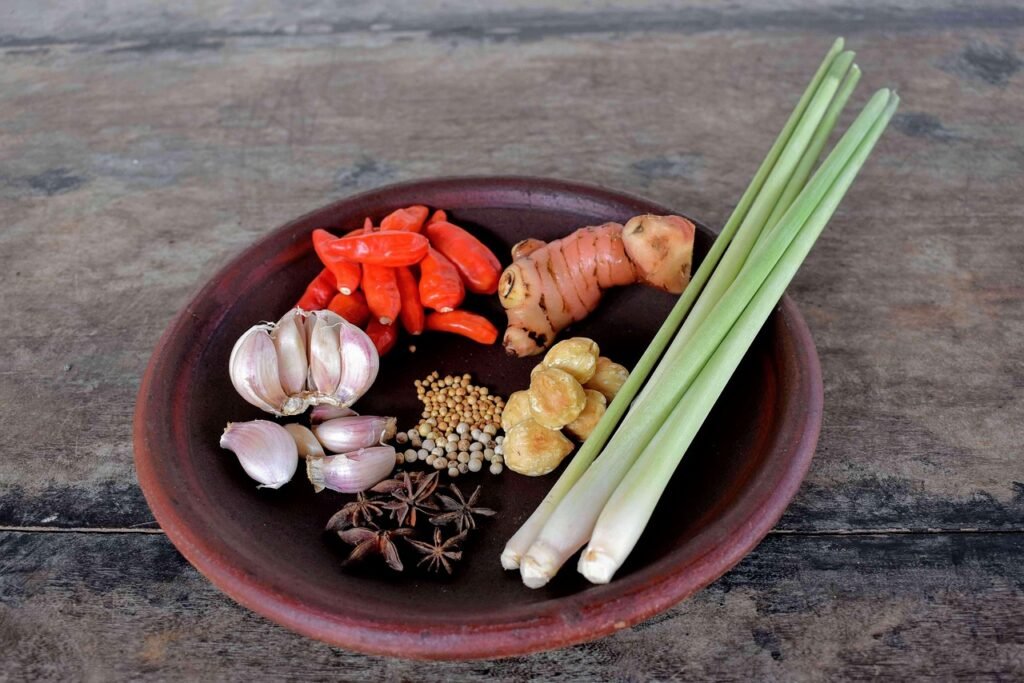
In Thai cooking, lemongrass forms the aromatic backbone of many dishes. One of the most famous examples is tom yum soup, where lemongrass is simmered with galangal, kaffir lime leaves, chilies, and fish sauce to create a fragrant broth.
Vietnamese cuisine often uses finely minced lemongrass in marinades. When combined with garlic, sugar, fish sauce, and chili, it creates a deeply flavorful paste used to season grilled pork, chicken, or tofu.
Across Southeast Asia, lemongrass is commonly used in:
- Curries
- Soups
- Stir-fries
- Rice dishes
- Marinades
- Herbal teas
One particularly delicious preparation is lemongrass chicken. The meat is marinated with minced lemongrass, garlic, soy sauce, sugar, and pepper, then grilled or pan-seared. The heat caramelizes the marinade and intensifies the citrus aroma.
Lemongrass also works beautifully in broths. Because the stalks are fibrous, they are often bruised and simmered whole, then removed before serving—similar to how you might use a bay leaf.
Outside of traditional Asian cuisine, chefs have found creative ways to use lemongrass in modern cooking. It appears in:
- Infused syrups
- Cocktails
- Ice creams
- Custards
- Sorbets
Lemongrass tea is one of the simplest and most enjoyable ways to experience the plant. Fresh or dried leaves are steeped in hot water to produce a light, refreshing herbal tea with subtle lemon notes.
The flavor pairs especially well with:
- Coconut milk
- Ginger
- Garlic
- Chili
- Lime
- Seafood
Because of its aromatic oils, a small amount of lemongrass can transform an entire dish.
Health Benefits
Lemongrass has a long history in traditional medicine, particularly in Ayurvedic and Southeast Asian herbal systems. While modern research is still exploring many of its properties, several potential health benefits have been studied.
One of the most widely known uses of lemongrass is as a digestive aid. Lemongrass tea is traditionally consumed after meals to help ease bloating and support digestion.
The plant contains several biologically active compounds, including:
- Citral
- Geraniol
- Limonene
- Myrcene
These compounds contribute to the plant’s aroma and may also provide therapeutic effects.
Digestive Support
Lemongrass tea is commonly used to soothe stomach discomfort. Some studies suggest that its compounds may help relax digestive muscles and reduce gas formation.
Anti-inflammatory Properties
Certain compounds in lemongrass appear to have anti-inflammatory effects. This has led to interest in its potential role in supporting joint health and reducing mild inflammation.
Antioxidant Activity
Lemongrass contains antioxidants, which help protect cells from oxidative stress. Antioxidants play a role in maintaining overall health and supporting the immune system.
Antimicrobial Effects
Laboratory studies have shown that lemongrass oil may have antimicrobial properties. It has been studied for activity against certain bacteria and fungi.
Stress and Relaxation
The scent of lemongrass is widely used in aromatherapy. Its fragrance is often described as uplifting and refreshing. Some people find that lemongrass tea or essential oil helps promote relaxation and mental clarity.
While lemongrass has promising benefits, it should be viewed as a supportive herbal ingredient rather than a cure for medical conditions.
Toxicity and Safety
Lemongrass is generally considered safe for culinary use and herbal tea when consumed in normal food quantities.
However, a few precautions are worth noting:
- Essential oils are highly concentrated and should not be ingested without professional guidance.
- Some people may experience skin irritation from lemongrass oil.
- Pregnant individuals should consult healthcare providers before using medicinal amounts of lemongrass.
For most people, enjoying lemongrass in food or tea poses very little risk.
Environmental Impact
Lemongrass can play a positive role in sustainable agriculture.
Because it grows quickly and forms dense clumps, it can help reduce soil erosion. Its root system helps stabilize soil, particularly in tropical farming systems.
Lemongrass is also relatively low-maintenance. It typically requires fewer pesticides than many crops because its natural oils help deter certain insects.
In permaculture systems, lemongrass is sometimes planted as a border plant or aromatic barrier to help discourage pests.
Additionally, lemongrass essential oil has been explored as a natural insect repellent, offering a plant-based alternative to some synthetic chemicals.
When grown responsibly, lemongrass represents a productive and environmentally friendly crop that connects agriculture, cuisine, and traditional medicine in a single remarkable plant.