
Scientific name: Panax ginseng (C.A. Mey.) Baill.
Family: Araliaceae
Asian ginseng might look like an unassuming root, but it’s packed with centuries of tradition, health lore, and botanical intrigue. Known for its twisting, human-like shape and earthy scent, this root has been revered in East Asian medicine for generations—as a tonic, a cure-all, and even a life-enhancer. When you think of ginseng, you might imagine it simmering in herbal tea, tucked into wellness remedies, or powering up body and mind alike.
This Plant Compendium entry digs deep into the world of Asian ginseng: its ancient origins, how it grows, how it’s harvested and used, and the many ways it continues to influence both traditional and modern healing. Let’s explore!
History of Asian Ginseng
Ginseng has a long and storied past, especially in East Asia. The name “Panax” literally means “all-curing,” reflecting its legendary status. In China, Ginseng has been treasured for over 2,000 years. Records from the Han Dynasty (around 200 BCE) list it in herbal medicine cabinets. It spread to Korea and Japan soon after, eventually making its way to North America in the 18th century—where Native American tribes also recognized its medicinal value. Today, Asian and American ginseng are both cultivated worldwide, though the wild plant remains rare and precious.
Botanical Description
Asian ginseng is a slow-growing perennial herb.
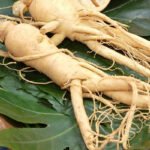
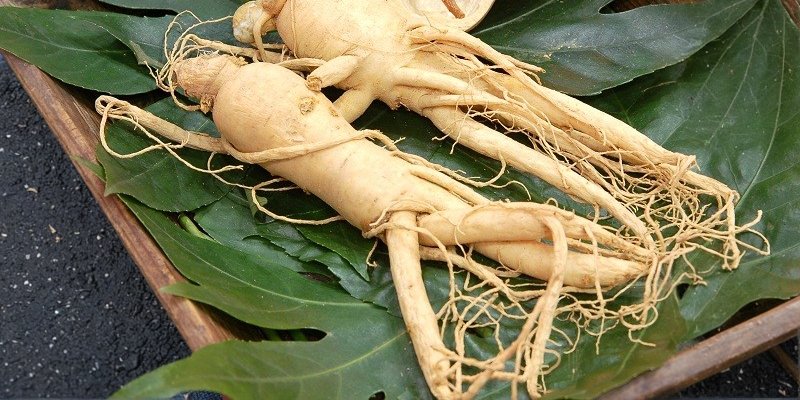
Roots: Ginseng roots are thick, fleshy, and often forked. They take 4–6 years to mature and resemble a little human figure—hence its nickname, “man-root.” When dried, they turn pale tan and feel wrinkled. Fresh roots are cream-colored with fine rootlets.
Stems: Each plant sends up one erect stem usually between 30–60 cm (12–24 in). It stays green and smooth, supporting the leaves and flowers.
Leaves: Ginseng has palmate compound leaves with 3–7 leaflets radiating from a central point like fingers on a hand. They are oval to oblong, 5–15 cm long, with serrated edges. Typically there are 1–2 whorls per stem, depending on species and growing stage.
Flowers: Clusters appear beneath the leaf whorl often greenish-white or yellowish.
Fruits: Fruits are small, round berries, bright red.
Seeds: Each fruit contains 1–2 seeds.
Growing Instructions
Here’s everything you need to know to get Ginseng off to a great start:
Sunlight: It prefers bright shade or dappled sunlight. Ideal locations have 75–90% shade cover. Avoid direct sun—your plant’s fragile leaves will get scorched.
Soil: It needs rich, well-drained soil with a pH level that is neutral to slightly acidic, around 5.5–6.5. Add plenty of organic matter like compost and leaf mold for texture and nutrients.
Temperature: Hardy in USDA zones 3–7, sometimes dipping to zone 8. Winter chill is key—it helps seeds complete dormancy.
Watering: Keep the soil evenly moist, but not waterlogged. Use mulch (leaf mold or straw) to retain moisture and regulate temperature.
Spacing: Plant roots or seeds about 15–20 cm (6–8 in) apart. Leave 60 cm (24 in) between rows to allow air and sunlight to circulate.
Pruning: Not much pruning needed. Remove dead leaves or spent flower clusters to keep it clean and healthy.
Support: Usually grows upright without help. In heavier shade, you might gently stake stems so they don’t flop over.
Life Cycle: Ginseng follows a typical life cycle consisting of:
Germination: Seeds first develop their root in the fall. They sprout above ground the following spring—this two-year germination is called “double dormancy.”
Vegetative Growth: In years 1–3, plants generate leaves but rarely flower. Root biomass builds slowly during this phase.
Flowering: Around years 4–6, mature plants start to flower each spring. Expect small white-green blossoms under the leaf canopy.
Fruit Set: After flowering, small red berries form and ripen in summer. Each berry hides 1–2 seeds for next year’s generation.
End of Season: Above-ground parts die back in fall. Root remains dormant under mulch through winter, ready to repeat the cycle.

Harvesting and Foraging
Harvesting
When: Ideally in fall after 4–6 years of growth—enough about flowering, seeds, and energy to the root.
How: Gently dig—you want to preserve the long taproot. Don’t just yank it out—you’ll damage delicate rootlets.
Drying: Clean gently, then dry at 30–40°C (85–105°F) for 2–4 weeks until root shrinks and is brittle.
Foraging
Be very careful—ginseng is often rare or protected in the wild.
Always check and follow local regulations.
Harvest only plants older than 5 years, better with flowers or fruits still attached.
Leave plenty behind—natural populations take years to replenish.
Plant Companions
Ginseng thrives best when planted in community:
Shade trees: Maple, ash, oak, tulip poplar—these mimic the shady forest canopy it loves.
Leaf litter producers: Maples or beech trees drop nutrient-rich leaves annually—great mulch!
Beneficial understory plants: Some use companion planting with ferns and goldenseal to help deter pests and improve health.
Common Pests and Diseases
Although hardy, ginseng can encounter:
Damping-off: A fungal infection that kills seedlings. Treat with proper drainage and airflow.
Root rot: Caused by overwatering and poor soil. Avoid by ensuring soil isn’t saturated.
Nematodes: Tiny worms that feast on roots—keep soil healthy and avoid contaminated plant material.
Slugs and snails: They can munch on leaves. Barriers or organic slug traps help keep them away.
Japanese beetles: Sometimes chew the leaves—handpick or use light traps.

Shopping Tips
Looking to buy ginseng? Keep these tips in mind:
Know the species: Panax ginseng (Asian) tends to be more stimulating; Panax quinquefolius (American) is milder and more calming.
Source matters: Wild-simulated or forest-grown is more potent than greenhouse grown.
Market labels: Look for terms like “4–6 year old roots”—you’re paying for maturity and quality.
Certification: Choose organic or sustainably harvested for safety and environmental peace of mind.
Storage
Store dried roots in a cool, dark, dry place—an airtight glass jar works great.
Keep the jar in a pantry or cabinet below 20°C (68°F).
Properly stored, ginseng remains potent for years.
For powdered or cut root: Use airtight containers, dark storage, and use within 1–2 years.
Fresh roots? Freeze them in tightly sealed bags until ready to use.
Culinary Uses
Teas and infusions: Slice roots thinly and steep in hot water for 5–10 minutes. The aroma is earthy and lightly sweet. Add honey or lemon to taste.
Soups and broths: Add 10–20 grams of sliced root to chicken or vegetable broth during simmering. The result is a rich, warming soup believed to boost immunity.
Tinctures: Ginseng slices steeped in vodka or high-proof alcohol for 4–8 weeks create a concentrated liquid supplement.
Stir-fries and sautés: Use very thin slices in stir-fries with ginger, garlic, soft vegetables. This introduces your meals to ginseng’s gentle bitterness without overpowering others.
Baking: You can finely grind dried ginseng and sprinkle small amounts (1 tsp) into hearty bread dough or muffins. Adds a subtle herbal kick.
Pro tip: Less is more. Ginseng is potent—use just enough to flavor, not overpower.
Health Benefits
The health benefits of ginseng are largely supported by research:
Immune support: Many studies find that ginseng can reduce the chance of catching colds or the flu. They can also help your body recover faster.
Energy and cognitive performance: Ginseng is often called an “adaptogen”—it helps your body deal with stress. It may boost alertness, fight fatigue, and improve memory.
Blood sugar regulation: Asian ginseng may help lower blood sugar in people with type 2 diabetes.
Anti-inflammatory effects: Ginsenosides (the active compounds) act as antioxidants and fight inflammation—great for your overall health.
Heart health: Some research suggests ginseng can modestly lower LDL (“bad”) cholesterol and improve circulation.
Sexual health: Traditional medicine uses it as an aphrodisiac and to alleviate erectile dysfunction; some trials support this, especially with Asian ginseng.
Just a note: research is ongoing, and findings vary—some stronger than others. Always consult a healthcare provider if you’re taking medications or dealing with specific health conditions.
Toxicity and Safety
Generally safe for most adults when taken in typical supplemental doses (200–400 mg extract or 1–2 g dried root daily for up to 12 weeks).
Side effects (rare): Insomnia, headaches, upset stomach, skin rash, jitteriness.
Drug interactions:
Warfarin: Ginseng may reduce its effectiveness.
Diabetes meds: Can lower blood sugar further.
MAO inhibitors: Could cause headaches or tremors.
Warfarin: Ginseng may reduce its effectiveness.
Diabetes meds: Can lower blood sugar further.
MAO inhibitors: Could cause headaches or tremors.
Not recommended for pregnant or breastfeeding women—limited safety data.
Children and older adults: Use with caution and professional advice.
Environmental Impact
Wild ginseng has become rare due to overharvesting. It’s protected in many Asian regions.
Cultivation practices: Shaded farms (wild-simulated) are more sustainable and mimic natural forest environments.
Import regulations: Asian and American ginseng may be listed under Convention on International Trade in Endangered Species, requiring permits to cross borders.
Preservation: If you forage, leave at least 10–20 mature plants behind, only collect over-mature berries, and allow natural reseeding.