






Marigold is one of those plants that almost everyone recognizes. You have probably seen its bright orange or golden blooms lining garden beds, edging vegetable plots, or glowing in pots on a sunny porch. But marigold is much more than just a cheerful garden flower. It is a powerful companion plant, a culinary ingredient, a traditional medicinal herb, and an important crop around the world.
In this Plant Compendium entry, we will take a deep dive into marigold (botanically known as Tagetes). You will learn how to grow it, harvest it, cook with it, and understand its health benefits. Along the way, we will lean on research and insights from botanical gardens and universities, translating the science into everyday language you can use.
History of Marigold
The marigolds most gardeners grow today belong to the genus Tagetes. Despite the common name “African marigold,” most ornamental marigolds actually originated in Mexico and Central America. According to research from institutions like the University of Florida IFAS Extension and the Missouri Botanical Garden, wild Tagetes species were first domesticated and cultivated by Indigenous peoples of Mesoamerica.
In Mexico, marigolds—especially Tagetes erecta—play a central role in Día de los Muertos (Day of the Dead) celebrations. Their bright color and strong scent are believed to guide spirits. From Mexico, marigolds spread to Europe in the 16th century through Spanish explorers. Over time, plant breeders developed the many varieties you see today: compact French marigolds, tall African marigolds, and delicate signet marigolds. Besides the Tagetes erecta, there are other well-known species as well including French marigold (Tagetes patula), Mexican mint marigold (Tagetes lucida), and lemon marigold (Tagetes tenuifolia).
It is important to note that marigold is not just one plant. The name is also used for members of the genus Calendula (Calendula officinalis), often called pot marigold. While they look similar and share some uses, Tagetes and Calendula are different genera. In this article, we are focusing primarily on Tagetes marigolds, though we will touch on calendula in the culinary and health sections where relevant.
Marigolds became popular in Europe not only for their beauty but also because they were easy to grow. By the 19th century, they were widely cultivated in ornamental gardens. Today, marigolds are grown worldwide, from home gardens in North America to large-scale farms in India for religious and decorative use.
Botanical Description
Scientific name: Tagetes spp.
Family: Asteraceae
Marigold belongs to the daisy family. If you look closely at a marigold flower, you will see it shares many traits with daisies and sunflowers.
Roots: Marigolds develop a fibrous root system. Instead of one large taproot, they produce many branching roots that spread through the upper layers of soil. This shallow but dense root network allows marigolds to quickly absorb nutrients and water. Research from university horticulture programs shows that this fibrous system also makes marigolds excellent at stabilizing soil in garden beds. Some species of Tagetes produce compounds in their roots called thiophenes. These natural chemicals can suppress certain soil nematodes (microscopic worms), which is one reason marigolds are popular in vegetable gardens.
Stems: Marigold stems are herbaceous, meaning they are soft and green rather than woody. They can be upright and sturdy, especially in African marigolds, or more compact and bushy in French marigolds. The stems are often slightly ridged and may branch freely. If you pinch the stem, you will notice a strong scent. That fragrance comes from essential oils stored in the plant tissues.
Leaves: Marigold leaves are usually pinnate, meaning they are divided into multiple narrow leaflets arranged along a central stem. The leaves are typically bright to dark green and slightly serrated at the edges. When you crush a leaf between your fingers, you release its distinctive aroma. Some people love the scent; others find it strong or musky. That smell plays an important ecological role by deterring certain insect pests.
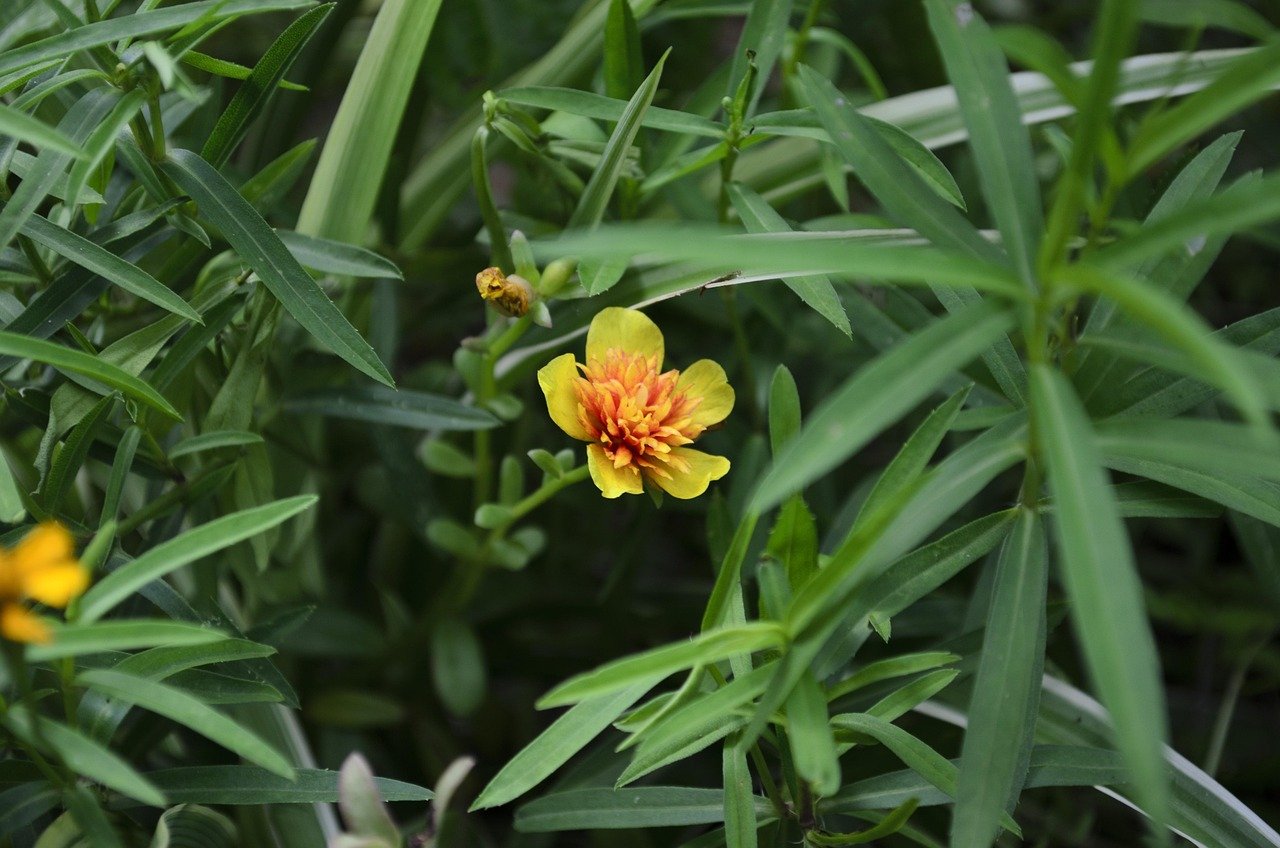
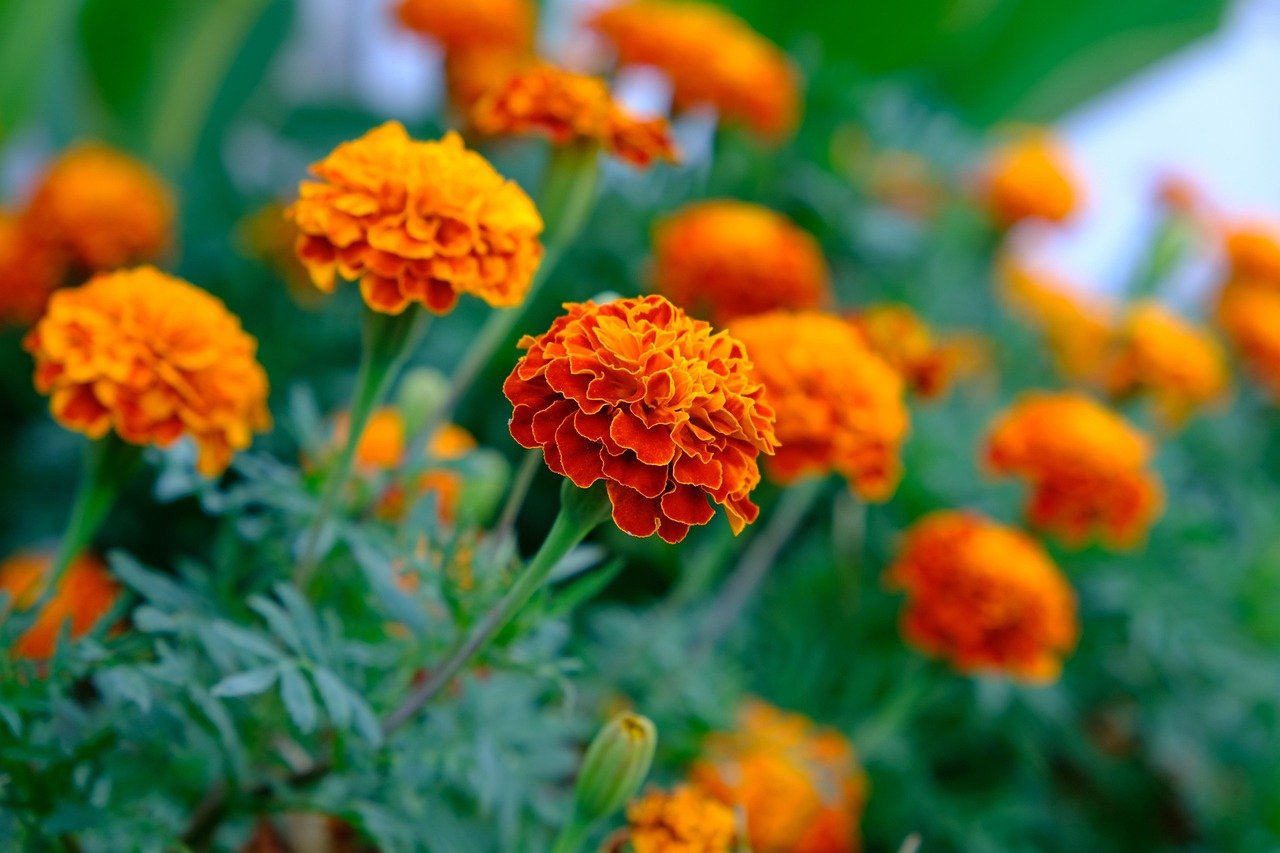
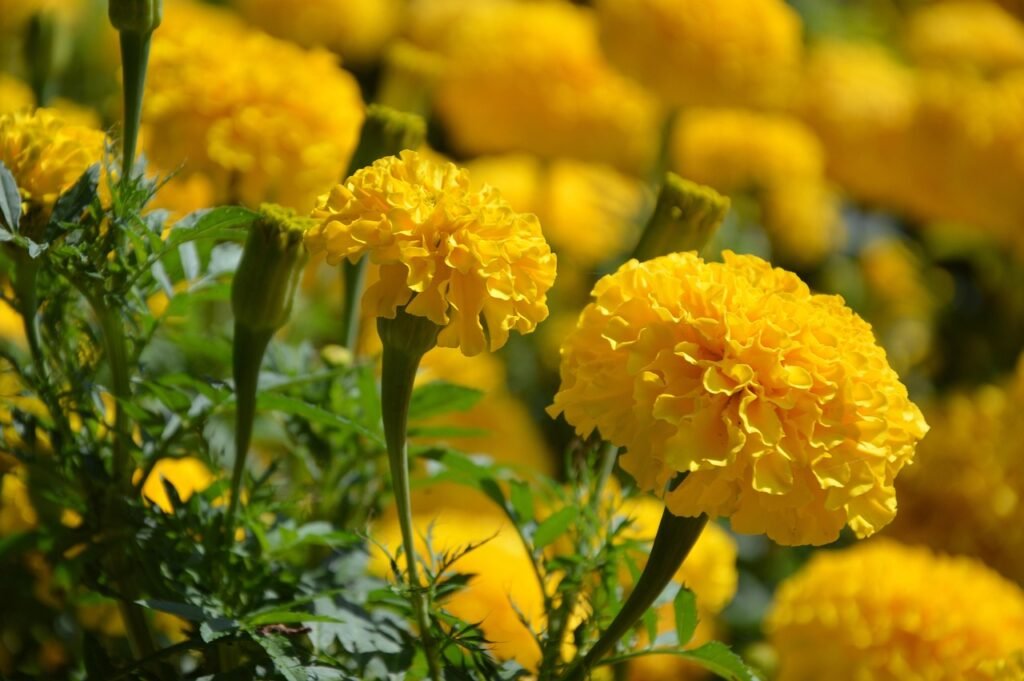
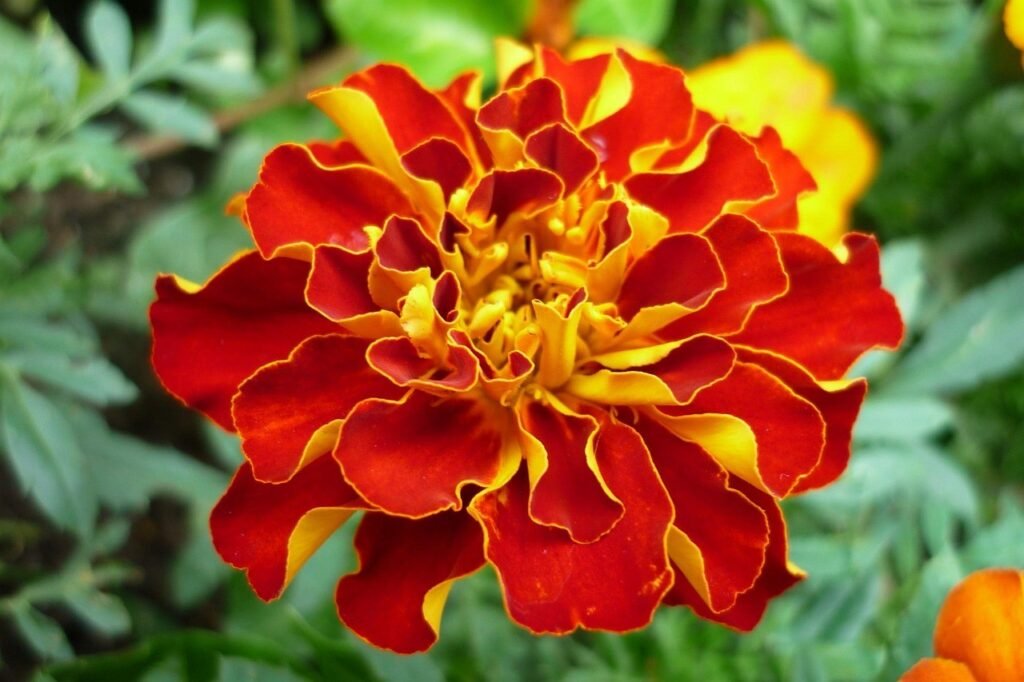
Flowers: The flowers are the stars of the show. Marigold blooms are composite flower heads made up of two types of florets: Ray florets (the outer “petals”) and Disc florets (the tiny flowers in the center). Colors range from pale yellow to deep gold, bright orange, and even reddish-brown. Some varieties are solid, while others are bi-colored. Flower size varies widely, from small, delicate signet marigolds to large, pom-pom-like African marigolds that can be several inches across. Marigolds are known for their long blooming period. With proper care, you can enjoy flowers from late spring until the first frost.
Fruits: After pollination, marigold flowers produce dry fruits called achenes. These are small, slender, and dark. Each achene contains a single seed. Unlike fleshy fruits such as tomatoes or berries, marigold fruits are dry and do not split open when mature. They remain attached to the flower head until dispersed.
Seeds: Marigold seeds are long, thin, and usually black with a pale or white tip. They are easy to collect and handle, making marigolds one of the simplest flowers to save seed from. Seeds generally remain viable for 2–3 years if stored properly in a cool, dry place.
Growing Instructions
Here’s everything you need to know to get marigold off to a great start:
Sunlight: Marigolds thrive in full sun. That means at least 6–8 hours of direct sunlight per day. According to university extension guides, full sun promotes strong stems and abundant blooms. In partial shade, plants may become leggy and produce fewer flowers. If you want bold color and continuous blooms, give your marigolds as much sun as you can.
Soil: Marigolds are not picky about soil. They prefer well-drained soil with moderate fertility. In fact, overly rich soil can lead to lush leaves but fewer flowers. A slightly acidic to neutral pH (around 6.0–7.0) works best. Good drainage is more important than perfect fertility. If your soil tends to stay soggy, consider raised beds or containers.
Temperature: Marigolds are warm-season annuals. They do best in temperatures between 65°F and 80°F (18–27°C). They are sensitive to frost and will not tolerate freezing conditions. Wait until after the last frost date in your area before planting outdoors.
Watering: Water marigolds deeply but allow the soil to dry slightly between waterings. They are moderately drought-tolerant once established. Overwatering can lead to root rot and fungal diseases. When watering, try to direct water at the base of the plant rather than overhead. Wet foliage can encourage disease.
Spacing: Proper spacing improves air circulation and reduces disease risk. Follow seed packet or plant label instructions, but in general: French marigolds: 6–12 inches apart and African marigolds: 10–18 inches apart. Crowded plants may compete for nutrients and become more susceptible to pests.
Pruning: Deadheading, or removing spent flowers, encourages more blooms. Simply pinch or snip off faded flower heads just above a set of leaves. You can also pinch young plants early in the season to encourage bushier growth.
Support: Most marigolds do not need support. However, tall African marigold varieties may benefit from staking in windy areas.
Life Cycle: Marigold follows a typical life cycle consisting of germination, vegetative growth, flowering, fruit set, and senescence (end of season).
- Germination: Seeds usually germinate within 5–10 days in warm soil. They require light moisture and warmth. Indoors, you can start seeds 4–6 weeks before your last frost date.
- Vegetative Growth: During this stage, the plant focuses on producing stems and leaves. You will see rapid green growth as roots establish and foliage expands.
- Flowering: Once mature, marigolds begin producing flower buds. With proper sunlight and deadheading, flowering can continue for months.
- Fruit Set: After pollination, seeds develop within the dried flower head. If you stop deadheading, you will see seed formation at the end of the bloom cycle.
- End of Season: As temperatures drop in autumn, growth slows. Frost will eventually kill the plant. At this point, you can collect seeds and compost the remaining plant material.
Harvesting and Foraging
Harvesting
Harvest marigold flowers when they are fully open and dry. The best time is mid-morning after dew has evaporated.
Use clean scissors to snip flower heads. For culinary or medicinal use, choose blooms that are vibrant and free of pesticide exposure.
If you are harvesting for drying:
- Lay flowers in a single layer in a well-ventilated area.
- Keep them out of direct sunlight.
- Turn occasionally to ensure even drying.
Foraging
If you are foraging wild marigolds, make sure you correctly identify the species. Only harvest from areas free of chemical sprays and pollution.
Remember that some marigold-like flowers belong to different genera. Proper identification is essential before using any plant for food or medicine.
Plant Companions
Marigolds are famous companion plants in organic gardening. Research from university agricultural extensions shows they can help reduce populations of root-knot nematodes when grown in rotation or as cover crops.
They pair well with:
- Tomatoes
- Peppers
- Beans
- Squash
- Cucumbers
Their strong scent may deter certain insect pests, and their bright flowers attract beneficial insects like lady beetles and parasitic wasps.
Common Pests and Diseases
Marigolds are relatively tough, but they are not invincible.
Common pests:
- Aphids
- Spider mites
- Whiteflies
Common diseases:
- Powdery mildew
- Root rot (in poorly drained soil)
- Botrytis blight
Good air circulation, proper spacing, and careful watering go a long way in preventing problems.
Shopping Tips
When buying marigold plants:
- Look for compact, bushy plants with deep green leaves.
- Avoid plants that are leggy or yellowing.
- Check for pests under the leaves.
- If buying seeds, choose reputable seed companies for better germination rates.
Consider what you want from your marigold: tall and dramatic, compact and colorful, or delicate and edible.
Storage
Fresh marigold flowers are best used immediately. If needed, you can store them in the refrigerator in a breathable container for 1–2 days.
For long-term storage:
- Dry petals thoroughly.
- Store in an airtight container.
- Keep in a cool, dark place.
Properly dried petals can last up to a year.
Culinary Uses
This is where marigold really surprises people.
Certain species, especially signet marigolds (Tagetes tenuifolia), have edible petals with a citrusy, slightly spicy flavor. According to horticulture departments at several universities, these petals can be used fresh or dried.
Here’s how you can use marigold in the kitchen:
- Sprinkle fresh petals over salads for color and a mild tang.
- Add to rice dishes for a golden hue.
- Infuse vinegar or oil with petals.
- Use in compound butter.
- Garnish soups and desserts.
In some cultures, marigold petals are used as a natural food coloring. The pigments responsible for their bright color are carotenoids, especially lutein. These compounds not only add color but also have antioxidant properties.
Dried petals can be blended into herbal tea mixtures. The flavor is light and slightly floral, with a subtle bitterness. Start small and adjust to taste.
Always make sure you are using pesticide-free flowers and correctly identified edible species.
Health Benefits
Marigold has a long history in traditional medicine. Scientific studies from agricultural and medical research institutions have examined compounds in Tagetes species, especially their essential oils and carotenoids.
Potential health-related properties include:
- Antioxidant activity
- Anti-inflammatory effects
- Antimicrobial properties
Lutein, extracted from marigold flowers, is widely used in dietary supplements for eye health. Research has shown lutein plays a role in supporting macular health and filtering blue light in the retina.
Essential oils from marigold have been studied for antifungal and antibacterial effects. In laboratory settings, certain extracts have shown activity against common pathogens.
In traditional herbal systems, marigold preparations have been used for:
- Minor skin irritations
- Digestive support
- Mild inflammatory conditions
It is important to remember that while promising, many studies are laboratory-based. Whole-plant use in humans should be approached thoughtfully and preferably with professional guidance.
Toxicity and Safety
Marigolds are generally considered safe for ornamental use. However, some people may experience skin irritation when handling the plant, especially if they are sensitive to members of the Asteraceae family.
In pets, large ingestion may cause mild gastrointestinal upset. As with any plant, moderation and proper identification are key.
Not all marigold species are equally suited for culinary use. Always confirm you are using edible varieties grown without chemical treatments.
Environmental Impact
Marigolds can play a positive role in sustainable gardening.
Benefits include:
- Supporting pollinators
- Reducing certain soil nematodes
- Providing long-season nectar sources
Because they are annuals, they do not typically become invasive in most regions. However, responsible gardening always includes preventing unwanted spread and composting plant material properly.
By planting marigolds, you are not just adding color. You are supporting biodiversity, soil health, and beneficial insects in your garden ecosystem.