


Scientific name: Hamamelis virginiana L.
Family: Hamamelidaceae
If you have ever used witch hazel toner on your skin or admired bright yellow ribbon-like flowers blooming in the dead of winter, you have already met hamamelis, commonly known as witch hazel. This remarkable shrub bridges the worlds of ornamental gardening, herbal medicine, and traditional botany in a way few plants can. Hamamelis has also been highly valued in cosmetology.
It is native to North America, where it is found along coastal regions. It’s one of the few angiosperms that flowers in the fall and matures fruits the following year. Hamamelis is also known for its unique seed dispersal mechanism where its ripe fruit capsule opens and shoots seeds at a distance of several meters,
Today, you will find hamamelis everywhere: in herbal medicine cabinets, botanical gardens, landscaping designs, and even research labs.
In this Plant Compendium entry, we’ll explore everything you need to know about hamamelis, from its fascinating history to growing instructions, culinary potential, and health benefits!
History of Hamamelis
Hamamelis has a long and respected history, especially in North America. Indigenous peoples, including many Native American tribes, were the first to use witch hazel medicinally. They prepared decoctions from bark and leaves to treat things like inflammation, skin irritations, minor wounds and muscle aches.
European settlers learned about the plant’s healing qualities from Indigenous communities. By the 1800s, witch hazel extract became widely produced in the United States. It quickly gained popularity as a household remedy.
The name “witch hazel” does not refer to magic. The word “witch” likely comes from the Old English wice, meaning “bendable,” referring to the flexible branches used for dowsing rods.
Interestingly, while Hamamelis virginiana is native to North America, several Asian species such as Hamamelis japonica and Hamamelis mollis are prized in ornamental horticulture. Botanical gardens such as the Royal Botanic Gardens, Kew have long showcased these winter-blooming species.
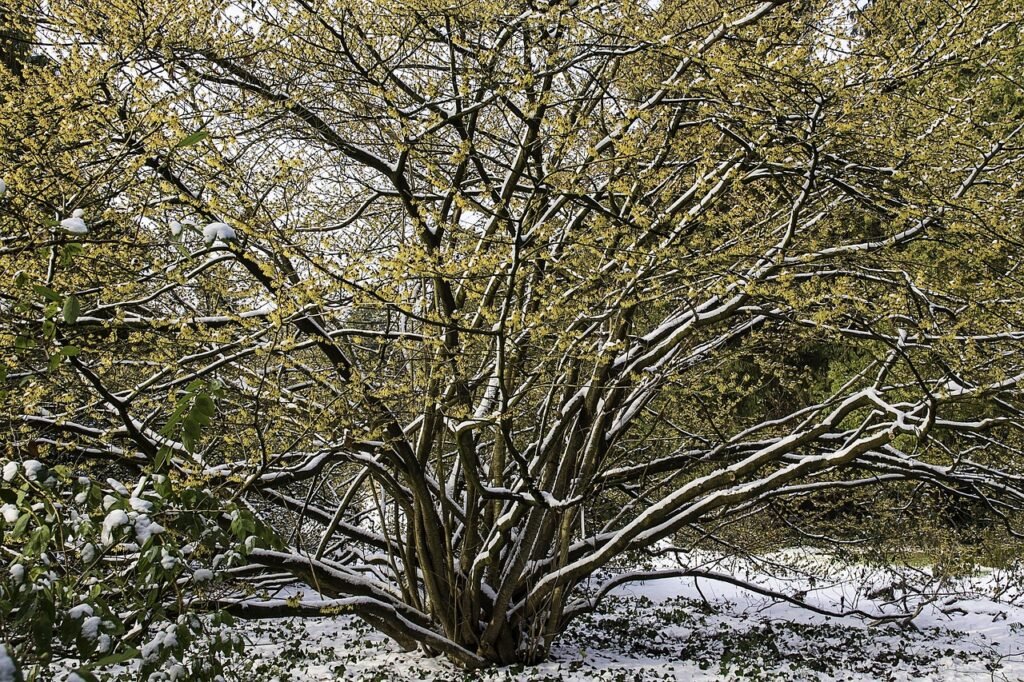
Botanical Description
Hamamelis is a deciduous shrub or small tree known for its unusual flowering time — often blooming in late fall or winter when almost nothing else does.
Roots: Hamamelis develops a moderately deep, spreading root system. The roots are woody and strong but not aggressively invasive. They form a stable base that allows the shrub to thrive in woodland settings.
Stems: The stems are slender, flexible, and slightly zigzagged. Young stems may appear smooth and grayish-brown. Mature branches become more rigid and develop textured bark.
Leaves: Leaves are broad, oval, and slightly asymmetrical at the base. They resemble hazel leaves, which explains part of the plant’s common name. In autumn, they turn brilliant shades of yellow before dropping.
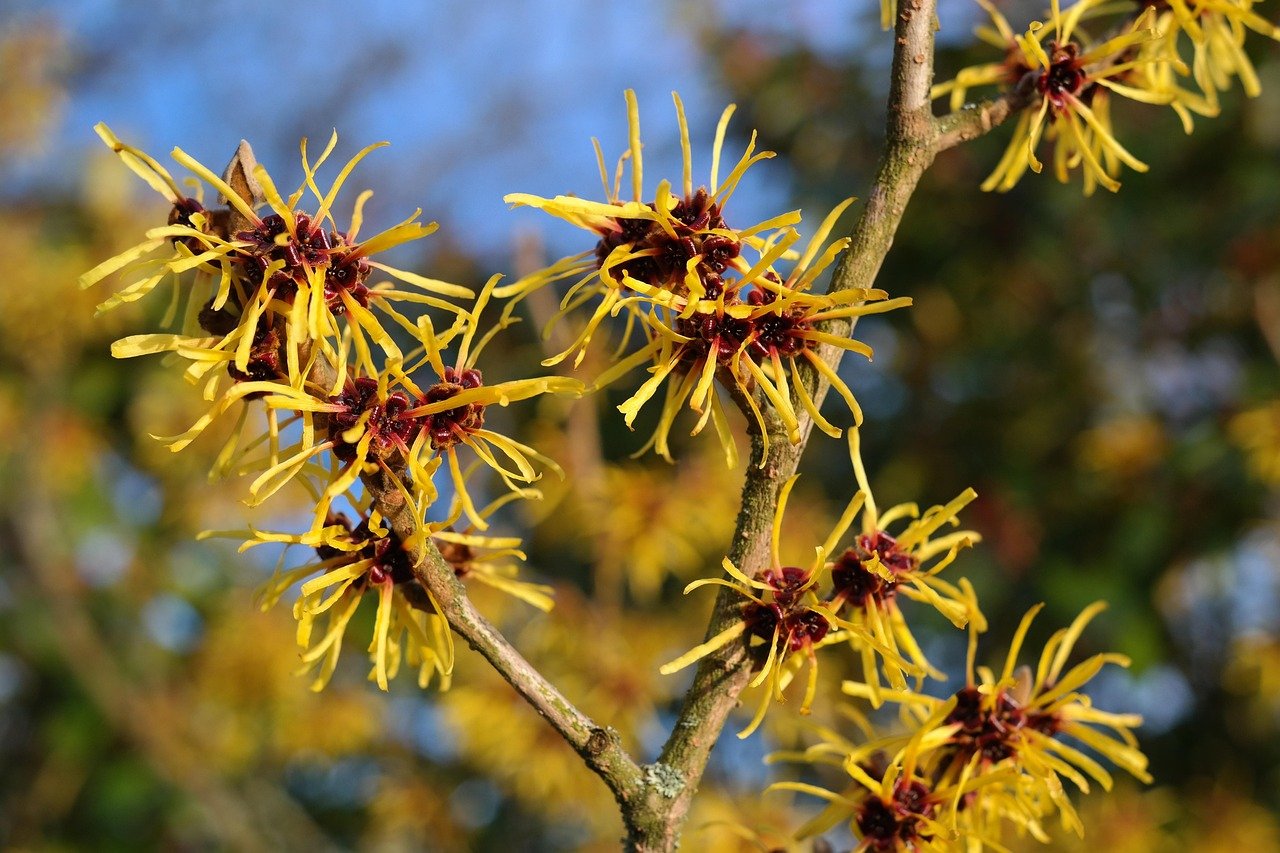
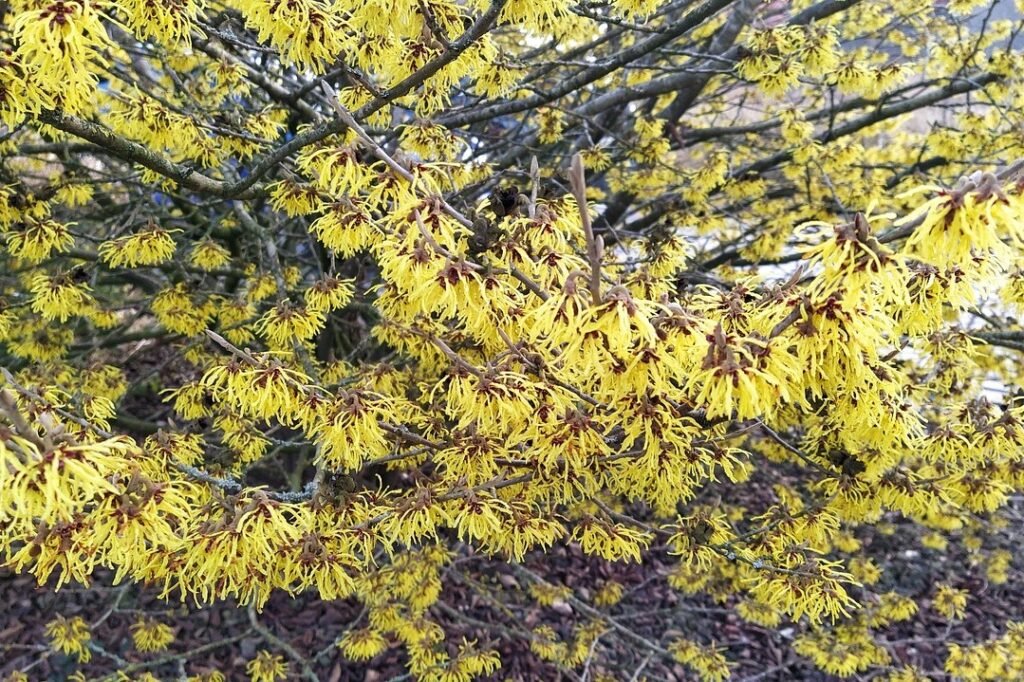
Flowers: The flowers are what truly set hamamelis apart. They have thin, ribbon-like petals that curl and crinkle. Colors range from bright yellow, golden orange and coppery red (in some Asian hybrids). Bloom time varies by species. American witch hazel flowers in fall, while many Asian varieties bloom in winter.
Fruits: The fruit is a small woody capsule. What makes it fascinating is its explosive seed dispersal. When mature, the capsule can eject seeds several feet away.
Seeds: The seeds are glossy black and relatively small. They require cold stratification to germinate, meaning they need a period of cold to break dormancy.
Growing Instructions
Here’s everything you need to know to get hamamelis off to a great start:
Sunlight: Hamamelis prefers full sun to partial shade. In cooler climates, full sun encourages better flowering. In warmer areas, partial shade protects it from stress.
Soil: It thrives in well-drained soil, slightly acidic to neutral pH and rich organic matter. According to research from the North Carolina State University, witch hazel performs best in moist woodland-type soils.
Temperature: Most species are hardy in USDA zones 3–8. They tolerate cold winters well, which is essential for proper flowering.
Watering: Water regularly during establishment. Once mature, hamamelis is moderately drought-tolerant but performs best with consistent moisture.
Spacing: Space shrubs 10–15 feet apart, depending on the species. They can spread widely over time.
Pruning: Prune lightly after flowering. Remove dead branches, crossing stems and suckers at the base. Avoid heavy pruning, as flowering occurs on older wood.
Support: Hamamelis rarely needs support. Its structure is naturally strong.
Life Cycle: Hamamelis follows a typical life cycle consisting of:
- Germination: Seeds require cold stratification for several months before sprouting.
- Vegetative Growth: Young plants focus on leaf and stem development during spring and summer.
- Flowering: Flowering occurs in fall or winter, depending on species.
- Fruit Set: Fruits develop slowly and may mature the following year.
- End of Season: Leaves drop in autumn. The plant enters dormancy but may bloom during this time.
Harvesting and Foraging
Harvesting
For medicinal use, bark and twigs are typically harvested in late fall after leaves drop. Leaves can be collected during the growing season.
Commercial witch hazel extract is usually distilled from bark and twigs.
Foraging
If you forage:
- Positively identify the species
- Avoid contaminated roadside areas
- Harvest sustainably (never strip entire branches)
Always check local regulations before collecting wild plants.
Plant Companions
Hamamelis pairs beautifully with woodland plants such as:
- Ferns
- Hellebores
- Spring bulbs
- Dogwoods
Its winter flowers shine when planted against evergreen backdrops.
Common Pests and Diseases
Hamamelis is relatively pest-resistant.
Occasional issues include:
- Aphids
- Leaf gall aphids
- Powdery mildew
The Cornell University notes that most infestations are cosmetic rather than harmful.
Good airflow and proper spacing reduce disease risk.
Shopping Tips
When buying hamamelis:
- Choose nursery-grown plants
- Inspect for healthy roots
- Avoid root-bound containers
- Select species suited to your climate
Winter-blooming hybrids are often sold as ornamental varieties.
Storage
If harvesting bark or leaves:
- Dry thoroughly in a cool, ventilated space
- Store in airtight containers
- Keep away from light and moisture
Properly dried material can last up to a year.
Culinary Uses
While hamamelis is best known for skincare, it also has limited traditional culinary applications.
Historically, Indigenous groups sometimes prepared mild decoctions of leaves or bark. These were not flavor-enhancing ingredients but were used in small amounts.
The flavor is:
- Strongly astringent
- Slightly bitter
- Tannic
You would not use witch hazel like mint or rosemary. Instead, its role is subtle and functional.
In rare traditional preparations, diluted infusions were used as:
- Gargles
- Mild herbal teas
- Tonic washes
Because of its high tannin content, the taste is drying — it literally tightens tissues in your mouth.
Modern culinary use is uncommon. Commercial witch hazel extract sold for skincare is not food-grade and should never be consumed.
If you are experimenting with herbal preparations, always ensure plant material is properly identified and safe for internal use.
Health Benefits
This is where hamamelis truly shines.
Research institutions, including the National Institutes of Health, have documented its primary active compounds:
- Tannins
- Flavonoids
- Gallic acid
- Proanthocyanidins
These compounds give witch hazel its well-known astringent and anti-inflammatory properties.
Skin Health
Hamamelis extract is widely used to:
- Reduce minor skin irritation
- Calm redness
- Tighten pores
- Support healing of minor cuts
Tannins bind to proteins in the skin, creating a tightening effect.
Hemorrhoid Relief
Witch hazel pads are commonly used for temporary relief of hemorrhoids due to their soothing and vasoconstrictive effects.
Anti-Inflammatory Effects
Studies from university medical centers suggest hamamelis may reduce inflammation through antioxidant activity.
Acne Support
Because of its mild antimicrobial and oil-reducing effects, it is often included in acne toners.
However, overuse may dry sensitive skin.
Minor Wounds and Bruises
Traditional herbalists use diluted witch hazel as a compress to reduce swelling and discomfort.
As always, consult a healthcare provider before internal use.
Toxicity and Safety
Hamamelis is generally considered safe for topical use.
Important considerations:
- Commercial products may contain alcohol
- Internal use requires professional guidance
- Large amounts of tannins may cause stomach upset
Always use products as directed.
Environmental Impact
Hamamelis plays an important ecological role. Its late-season flowers provide nectar for winter-active moths and pollinating insects.
Its seeds feed wildlife, and its dense growth offers shelter for birds.
Because it is native to woodland ecosystems, planting American witch hazel supports biodiversity in native landscapes.
Unlike invasive shrubs, hamamelis integrates harmoniously into forest understories.