









The article is about how sugar moved from wild plants to a global industry, and how sugar-producing plants like sugarcane and sugar beet shaped history, trade, and everyday life.
“Sugar is more than a sweetener; it is a story of plants, people, and power woven across centuries.” – The Economic Botanist
| What you will learn: * Where does sugar come from, and which plants are used to produce it? * How did sugar production evolve from ancient times to the modern industry? * What role did sugar play in shaping global trade, economies, and societies? * What are the key differences between sugarcane and sugar beet, and how are they processed? |
When you stir sugar into your coffee, it feels simple. However, behind that small spoonful lies a long and complex story. Sugar connects agriculture, science, trade, and even human history in ways most of us rarely think about. In fact, the history of sugar shows how one plant-based product helped shape economies, empires, and diets across the world.
As we explore where sugar comes from, you will see how plants like sugarcane and sugar beet became essential crops. At the same time, you will understand how sugar production evolved from basic techniques to modern industrial processes. Along the way, we will break down the science into clear, everyday language so you can follow the journey easily.
- Where Does Sugar Come From? Understanding Sugar-Producing Plants
- The Origin of Sugar: Early History and Ancient Civilizations
- The Rise of the Global Sugar Trade
- Evolution of Sugar Production and Processing
- Sugar Beet vs Sugarcane: Key Differences
- The Impact of Sugar on the Global Economy
- How Sugar Changed the World
- Sustainable Sugar Production Today
- The Bottom Line
Where Does Sugar Come From? Understanding Sugar-Producing Plants
To understand sugar production history, we first need to look at the plants that make sugar possible. After all, sugar does not start in a factory—it starts in nature.
Sugarcane: The Foundation of the Global Sugar Industry
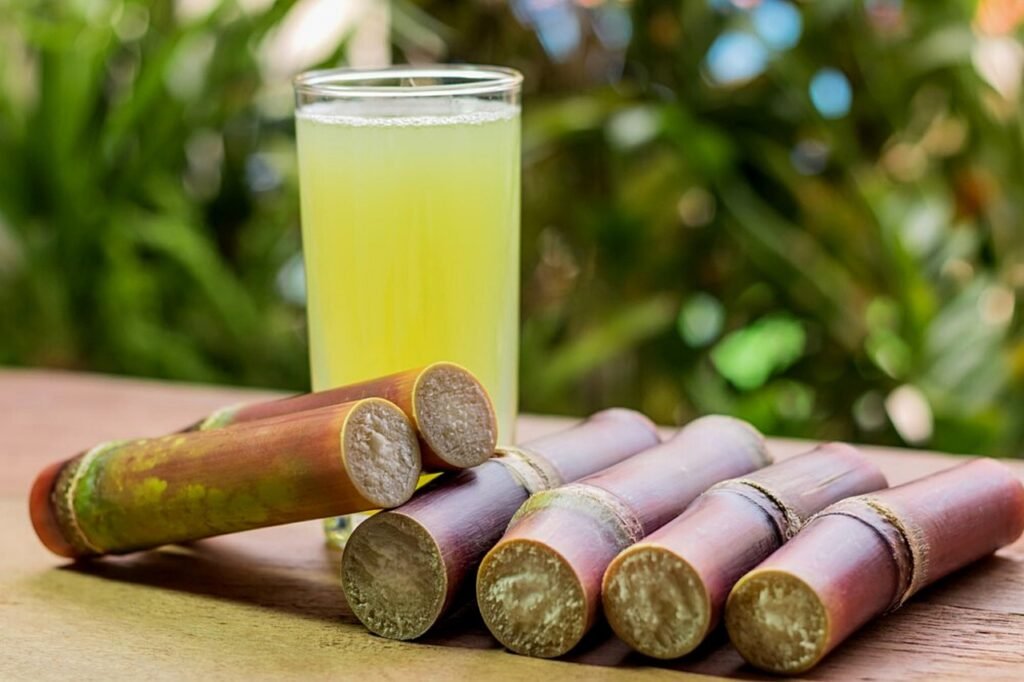
First and foremost, sugarcane stands as the original and most important sugar-producing plant. This tall, grass-like plant grows best in warm, tropical climates. Inside its stalks, sugarcane stores a sweet juice rich in sucrose, which we extract and refine.
Because sugarcane grows quickly and produces large amounts of sugar, it became the backbone of early sugar agriculture. Regions like Southeast Asia and later the Caribbean proved ideal for cultivation. As a result, sugarcane farming spread rapidly across the globe.
Moreover, sugarcane played a major role in the rise of the global sugar industry. Its high yield made it attractive for large-scale plantations, especially during colonial times.
Sugar Beet: A Game-Changer in Europe
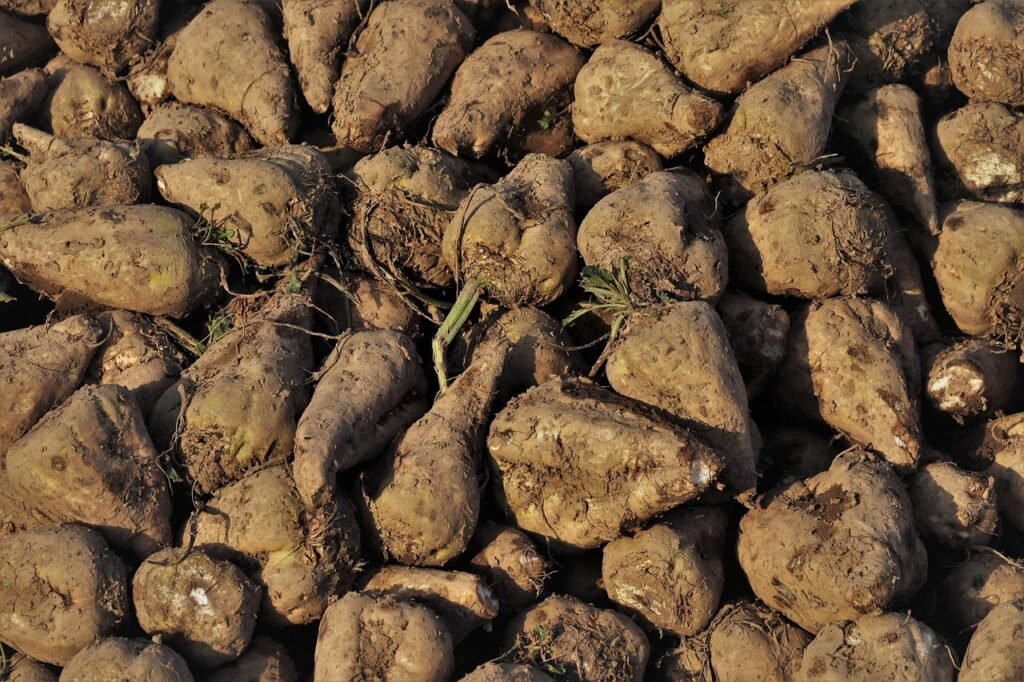
While sugarcane dominated warm regions, Europe needed another option. That is where sugar beet entered the story. This root vegetable contains high levels of sucrose, similar to sugarcane.
During times when trade routes became unstable, especially in the 18th and 19th centuries, European countries turned to sugar beet production. Consequently, this shift reduced reliance on imported sugarcane.
Today, both sugarcane and sugar beet contribute significantly to global sugar production. Chemically, the sugar from both plants remains nearly identical, even though they grow in very different climates.
Other Natural Sources of Sugar
Although sugarcane and sugar beet dominate the market, other plants also produce sugar. For example, maple trees provide sap that we boil into syrup. Similarly, palm trees offer palm sugar, while sorghum produces sweet juices.
Fun Fact
Maple syrup contains natural sugars that come directly from tree sap, making it one of the least processed sweeteners available.
Even though these sources play smaller roles, they show how widespread sugar production is in nature.
The Origin of Sugar: Early History and Ancient Civilizations
Now that we understand the plants, let’s go back in time. The origin of sugar begins thousands of years ago, long before modern factories existed.
Ancient India: The Birthplace of Sugar
Historians trace the earliest sugar production to ancient India. People discovered how to extract juice from sugarcane and boil it down into crystals. This process marked one of the first major steps in sugar processing.
Interestingly, the word “sugar” comes from the Sanskrit word “śarkarā,” which means gravel or ground substance. This name reflects the grainy texture of early sugar crystals.
Spread Across Asia and the Middle East
As trade expanded, knowledge of sugar spread to China and the Middle East. Traders and travelers carried both the plant and the processing techniques across regions.
As a result, cultures began refining sugar further. They improved boiling methods and learned how to create purer crystals. Therefore, sugar became more valuable and easier to transport.
Sugar in Ancient Europe
Although ancient Greece and Rome knew about sugar, they treated it as a luxury item. In fact, people often used sugar for medicine rather than food.
Because sugar remained rare and expensive, only wealthy individuals could afford it. However, that situation would soon change.
The Rise of the Global Sugar Trade
As time moved forward, sugar shifted from a rare luxury to a major global commodity.
The Islamic World and Sugar Expansion
During the medieval period, the Islamic world played a key role in advancing sugar production. Farmers improved irrigation systems, while scientists refined processing techniques.
Consequently, sugar cultivation spread into North Africa and parts of Europe, including Spain. This expansion laid the groundwork for future global trade.
European Colonization and Sugar Plantations
Eventually, European powers recognized the economic potential of sugar. When they colonized regions in the Americas, they established large-scale sugar plantations.
Because tropical climates suited sugarcane perfectly, these plantations produced massive amounts of sugar. As a result, sugar became one of the most important global trade goods.
Sugar and Slavery: A Difficult History
However, the growth of the sugar industry came at a high human cost. Plantation owners relied heavily on enslaved labor to meet production demands.
This dark chapter in sugar trade history reminds us that economic growth often came with serious ethical consequences. Therefore, understanding sugar’s past also means recognizing its impact on people and societies.
Evolution of Sugar Production and Processing
While demand for sugar increased, production methods also evolved.
Early Sugar Processing Techniques
In the beginning, people crushed sugarcane to extract juice. Then, they boiled the liquid until it formed crystals. Although simple, this method required a lot of labor and time.
Industrial Revolution and Mechanization
Later, the Industrial Revolution transformed sugar production. Machines replaced manual labor in many stages of the process. This shift increased efficiency and lowered costs.
As a result, sugar became more accessible to everyday people. Instead of being a luxury, it turned into a common household item.
Modern Sugar Production Process
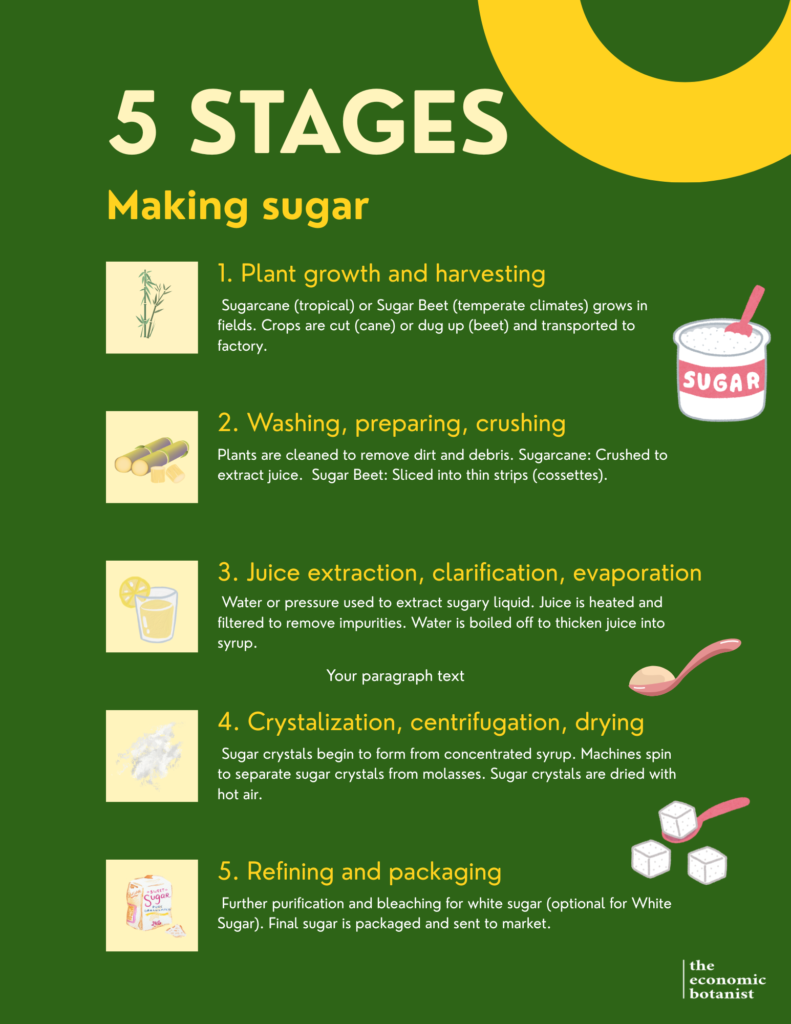
Today, sugar production follows a highly organized system. First, farmers harvest sugarcane or sugar beet. Next, factories extract juice and remove impurities. Finally, they crystallize and dry the sugar before packaging it.
Fun Fact
Modern sugar factories can process thousands of tons of sugarcane in a single day, producing enough sugar to supply entire cities.
Even though the process has advanced, the basic idea remains the same as it was thousands of years ago.
Sugar Beet vs Sugarcane: Key Differences
Although both plants produce sugar, they differ in several important ways.
First, sugarcane thrives in tropical climates, while sugar beet grows best in cooler regions. Therefore, geography plays a major role in determining which crop farmers choose.
Second, sugarcane requires more water and space, whereas sugar beet fits well into crop rotation systems. As a result, farmers often select crops based on environmental and economic factors.
Finally, even though both produce sucrose, their processing methods differ slightly. However, the end product tastes nearly identical.
The Impact of Sugar on the Global Economy
As sugar production increased, its influence spread far beyond agriculture.
Sugar became a key driver of global trade. Countries built entire economies around sugar exports. At the same time, demand for sugar fueled shipping, finance, and industrial growth.
Moreover, sugar shaped labor systems and migration patterns. People moved across continents to work in sugar plantations and factories. Consequently, sugar played a role in shaping modern global society.
How Sugar Changed the World
When we look at the bigger picture, sugar did more than sweeten food. It changed how people lived and ate.
For example, sugar helped create new types of foods and beverages. From baked goods to soft drinks, sugar became a central ingredient in modern diets.
Additionally, sugar influenced cultural traditions. Many celebrations and recipes rely on sweet foods, showing how deeply sugar has entered daily life.
At the same time, increased sugar consumption also raised health concerns. Therefore, today’s conversations about sugar often include both its benefits and its risks.
Sustainable Sugar Production Today
Today, the sugar industry faces new challenges. Environmental concerns, such as water use and soil health, push producers to adopt more sustainable practices.
For instance, farmers now explore ways to reduce waste and improve efficiency. Some companies also focus on fair trade practices to ensure better working conditions.
As consumers, you play a role as well. By choosing responsibly sourced products, you can support a more sustainable sugar industry.
The Bottom Line
The history of sugar tells a powerful story. What began as a simple plant in ancient fields grew into a global industry that shaped economies, cultures, and daily life.
From sugarcane fields in tropical regions to sugar beet farms in cooler climates, sugar production continues to evolve. At the same time, its impact remains visible in the foods we eat and the systems we rely on.
When you understand where sugar comes from, you gain a deeper appreciation for something you use every day. More importantly, you see how closely plants, people, and history connect.
If you found this article helpful, take a moment to explore where your everyday foods come from—you might be surprised by the stories behind them.