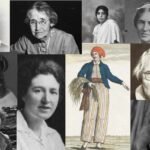


The article is about the incredible women who shaped plant science—female botanists whose discoveries changed how we understand plants, ecosystems, and conservation, even though history often overlooked their contributions.
“Plants tell the story of our planet, but the people who study them tell the story of human curiosity. When we listen closely, we find that many of the most important voices in botany were women whose work helped science grow in ways we are only now beginning to fully appreciate.” — The Economic Botanist
Plants shape the world around you. They produce the oxygen you breathe, the food you eat, and the ecosystems that support life on Earth. Because of this, the science of botany plays a huge role in understanding our planet.
However, when you look back at the history of plant science, something becomes clear. Many of the most important discoveries came from women, yet their names rarely appear in traditional science history books.
For centuries, women faced barriers in science. Universities often excluded them. Scientific societies denied them membership. Meanwhile, publishers sometimes refused to print their work. Despite these challenges, determined women carried out research, collected plants, documented ecosystems, and helped shape modern botany.
Today, historians and scientists are rediscovering these female botanists and recognizing their influence on plant taxonomy, ecology, agriculture, and conservation. When you learn their stories, you also gain a deeper appreciation for how science actually develops—through curiosity, persistence, and collaboration.
In this guide, you will discover 15 female botanists who changed science forever, explore their major discoveries, and understand why their work still matters today.
- Why Female Botanists Were Often Overlooked in Scientific History
- 15 Famous Female Botanists Who Changed Plant Science
- How Female Botanists Transformed Plant Taxonomy and Classification
- The Role of Women in Conservation and Environmental Science
- Modern Women in Botany Continuing the Legacy
- Why Studying Historic Women Botanists Matters Today
- Frequently Asked Questions About Female Botanists
- The Bottom Line
Why Female Botanists Were Often Overlooked in Scientific History
When you study the history of science, you might notice a pattern. Many groundbreaking discoveries appear to come from male scientists. However, that picture does not always reflect reality.
In fact, women scientists in history contributed far more than the historical record suggests. Botany offered slightly more opportunities for women than some other scientific fields, yet barriers still limited their recognition.
Understanding those barriers helps explain why so many historic women botanists remained invisible for so long.
Barriers to Education and Scientific Institutions
First, women struggled to access formal education. Until the late nineteenth and early twentieth centuries, many universities simply refused to admit women into scientific programs.
Because of this, many early women in plant science had to teach themselves. Some learned through private tutors, while others worked alongside male relatives who allowed them access to laboratories or collections.
However, even when women produced original research, they often could not publish it under their own names. Some papers appeared under the names of husbands, fathers, or male colleagues.
As a result, the scientific community sometimes credited discoveries to the wrong people.
Fieldwork Challenges and Social Restrictions
Botany often requires fieldwork. Scientists travel to forests, mountains, wetlands, and remote ecosystems to collect plant specimens.
Unfortunately, social expectations once restricted women from traveling alone or joining scientific expeditions.
Because of these rules, several women had to find creative solutions. Some disguised themselves as men. Others relied on local collectors or informal networks to gather specimens.
Despite these challenges, female botanists built enormous plant collections and made major discoveries about biodiversity.
Why Their Contributions Are Being Revisited Today
Today, historians are taking a closer look at the past. As researchers digitize herbarium records, journals, and archives, they uncover forgotten contributions from early women scientists.
At the same time, modern conversations about diversity in STEM history encourage scientists to recognize overlooked pioneers.
Because of this renewed interest, many female botanists are finally receiving the recognition they deserve.
15 Famous Female Botanists Who Changed Plant Science
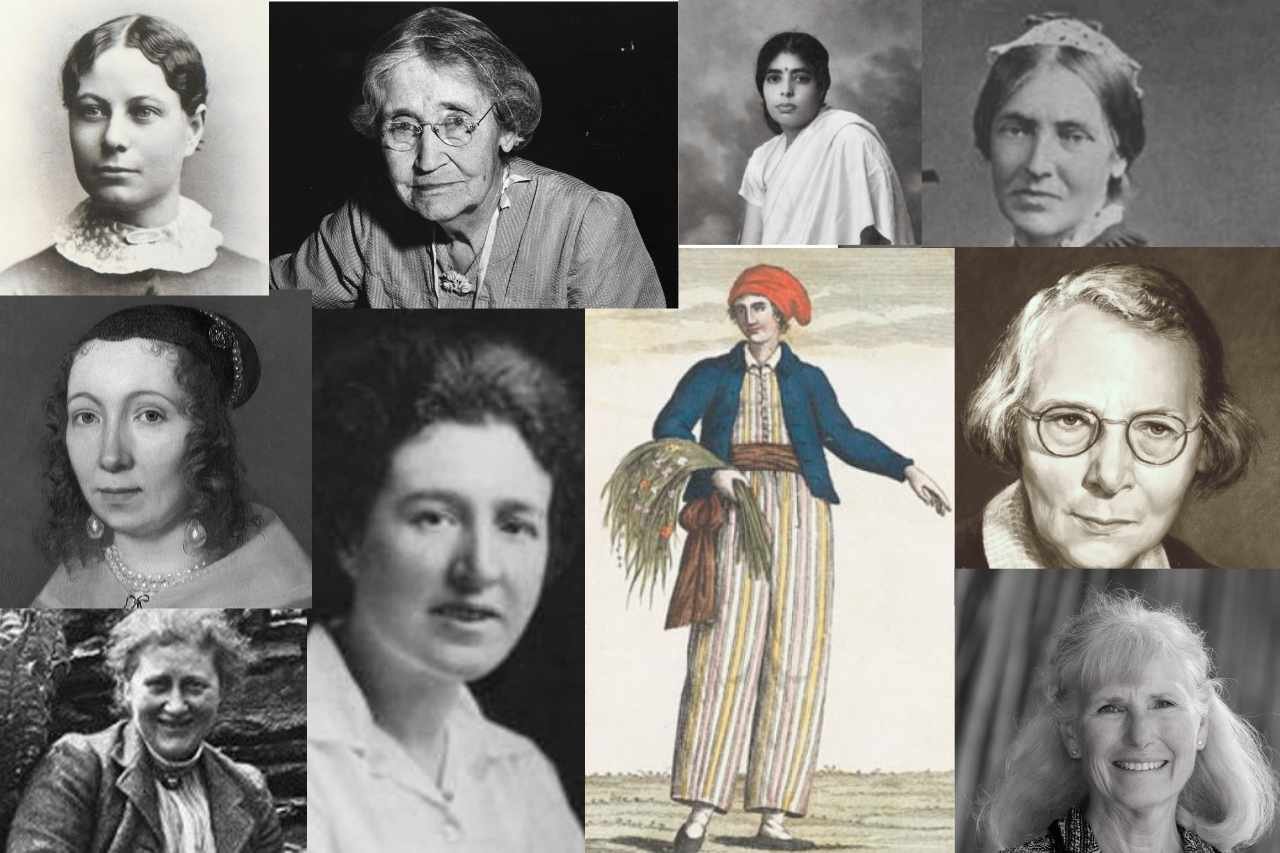
Throughout history, women played key roles in plant exploration, plant taxonomy, and ecological science. The following botanists helped transform how we understand plants and ecosystems.
Maria Sibylla Merian – Pioneer of Scientific Illustration and Ecology
Maria Sibylla Merian stands among the earliest scientific pioneers to study the relationship between plants and insects.
She was born in 1647 in Germany. From a young age, she showed strong curiosity about nature. Instead of accepting traditional beliefs, she raised insects and carefully observed how they interacted with plants.
Eventually, she traveled to Suriname in South America to study tropical ecosystems. This journey was remarkable because few women conducted scientific expeditions during that time.
Her detailed illustrations showed insects feeding on specific plants and moving through life cycles. Because of this work, scientists began to understand the connection between plants and insect development.
Today, ecologists still rely on the concept of plant–insect relationships that Merian helped reveal.
Fun Fact
Maria Sibylla Merian financed her own scientific expedition to South America in 1699, something almost unheard of for a woman at the time.
Jeanne Baret – The First Woman to Circumnavigate the Globe for Botany
Jeanne Baret made history as one of the most daring plant explorers in scientific history.
In 1766, she joined a global expedition led by Louis Antoine de Bougainville. Because women were banned from the voyage, she disguised herself as a man to participate.
During the journey, she worked closely with botanist Philibert Commerson. Together they collected thousands of plant specimens across South America and the Pacific Islands.
Among the plants associated with their expedition is the colorful tropical genus known as Bougainvillea.
Baret’s work expanded botanical knowledge of global plant diversity and helped scientists classify new species.
Agnes Arber – Founder of Modern Plant Morphology
Agnes Arber changed how scientists think about plant structure.
Born in 1879, she developed an interest in botany while studying at Cambridge. Although women could not fully participate in academic life at the time, she continued her research with remarkable determination.
Arber studied plant morphology, which focuses on the shapes and structures of plants. She explored how leaves, stems, and flowers develop and evolve.
Her work helped scientists understand how plant structures adapt to environmental conditions. Even today, researchers studying plant development reference her ideas.
E. K. Janaki Ammal – Pioneer of Plant Genetics
E. K. Janaki Ammal became one of the most influential plant geneticists of the twentieth century.
She grew up in India and later pursued advanced scientific education abroad. Eventually, she specialized in cytogenetics, the study of chromosomes within cells.
Her research played a major role in improving sugarcane crops through hybridization. By studying genetic variation in plants, she helped scientists develop stronger and more productive crop varieties.
Today, agricultural scientists still build on genetic principles that Ammal helped establish.
Katherine Esau – Authority in Plant Anatomy
Katherine Esau transformed the study of plant anatomy.
After immigrating to the United States, she focused on understanding how plant tissues function internally. She examined structures such as vascular systems, which transport water and nutrients through plants.
Esau wrote influential textbooks that trained generations of botanists.
Because of her work, scientists gained a clearer picture of how plants grow, transport nutrients, and respond to environmental stress.
Ynes Mexia – Legendary Plant Collector
Ynes Mexia proves that it is never too late to pursue science.
She began her botanical career in her fifties. However, she quickly became one of the most successful plant collectors of her era.
Mexia conducted expeditions across Mexico, South America, and Alaska. During her travels, she collected more than 140,000 plant specimens.
Her discoveries included several previously unknown species. Today, her collections remain essential for plant taxonomy research.
Fun Fact
Ynes Mexia once collected over 50,000 plant specimens during a single expedition to South America.
Wangari Maathai – Botany Meets Environmental Activism
Wangari Maathai connected botany with environmental justice.
In 1977, she founded the Green Belt Movement in Kenya. The movement encouraged rural communities to plant trees to restore degraded land.
Millions of trees were planted through this initiative. At the same time, the project empowered women and improved local ecosystems.
Maathai later received the Nobel Peace Prize for her environmental leadership.
Anna Atkins – Pioneer of Botanical Photography
Anna Atkins introduced photography into scientific plant documentation.
In the mid-1800s, she used cyanotype printing techniques to create detailed images of algae and other plant specimens.
Her book Photographs of British Algae became one of the earliest photography-based scientific publications.
Because of her work, photography eventually became an important tool in botanical research.
Marianne North – Explorer of Global Plant Diversity
Marianne North traveled across continents documenting plant life.
She visited South America, Asia, Africa, and Australia. During these journeys, she painted hundreds of plants and ecosystems.
Her artwork captured many species that scientists had rarely seen before.
Today, her paintings still help researchers understand historical plant distributions.
Alice Eastwood – Protector of Botanical Collections
Alice Eastwood made a heroic effort to protect plant specimens during the 1906 San Francisco Earthquake.
When the earthquake struck, she rushed into the damaged building that housed botanical collections. She saved hundreds of important specimens before the fire destroyed the structure.
Because of her bravery, valuable plant records survived for future research.
Beatrix Potter – Early Researcher of Fungi
Many people know Beatrix Potter as the author of children’s books. However, she also conducted serious scientific research.
She studied fungi and created detailed illustrations of mushroom species. Her work helped scientists understand fungal reproduction.
Mary Agnes Chase – Global Expert on Grasses
Mary Agnes Chase became one of the world’s leading experts on grass species.
She traveled extensively to collect plant samples and document grass diversity. Her research improved scientific understanding of agricultural plants.
Irene Manton – Pioneer of Plant Cell Biology
Irene Manton used advanced microscopy techniques to study plant cells.
Her work revealed new details about cellular structures and plant reproduction.
Ruth Patrick – Innovator in Freshwater Ecology
Ruth Patrick transformed ecological research on freshwater ecosystems.
She developed methods for studying algae and microorganisms in rivers. These methods helped scientists evaluate water quality.
Pamela Soltis – Modern Leader in Plant Evolution
Pamela Soltis represents the next generation of female botanists.
Her research focuses on plant genomics and evolutionary biology. By studying plant DNA, she helps scientists understand how species evolve and adapt to environmental change.
How Female Botanists Transformed Plant Taxonomy and Classification
Plant taxonomy helps scientists organize the enormous diversity of plant life on Earth.
Female botanists contributed heavily to this field. Through plant collecting, illustration, and herbarium work, they helped scientists identify and classify species.
For example, plant collectors like Ynes Mexia gathered thousands of specimens from remote regions. Meanwhile, scientific illustrators like Maria Sibylla Merian created accurate visual records of plant characteristics.
Because of these efforts, botanists gained the information needed to describe new species and refine classification systems.
Today, researchers still rely on herbarium collections created by these early scientists.
The Role of Women in Conservation and Environmental Science
Botany does more than classify plants. It also helps protect ecosystems.
Many female botanists recognized early signs of environmental damage and advocated for conservation.
For instance, Wangari Maathai connected tree planting with community empowerment and environmental restoration.
Meanwhile, ecological researchers studied plant communities to understand biodiversity and ecosystem health.
Because of their work, modern conservation science gained powerful tools for protecting forests, wetlands, and grasslands.
Modern Women in Botany Continuing the Legacy
Today, women in plant biology lead research in genetics, climate science, ecology, and agriculture.
Scientists study plant genomes to improve crops, investigate plant responses to climate change, and protect endangered ecosystems.
In addition, more women now pursue careers in science than ever before.
This growing diversity strengthens scientific research. When different perspectives enter the field, scientists ask new questions and discover new solutions.
The legacy of historic female botanists continues through these modern researchers.
Why Studying Historic Women Botanists Matters Today
Learning about influential women in science does more than correct historical records.
First, it provides a more accurate understanding of how scientific knowledge develops. Science rarely moves forward because of one person alone. Instead, discoveries grow through collaboration and shared curiosity.
Second, representation matters. When young students see scientists who look like them, they can imagine themselves entering the field.
Finally, recognizing overlooked pioneers reminds us that great ideas can come from unexpected places.
Frequently Asked Questions About Female Botanists
Who was the first female botanist?
One of the earliest widely recognized female botanists was Maria Sibylla Merian. In the seventeenth century, she documented plant–insect relationships and created detailed scientific illustrations that helped establish ecological research.
What contributions did women make to botany?
Women contributed to plant taxonomy, scientific illustration, plant genetics, ecological research, and conservation science. Their work expanded knowledge of biodiversity and helped scientists understand how plants interact with ecosystems.
Why were female botanists historically overlooked?
Many women faced barriers to education, fieldwork, and scientific publishing. As a result, their research sometimes appeared under male colleagues’ names or received limited recognition.
Are there famous female botanists today?
Yes. Modern researchers such as Pamela Soltis lead major studies in plant genetics, plant evolution, and biodiversity science.
How did women influence plant taxonomy?
Women collected plant specimens, built herbarium archives, and produced detailed botanical illustrations. These resources allowed scientists to identify new species and refine plant classification systems.
The Bottom Line
The history of botany contains far more diversity and creativity than many people realize. Female botanists explored distant ecosystems, studied plant structures, developed crop genetics, and helped launch modern conservation movements.
Although many of these scientists worked in difficult circumstances, their discoveries shaped plant biology, ecology, and environmental science.
When you study these pioneers, you gain a deeper understanding of how scientific knowledge grows. Curiosity, persistence, and collaboration drive discovery—no matter who carries out the research.
The legacy of these pioneering women in plant science continues to influence modern research and environmental protection efforts around the world.
If you enjoyed learning about these remarkable female botanists, consider sharing this article or exploring more stories about the scientists who shaped our understanding of the natural world.