








Celery might not always steal the spotlight, but once you really get to know it, this humble plant earns its place as a staple in both the garden and the kitchen. With its crisp texture, refreshing taste, and impressive health benefits, celery is far more than just a garnish on a plate or a vehicle for peanut butter.
Whether you’re thinking about growing celery at home, adding it to your meals, or simply learning more about it, you’re in the right place. This Plant Compendium entry will walk you through everything you need to know—from its history and plant biology to growing tips, culinary uses, and health benefits—all explained in a clear, friendly way.
History of Celery
Celery has a long and fascinating history that stretches back thousands of years. Originally, wild celery grew in marshy areas across parts of Europe, North Africa, and western Asia. Early varieties were much more bitter and less tender than the celery you find in stores today.
Ancient civilizations, including the Egyptians, Greeks, and Romans, valued celery for both medicinal and symbolic purposes. It was used in rituals, worn as garlands, and believed to have healing properties. In fact, celery leaves were once associated with victory and honor.
It wasn’t until the 17th century that celery began to be cultivated as a food crop in Italy. Farmers selectively bred it to reduce bitterness and improve texture. Over time, it evolved into the crunchy, mild-flavored vegetable we recognize today.
By the 19th century, celery had become popular in Europe and North America. It was even considered a luxury food at one point, served in special glass vases to keep the stalks crisp and upright on dining tables.
Botanical Description
Scientific name: Apium graveolens L.
Family: Apiaceae
Celery is a biennial plant typically grown as an annual for its edible stalks. It belongs to the Apiaceae family, which also includes carrots, parsley, and fennel.
Roots: Celery has a shallow, fibrous root system. These roots spread out rather than growing deep, which is why consistent watering is so important. The roots are efficient at absorbing nutrients but can dry out quickly if the soil isn’t kept moist.
What is Celeriac? (Apium graveolens var. rapaceum (Mill.) DC.)
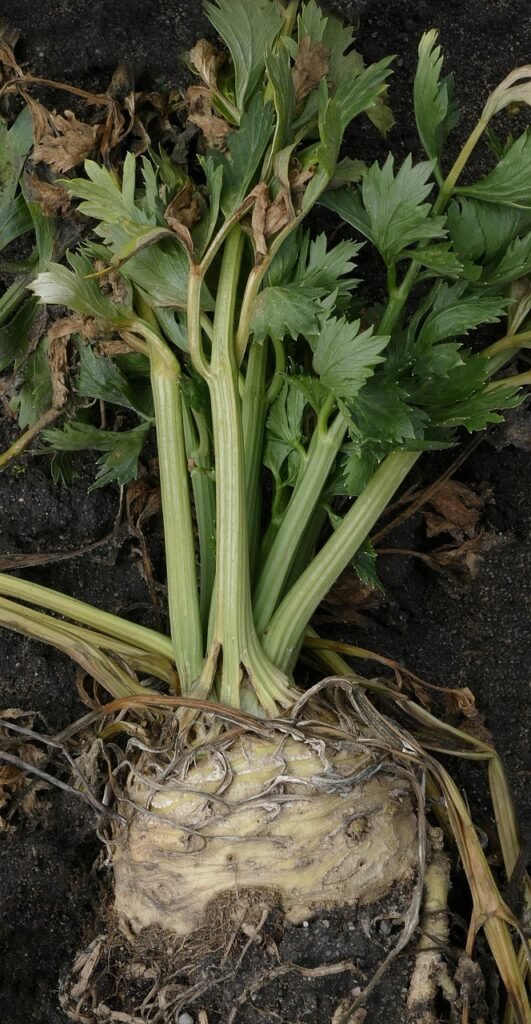
Celeriac, also known as celery root, is a cultivated variety of Apium graveolens grown primarily for its enlarged, bulbous hypocotyl and root rather than its stalks. Unlike the familiar crisp green stems of common celery (Apium graveolens), celeriac develops a rough, knobby, beige-colored root with a dense, white interior.
Botanically, celeriac belongs to the same species as celery but has been selectively bred to emphasize underground storage tissue. The swollen structure is not a true root alone but a combination of stem base and root tissue, adapted for nutrient storage.
Celeriac has a subtle, earthy flavor with mild celery notes and is widely used in European cuisine. It can be eaten raw (often grated into salads such as remoulade) or cooked in soups, purées, and roasted dishes. Its long growing season and tolerance for cool climates make it particularly suited to temperate regions.
This variety illustrates the diversity within Apium graveolens, where selective cultivation has produced distinct forms optimized for either stalk (celery) or root (celeriac) production.
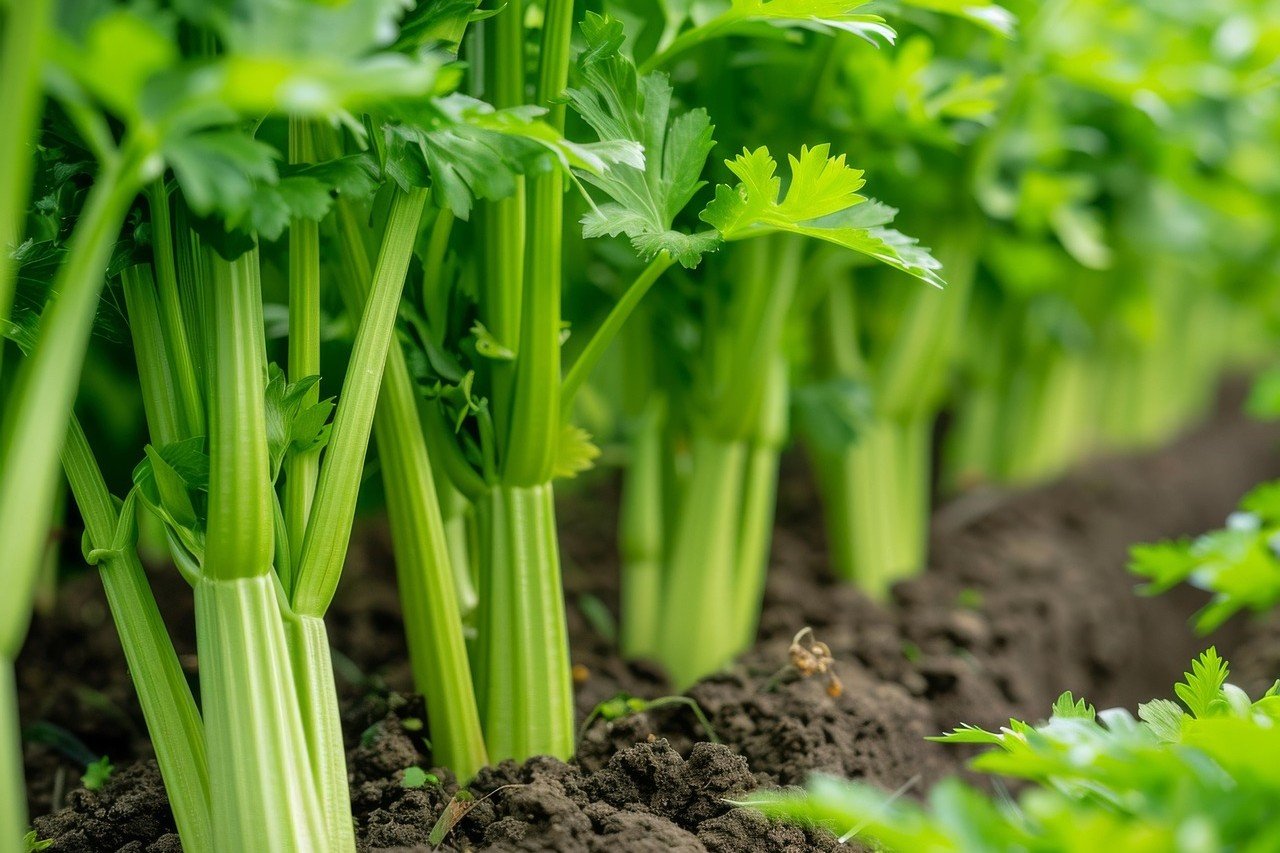
Stems: What we usually call celery “stalks” are actually thickened leaf stems called petioles. These are crisp, juicy, and pale green. In cultivated varieties, the stems are bred to be tender and less stringy than their wild counterparts.
Leaves: Celery leaves are bright to dark green and have a feathery, almost fern-like appearance. They are highly aromatic and often overlooked, but they’re edible and full of flavor—similar to parsley but slightly more bitter.
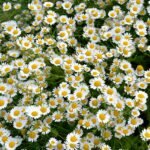
Flowers: If left to grow into its second year, celery produces small, white flowers arranged in umbrella-shaped clusters called umbels. These are typical of plants in the carrot family.
Fruits: The fruits are tiny, dry structures that contain the seeds. They are not typically eaten in this form but are important for seed production.
Seeds: Celery seeds are small, brown, and strongly flavored. They are often used as a spice and have a more concentrated celery taste than the stalks themselves.
Growing Instructions
Here’s everything you need to know to get celery off to a great start:
Sunlight: Celery grows best in full sun, meaning at least 6 hours of direct sunlight per day. However, in very hot climates, it can benefit from partial shade to prevent stress and bitterness.
Soil: Rich, well-draining soil is key. Celery is a heavy feeder, so you’ll want soil that’s packed with organic matter like compost. Aim for a slightly acidic to neutral pH.
Temperature: Celery prefers cool weather. Ideal temperatures range between 15°C and 21°C (60°F to 70°F). Too much heat can cause the plant to become tough and bitter.
Watering: Consistent moisture is essential. Celery needs regular watering to stay tender and crisp. If the soil dries out, the stalks can become stringy and lose their quality.
Spacing: Space plants about 20–30 cm (8–12 inches) apart. This gives them enough room to develop full, healthy stalks.
Pruning: There’s no heavy pruning required, but you can remove damaged or yellowing leaves to keep the plant healthy and encourage growth.
Support: Celery generally doesn’t need support, but in windy areas, a light staking system can help keep plants upright.
Life Cycle: Celery follows a typical life cycle consisting of:
- Germination: Seeds take 2–3 weeks to sprout and require light to germinate.
- Vegetative Growth: The plant focuses on developing stalks and leaves. This is the stage you’ll harvest from.
- Flowering: In its second year, celery produces flowers if not harvested.
- Fruit Set: Flowers develop into seed-containing fruits.
- End of Season: The plant completes its life cycle after seed production.
Harvesting and Foraging
Harvesting
You can harvest celery in two main ways:
- Cut-and-come-again: Remove outer stalks as needed, allowing the inner stalks to continue growing.
- Whole plant harvest: Cut the entire plant at the base when it reaches full size.
For the best flavor and texture, harvest celery when the stalks are firm, crisp, and about 20–30 cm tall.
Foraging
Wild celery does exist, but foraging is not recommended unless you are experienced. It can be confused with toxic look-alikes in the same plant family. If you’re not absolutely certain, it’s safer to stick with cultivated varieties.
Plant Companions
Celery benefits from being planted near certain crops. Good companion plants include:
These plants can help improve soil conditions or deter pests. Avoid planting celery near crops that compete heavily for nutrients.
Common Pests and Diseases
Like many garden plants, celery can face a few challenges:
Common pests:
- Aphids
- Slugs and snails
- Leaf miners
Common diseases:
- Leaf blight
- Fusarium wilt
- Pink rot
To manage these issues:
- Keep the garden clean and well-spaced
- Use mulch to control moisture
- Rotate crops each season
Shopping Tips
When buying celery, whether at a grocery store or farmers’ market, look for:
- Firm, tightly packed stalks
- Bright green color
- Fresh, unwilted leaves
Avoid celery that looks limp, has brown spots, or feels rubbery. These are signs that it’s past its prime.
Storage
To keep celery fresh and crisp:
- Store it in the refrigerator
- Wrap it in aluminum foil to maintain moisture
- Keep it in the crisper drawer
Properly stored, celery can last up to two weeks. You can also chop and freeze it for later use, especially for soups and stews.
Culinary Uses
Celery is one of those ingredients that quietly does a lot of heavy lifting in the kitchen. It may not always be the star of the dish, but it’s often the reason everything tastes better. Its crisp texture, mild bitterness, and fresh, herbal notes make it incredibly versatile.
Once you start paying attention, you’ll notice celery shows up in cuisines all over the world—and in far more ways than just raw sticks on a snack tray.
Raw Uses
Raw celery is where you really experience its signature crunch and refreshing bite. It has a clean, slightly peppery flavor that works beautifully in fresh dishes.
You can use raw celery in:
- Salads: Thinly sliced celery adds crunch and brightness to green salads, grain bowls, and pasta salads. Try pairing it with apples, walnuts, and a light vinaigrette for a classic combination.
- Slaws: Celery brings a refreshing contrast to heavier slaws made with cabbage or carrots.
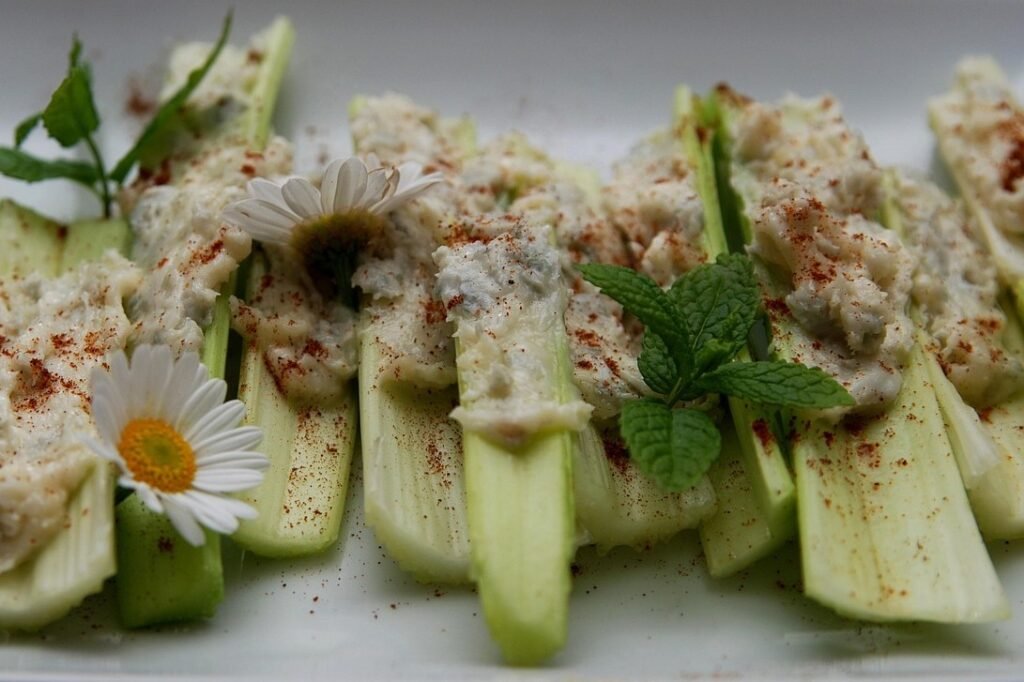
- Snacking: One of the simplest and most popular ways to enjoy celery. Pair it with:
- Peanut butter or almond butter
- Cream cheese
- Hummus or bean dips
Celery is also a key ingredient in classic dishes like Waldorf salad, where its crunch balances sweet fruit and creamy dressing.
Don’t forget the leaves—they’re often overlooked but full of flavor. You can chop them and use them like herbs to add a slightly bitter, parsley-like note.
Cooked Uses
When you cook celery, something interesting happens: its sharpness softens, and it develops a gentle sweetness. The texture becomes tender, and the flavor blends more deeply into dishes.
This is where celery really becomes a foundational ingredient.
Flavor Bases (The Secret Backbone of Cooking)
Celery is part of several classic vegetable bases used around the world:
- Mirepoix (French cooking): celery + onion + carrot
- Soffritto (Italian cooking): celery + onion + carrot, often cooked slowly in olive oil
- Cajun/Creole “Holy Trinity”: celery + onion + bell pepper
These combinations are used to build flavor at the very beginning of cooking. When you sauté celery with aromatics, it releases natural sugars and compounds that create depth and richness.
If you’ve ever wondered why soups, stews, and sauces taste so comforting, celery is often part of the answer.
Soups and Stews
Celery is essential in:
- Chicken soup
- Vegetable soup
- Beef stew
- Lentil and bean soups
It adds a subtle savory note that ties all the ingredients together. Even if you don’t notice it directly, you’d miss it if it weren’t there.
Stir-Fries and Sautéed Dishes
Celery holds its shape well when cooked quickly, which makes it great for stir-fries. It absorbs sauces while still keeping a bit of crunch.
Try it with:
In Chinese cooking, celery is often used this way, valued for both texture and freshness.
Stuffings and Roasted Dishes
Celery adds moisture and flavor to:
- Bread stuffing
- Rice-based dishes
- Roasted vegetable mixes
When roasted, celery becomes softer and slightly caramelized, especially when paired with olive oil and herbs.
Celery in Global Cuisine
Celery shows up in many culinary traditions, sometimes in ways you might not expect.
- Mediterranean cooking: Used in stews, braises, and seafood dishes
- Asian cuisine: Common in stir-fries and light, savory dishes
- North American cooking: A staple in soups, stuffing, and holiday meals
It’s one of those ingredients that crosses cultural boundaries easily because it blends so well with other flavors.
Flavor Pairings
Celery has a mild but distinct flavor that pairs well with both rich and fresh ingredients.
Some of its best companions include:
- Proteins: chicken, turkey, tuna, eggs
- Vegetables: carrots, onions, potatoes, fennel
- Fruits: apples, grapes, citrus
- Herbs: parsley, thyme, dill
- Fats: butter, olive oil, creamy dressings
This flexibility is part of what makes celery so useful—you can add it to almost anything without overwhelming the dish.
Celery Seeds and Seasoning
Celery seeds are small but powerful. They have a concentrated, slightly bitter, earthy flavor that’s much stronger than fresh celery.
You’ll often find them in:
- Pickling spice blends
- Salad dressings (especially coleslaw)
- Dry rubs for meats
- Bloody Mary seasoning mixes
Ground celery seed is also used to make celery salt, a classic seasoning that adds a savory kick to dishes.
Juicing and Smoothies
Celery juice has gained a lot of attention in recent years, and while some claims are exaggerated, there’s no denying it’s refreshing and hydrating.
Celery juice has a clean, slightly salty taste that works well on its own or blended with:
- Green apple
- Lemon or lime
- Cucumber
- Ginger
In smoothies, celery adds nutrients without overpowering sweeter ingredients. It’s a great way to boost the nutritional value of your drink while keeping it light.
Celeriac
Celeriac is a versatile root vegetable valued for its subtle, nutty flavor with characteristic celery undertones. Its firm, dense flesh holds up well to a variety of cooking methods, making it a staple in many traditional and modern cuisines.
Raw celeriac is often peeled and grated into salads, most notably the classic French céleri rémoulade, where it is dressed with a mustard-based mayonnaise. When cooked, its flavor becomes milder and slightly sweet, lending itself well to purées, soups, and stews. It can be boiled and mashed on its own or combined with potatoes for a more complex flavor profile.
Roasting celeriac brings out its natural sweetness and adds a caramelized depth, while slicing it into cubes or steaks allows it to be used as a hearty, low-carbohydrate alternative in many dishes. It also performs well when braised or added to gratins.
Because of its ability to absorb surrounding flavors, celeriac pairs particularly well with herbs, cream, butter, and aromatic vegetables. Its culinary flexibility and long storage life have made it a valued ingredient across European kitchens, especially in colder seasons.
Creative and Modern Uses
If you want to go beyond the basics, celery can be surprisingly creative in the kitchen:
- Celery slaw with citrus dressing for a bright, crunchy side
- Braised celery cooked slowly in broth and butter until tender
- Celery pesto using leaves instead of basil
- Infused broths where celery adds depth to homemade stock
You can even use celery leaves as a finishing garnish, much like fresh herbs, to add a burst of flavor right before serving.
The real magic of celery is how it enhances everything around it. It’s not always the main character—but it’s often the reason the dish works.
When you start thinking of celery as more than just a raw snack, you open the door to a whole range of flavors and textures. Whether it’s adding crunch to a salad, depth to a soup, or freshness to a juice, celery is one of the most quietly powerful ingredients you can keep in your kitchen.
Health Benefits
Celery is often described as a “low-calorie” food, but that doesn’t mean it’s low in value. In fact, it’s packed with nutrients that can support your overall health.
Hydration
Celery is about 95% water, making it a great choice for staying hydrated, especially during warmer months.
Vitamins and Minerals
It contains:
- Vitamin K (important for blood clotting)
- Vitamin C (supports the immune system)
- Potassium (helps regulate blood pressure)
Antioxidants
Celery is rich in antioxidants, which help protect your cells from damage caused by free radicals. These compounds may play a role in reducing inflammation.
Digestive Health
The fiber in celery supports healthy digestion. It helps keep things moving in your gut and can contribute to a balanced digestive system.
Heart Health
Celery contains compounds that may help lower blood pressure and support heart health. While it’s not a cure-all, it can be a helpful part of a balanced diet.
Weight Management
Because it’s low in calories and high in water and fiber, celery can help you feel full without adding a lot of calories. That makes it a useful snack if you’re trying to manage your weight.
Toxicity and Safety
Celery is generally safe for most people to eat, but there are a few things to keep in mind:
- Allergies: Some people may be allergic to celery, especially in certain regions.
- Pesticide residue: Celery can sometimes carry pesticide residues, so washing it thoroughly is important.
- Wild look-alikes: As mentioned earlier, wild celery can be confused with toxic plants, so avoid foraging unless you’re experienced.
Environmental Impact
Celery farming has both positive and negative environmental aspects.
Water Use: Celery requires a lot of water to grow well. In regions where water is scarce, this can be a concern.
Soil Health: Because it’s a heavy feeder, celery can deplete soil nutrients if not managed properly. Crop rotation and composting can help maintain soil health.
Local Growing Benefits: Growing celery at home or buying from local farmers can reduce transportation emissions and support sustainable practices.
Organic Options: Choosing organic celery can reduce exposure to synthetic pesticides and may be better for the environment, depending on farming practices.