



If you’ve ever tasted a true huckleberry, you know why people talk about them with almost mythical admiration. These tiny berries pack a surprising punch of flavor—sweet, tart, and deeply aromatic all at once. They’ve inspired pies, jams, folklore, and even idioms like “a huckleberry above a persimmon,” meaning something especially good.
But beyond their delicious taste, huckleberries are fascinating plants. They grow wild across North America, especially in forests, mountains, and cool northern regions. For centuries, Indigenous communities harvested them as a vital seasonal food. Today, they remain a favorite for foragers, gardeners, and chefs alike.
The name huckleberry actually refers to several closely related species, mostly in the genera Vaccinium and Gaylussacia. These are cousins of blueberries and cranberries, which explains their similar look and taste. Yet true huckleberries have their own identity—often with darker berries, stronger flavor, and seeds that give them a slightly crunchy texture.
In this Plant Compendium entry, we’ll explore everything you need to know about huckleberries. We will be focusing on the Vaccinium membranaceum (mountain huckleberry) on this entry, but will ensure to talk briefly about other species too to avoid confusion. in addition, you’ll learn how they grow, how to cultivate them in your own garden, how to harvest and cook with them, and why these little berries have played such an important role in both ecology and culture.
History of Huckleberry
The story of huckleberries in North America stretches back thousands of years. Long before modern agriculture, Indigenous peoples relied on wild berries as important seasonal foods. Huckleberries were especially valued in the forests and mountains of the Pacific Northwest and the northern United States.
Many tribes—including the Salish, Nez Perce, and Kootenai—organized seasonal harvest trips to traditional berry grounds. Families would travel together to gather the fruit during peak ripeness. These gatherings were more than simple food collection; they were cultural events tied to ceremony, storytelling, and community life.
Huckleberries were eaten fresh but were also preserved for winter. Traditional preservation methods included:
- Sun drying the berries
- Pressing them into cakes
- Mixing them with dried meat and fat to make pemmican
- Storing them in baskets lined with leaves
These preserved foods provided valuable nutrition during the colder months when fresh plant foods were scarce.
European settlers quickly fell in love with the berries as well. Early American cookbooks from the 18th and 19th centuries often mention huckleberry pies, which were staples in rural kitchens. In fact, before cultivated blueberries became widespread in the early 20th century, many “blueberry pies” were actually made with wild huckleberries.
The plant also entered American folklore. The phrase “I’m your huckleberry,” made famous by the Old West, meant something like “I’m just the person for the job.” Meanwhile, Huckleberry Finn, the beloved character from Mark Twain’s novel Adventures of Huckleberry Finn, helped cement the berry’s place in American cultural imagination.
Today, huckleberries remain mostly wild-harvested. Unlike blueberries, they are difficult to cultivate commercially. This makes them a prized seasonal fruit, especially in regions like Montana, Idaho, Oregon, and British Columbia, where summer huckleberry festivals celebrate the harvest each year.
Botanical Description
Scientific name: Vaccinium membranaceum Douglas ex Torr.
Family: Ericaceae
Plants popularly known as huckleberries belong primarily to two plant genera: Vaccinium (true huckleberries and blueberries) and Gaylussacia (often called black huckleberries). While they differ slightly, their general appearance and growth habits are quite similar.
There are several species with this same popular name:
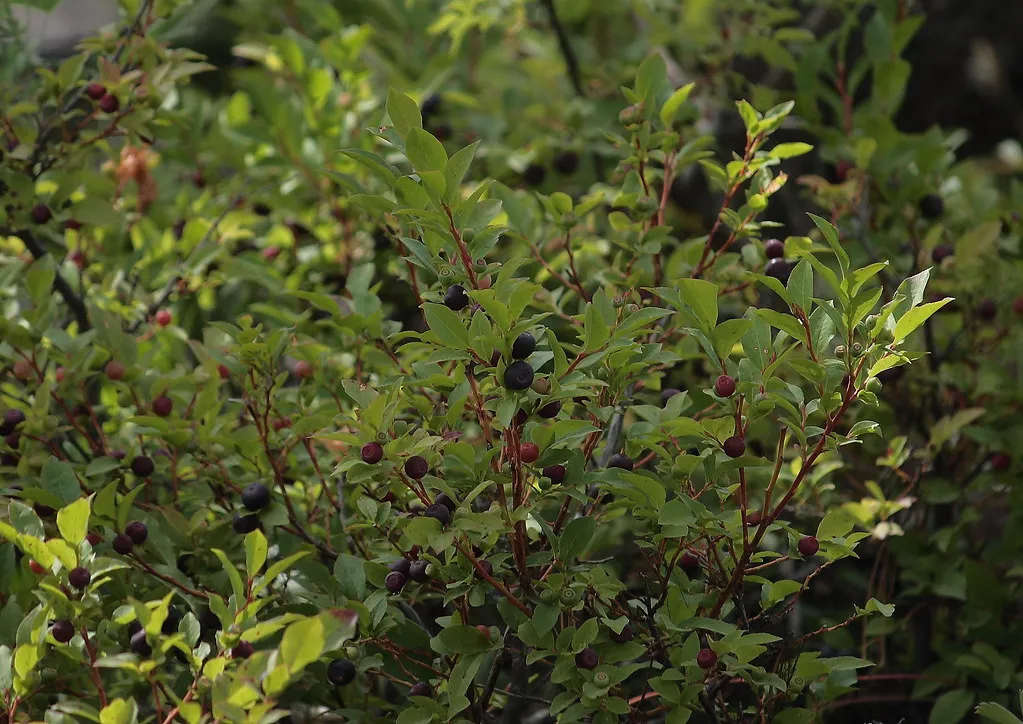
- Mountain Huckleberry (Vaccinium membranaceum): Found in Canada (British Columbia, Alberta, Ontario, and the territories), these purple-black berries are prized for their sweet-acidic flavor. This is the one we will be talking about here.
- Red Huckleberry (Vaccinium parvifolium): Common in British Columbia’s coastal coniferous forests, known for bright red berries.
- Black Huckleberry (Gaylussacia baccata): Found in eastern Canada, particularly in Ontario.
- Velvetleaf Huckleberry (Vaccinium myrtilloides): Sometimes called “Canadian blueberry,” a sweet low-bush species native across Canada.
Specifically for the mountain huckleberry, the botanical description is as follows:
Roots: Huckleberry plants have shallow, fibrous root systems. These roots spread horizontally through the top layers of soil rather than growing deep underground. Because of this, the plants rely heavily on moist soil, organic matter and symbiotic fungi known as mycorrhizae. These fungal partnerships help the plant absorb nutrients from acidic forest soils.
Stems: Most huckleberries grow as small shrubs ranging from 1 to 6 feet tall depending on species. The stems are usually slender, woody, and branching. Some species form dense colonies by sending up new shoots from underground stems called rhizomes. Young stems may appear green or reddish, while older wood becomes brown or gray.
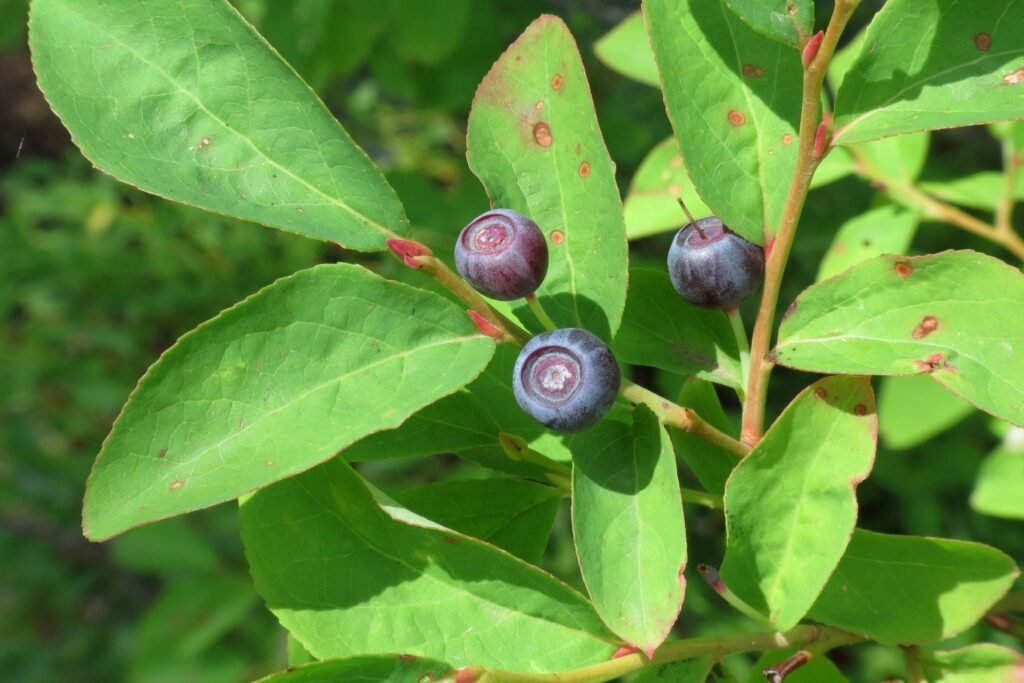
Leaves: Huckleberry leaves are generally oval or elliptical, smooth-edged or finely toothed, and alternately arranged along the stems. They are typically bright green during the growing season and may turn beautiful shades of red, orange, or yellow in autumn. Leaves are relatively small, usually 1–3 inches long.
Flowers: Huckleberry flowers appear in spring, usually between April and June depending on climate. The blossoms are small and bell-shaped, similar to blueberry flowers. They often appear white, pale pink or light greenish. These flowers grow singly or in small clusters along the branches. Their shape makes them especially attractive to native pollinators, including bees and hummingbirds.
Fruits: The fruits are the part everyone cares about. Huckleberries are small round berries, typically 5–10 mm in diameter and dark purple, blue, red, or black depending on species. Unlike cultivated blueberries, many huckleberries contain noticeable seeds that create a slight crunch when eaten. Flavor is where they really shine. Compared to blueberries, huckleberries are usually more tart, more aromatic and intensely fruity. They ripen in mid to late summer.
Seeds: Inside each berry are numerous tiny seeds. These seeds pass through animals easily, which helps spread the plant across forests and mountain slopes. Birds, bears, and small mammals are especially important for seed dispersal.
Growing Instructions
Growing huckleberries in the garden can be rewarding, but it does require patience. These plants are famously picky about their conditions.
Here’s everything you need to know to get huckleberries off to a great start:
Sunlight: Huckleberries grow best in partial shade to full sun. In wild forests they often receive filtered light through tree canopies. In gardens, they benefit from morning sun and light afternoon shade. In cooler climates, they can tolerate full sun if soil moisture is consistent.
Soil: Soil is the most important factor for successful huckleberry cultivation. They prefer acidic soil (pH 4.5–5.5), rich organic matter, and excellent drainage. Adding peat moss, pine needles, or composted leaf mold can help mimic their natural woodland environment.
Temperature: Most species prefer cool to moderate climates. They grow particularly well in regions with mild summers, cold winters, and reliable snow cover. Hardiness varies by species, but many tolerate temperatures down to -30°C (-22°F).
Watering: Consistent moisture is important, especially during flowering and fruit development. Water deeply but avoid waterlogged soil. Mulching with bark or leaves helps maintain moisture and acidity.
Spacing: Spacing depends on the species, but generally 3–5 feet apart for most shrubs and more space for spreading varieties. Good airflow helps reduce disease risk.
Pruning: Huckleberries require minimal pruning. You mainly remove dead wood, weak or crossing branches and very old stems. Pruning encourages new growth, which produces better fruit.
Support: Most huckleberries are self-supporting shrubs and do not require trellising or staking.
Life Cycle: Huckleberry follows a typical life cycle consisting of:
- Germination: Seeds germinate slowly and may require cold stratification to mimic winter conditions. Many plants in the wild spread vegetatively rather than from seed.
- Vegetative Growth: In spring, new shoots and leaves emerge as temperatures rise. The plant invests energy into foliage and root development.
- Flowering: Bell-shaped flowers appear in late spring. Pollinators visit the blossoms, transferring pollen between plants.
- Fruit Set: After pollination, berries begin forming. They gradually swell and change color as sugars develop.
- End of Season: By late summer or early fall, fruiting ends. The plant begins preparing for dormancy as leaves change color and eventually drop.
Harvesting and Foraging
Harvesting
If you’re growing huckleberries in your garden, harvesting is simple but requires timing. Berries ripen mid to late summer, depending on the region. They are ready when they:
- Turn deep purple, blue, or black
- Detach easily from the stem
- Taste sweet and slightly tart
Because berries ripen gradually, harvesting usually happens over several weeks. Gently roll berries off the branch rather than pulling hard to avoid damaging the plant.
Foraging
For many people, foraging wild huckleberries is the true experience. They commonly grow in:
- Mountain forests
- Clearings
- Burned areas
- Woodland edges
Look for shrubs in acidic soils under pine or fir forests.
A few important foraging tips:
- Harvest responsibly and leave berries for wildlife
- Avoid overharvesting a single patch
- Check local regulations, especially in parks
- Bring containers that allow airflow
In places like the Rocky Mountains and Pacific Northwest, entire summer traditions revolve around the annual huckleberry harvest.
Plant Companions
Huckleberries grow best with plants that share their love for acidic soil and woodland conditions.
Good companion plants include:
- Blueberries
- Cranberries
- Rhododendrons
- Azaleas
- Ferns
- Wild strawberries
These plants thrive in similar soil conditions and help create a natural forest garden environment.
Common Pests and Diseases
Huckleberries are relatively hardy but still face some common challenges.
Possible pests include:
- Aphids
- Leafhoppers
- Berry maggots
- Caterpillars
Birds are also enthusiastic berry eaters.
Common diseases include:
- Powdery mildew
- Leaf spot
- Root rot (in poorly drained soil)
Maintaining healthy soil and good airflow is the best prevention.
Shopping Tips
Because huckleberries are difficult to cultivate commercially, fresh berries can be hard to find.
You may encounter them:
- At farmers markets
- At roadside stands in mountain regions
- In specialty grocery stores
- Frozen in regional markets
When buying fresh huckleberries, look for:
- Firm berries
- Deep, rich color
- No mold or shriveling
Frozen berries are often the most reliable option outside huckleberry-growing regions.
Storage
Fresh huckleberries are delicate and should be handled carefully.
For best storage:
- Refrigerate immediately
- Keep them dry
- Use within 3–5 days
Do not wash berries until just before eating.
Huckleberries freeze extremely well. Spread them in a single layer on a baking sheet before transferring to freezer bags. This keeps them from clumping together. Frozen berries maintain their flavor for up to a year.
Culinary Uses
If you ask people why they love huckleberries, the answer usually comes down to flavor.
These berries are widely considered one of the most flavorful wild fruits in North America. Their taste sits somewhere between blueberry, blackberry, and cranberry—with a deeper, more complex aroma.
Because of this bold flavor, they shine in both simple and elaborate recipes.
Fresh Eating
Fresh huckleberries are fantastic eaten straight from the bush. They are small but intensely flavored, making them perfect for:
- Snacking
- Sprinkling over cereal or yogurt
- Tossing into fruit salads
- Garnishing desserts
Baking
Huckleberries truly excel in baked goods. Classic recipes include:
- Huckleberry pie
- Muffins
- Pancakes
- Cobblers
- Crumbles
- Scones
The berries hold their shape during baking and release a beautiful purple juice.
Jams and Preserves
Because of their balance of sweetness and acidity, huckleberries make excellent preserves. Popular options include:
- Huckleberry jam
- Jelly
- Syrup
- Fruit butter
Many people consider huckleberry jam superior to blueberry jam due to its deeper flavor.
Sauces and Savory Dishes
Chefs increasingly use huckleberries in savory cooking. Their tartness pairs beautifully with rich foods like:
- Duck
- Venison
- Pork
- Game birds
A simple huckleberry reduction can transform a dish.
Beverages
Huckleberries also make wonderful drinks, including:
- Smoothies
- Lemonades
- Cocktails
- Liqueurs
- Wine
In the northern United States and Canada, huckleberry milkshakes are a regional favorite.
Frozen Desserts
The berries add vibrant color and flavor to:
- Ice cream
- Sorbet
- Gelato
- Frozen yogurt
Their natural acidity keeps frozen desserts from tasting overly sweet.
Health Benefits
Like many dark berries, huckleberries are nutritional powerhouses. They contain a wide range of beneficial plant compounds that support overall health.
Rich in Antioxidants
Huckleberries are particularly high in anthocyanins, the pigments that give them their deep purple color.
These compounds act as antioxidants, helping the body combat oxidative stress linked to aging and chronic disease.
Supports Heart Health
Research suggests that berry consumption may help support cardiovascular health by:
- Improving blood vessel function
- Reducing inflammation
- Supporting healthy cholesterol levels
Good Source of Vitamins
Huckleberries provide several essential nutrients, including:
- Vitamin C
- Vitamin A
- Vitamin K
- Manganese
These nutrients support immune health, bone strength, and metabolic function.
Fiber for Digestive Health
Like many berries, huckleberries contain dietary fiber, which helps maintain healthy digestion and supports beneficial gut bacteria.
Potential Brain Benefits
Some research suggests that anthocyanin-rich berries may help support cognitive health, particularly as we age.
While huckleberries haven’t been studied as extensively as blueberries, their similar chemistry suggests comparable benefits.
Toxicity and Safety
Huckleberries are generally safe and edible for humans. However, a few precautions are worth noting.
First, always make sure you correctly identify wild plants before eating them. While huckleberries have few dangerous look-alikes, misidentification can happen.
Second, wildlife depends heavily on these berries. In some areas, especially in bear habitats, foragers should stay alert and avoid surprising animals feeding on berry patches.
Finally, some people may experience mild digestive discomfort if they eat very large quantities of berries due to their fiber and natural acids.
Environmental Impact
Huckleberries play an important ecological role in forest ecosystems. Their berries provide food for many animals, including:
- Bears
- Birds
- Deer
- Small mammals
For species like grizzly bears, huckleberries are a crucial late-summer food that helps them build fat reserves before winter.
The shrubs also support pollinators, especially native bees that rely on their spring flowers.
Interestingly, some huckleberry species thrive after forest fires. Fire can stimulate new growth and improve berry production by opening the canopy and enriching soil nutrients.
However, climate change, habitat loss, and fire suppression practices may affect huckleberry populations in some regions. Maintaining healthy forest ecosystems is essential for preserving these beloved berries.