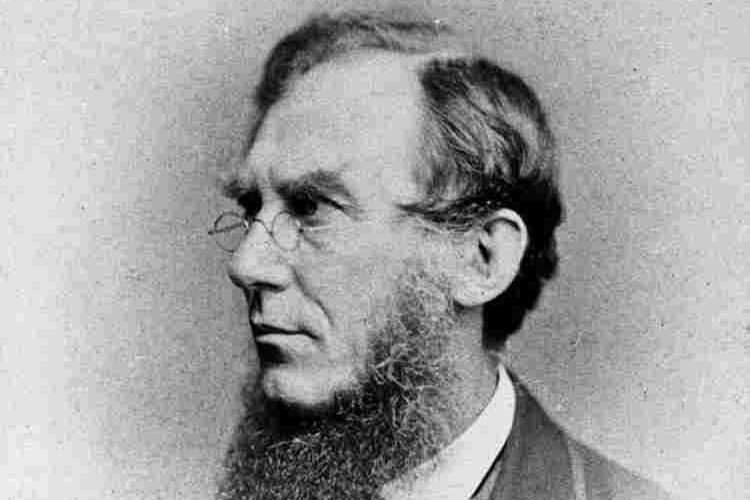








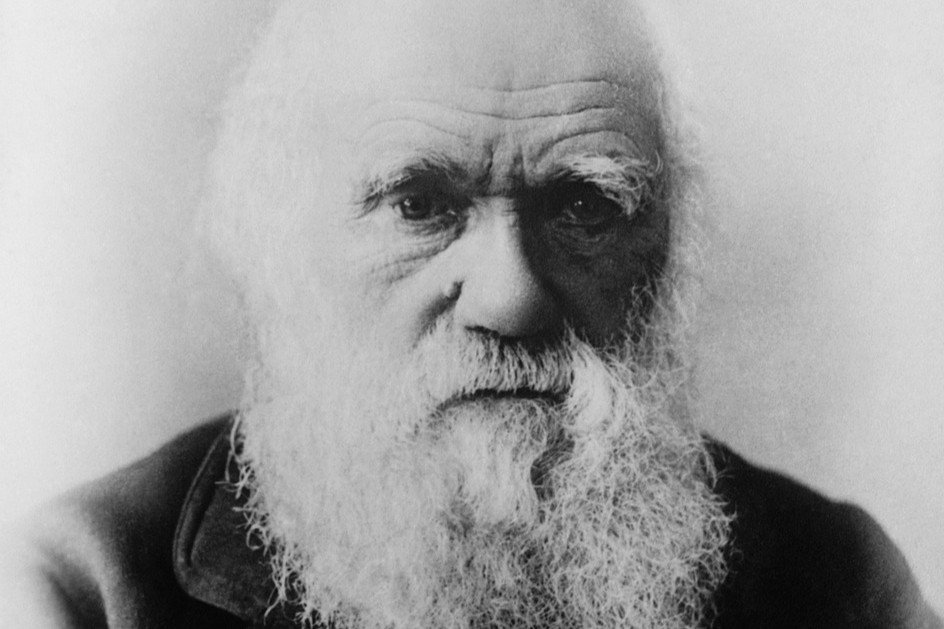
The article is about how Charles Darwin used plants to test big ideas, ask careful questions, and quietly transform plant science in ways that still affect what you learn about nature today.
“Plants were Darwin’s most patient teachers. They never rushed him, but they always answered.” – The Economic Botanist
When most people hear the name Charles Darwin, they immediately think of animals, finches, fossils, and evolution. Plants rarely come to mind. Yet if you look closely at Darwin’s life and work, you discover something surprising: plants were not a side project for him. They were central to how he tested ideas, gathered evidence, and proved that natural selection was real. In many ways, plant science was Darwin’s quiet laboratory, and it helped him change biology forever.
What makes this story so powerful is how relatable it is. Darwin did not work in high-tech labs or use advanced instruments. He worked with gardens, greenhouses, notebooks, and endless patience. He observed plants the way you might observe a houseplant on your windowsill—only he did it with intense curiosity and scientific discipline. In this article, we’ll walk through Charles Darwin’s contributions to plant science, why his botanical studies mattered, and how his work still shapes modern plant biology today.
- Charles Darwin’s Early Interest in Plants and Botany
- Why Plants Were Central to Darwin’s Scientific Method
- Plant Evolution and Natural Selection in Darwin’s Work
- Cross-Pollination and Plant Reproduction
- Fertilisation of Orchids and Pollination Biology
- Darwin’s Greenhouse Experiments and Home Research
- Movement in Plants and Early Plant Physiology
- Climbing Plants and Structural Adaptation
- Insectivorous Plants and Nutrient Adaptation
- Plants as Evidence in On the Origin of Species
- Darwin’s Influence on Modern Plant Science
- Charles Darwin’s Place in the History of Plant Science
- The Bottom Line
Charles Darwin’s Early Interest in Plants and Botany
Darwin’s relationship with plants started early, long before On the Origin of Species made him famous. As a student at Cambridge University, he was surrounded by the booming world of Victorian botany. Collecting, classifying, and studying plants was popular at the time, and it was considered a respectable scientific pursuit. While Darwin didn’t set out to become a botanist, plants slowly became one of his favorite ways to explore nature.
Plants appealed to Darwin because they were predictable in one important way: they stayed put. Animals move, migrate, and behave unpredictably. Plants, on the other hand, grow slowly and respond to their environment in ways you can observe over time. This made them ideal for careful experiments. Darwin could change one variable—light, water, pollen—and watch what happened. This hands-on approach shaped his scientific style and helped him develop the habit of asking simple questions with deep implications.
As Darwin matured as a scientist, he began to see plants not as passive life forms, but as active participants in evolution. He noticed how plants competed for sunlight, relied on insects for pollination, and adapted to harsh environments. These observations laid the groundwork for his later ideas about natural selection in plants.
Why Plants Were Central to Darwin’s Scientific Method
Darwin’s botanical studies were not casual observations. They were long-term, structured experiments designed to test specific ideas. He believed that big theories should be supported by small, repeatable facts. Plants allowed him to do exactly that.
He kept detailed notes, tracked changes over weeks or even years, and compared results across species. This approach helped him avoid speculation and focus on evidence. When you read Darwin’s plant research today, what stands out is how modern it feels. He asked clear questions, designed experiments to answer them, and revised his ideas when the data didn’t fit.
Plants also helped Darwin explain evolution to others. It’s easier for people to accept slow change when they can see it happening in something familiar, like a flower or vine. By studying plant reproduction, movement, and adaptation, Darwin was able to show that natural selection wasn’t just an abstract idea—it was something happening quietly in gardens and fields all around us.
Plant Evolution and Natural Selection in Darwin’s Work
One of Darwin’s major contributions to plant science was showing how natural selection applies to plants just as much as it does to animals. He demonstrated that plants compete for resources, vary in their traits, and pass those traits to future generations.
Darwin paid close attention to plant adaptation. He studied how plants in different environments developed features that helped them survive, such as thicker leaves, climbing structures, or specialized roots. These adaptations weren’t random in their effects. They helped plants reproduce more successfully, which meant those traits became more common over time.
By applying evolutionary theory to plants, Darwin expanded the scope of biology itself. Evolution was no longer just about animals with bones and muscles. It was about all living things, including organisms that don’t seem to move at all.
Cross-Pollination and Plant Reproduction
One of Darwin’s most important botanical discoveries involved plant reproduction. At the time, many scientists believed plants mainly self-fertilized. Darwin questioned this assumption and decided to test it.
Through careful experiments, he showed that cross-pollination—when pollen moves between different plants of the same species—produced healthier, more vigorous offspring than self-pollination. This finding had huge implications. It showed that genetic diversity mattered in plants, just as it did in animals.
Darwin’s work on cross-pollination helped explain why flowers are shaped, colored, and scented the way they are. These traits aren’t just for beauty. They exist to attract pollinators and increase the chances of successful reproduction. Today, this idea is a foundation of pollination biology.
Fun Fact
Darwin spent years hand-pollinating plants himself, sometimes using tiny tools and working so carefully that his fingers cramped—but he believed the results were worth it.
Fertilisation of Orchids and Pollination Biology
Darwin’s book On the Various Contrivances by Which British and Foreign Orchids Are Fertilised is one of his most impressive works in plant science. In it, he explored the complex relationship between orchids and their pollinators.
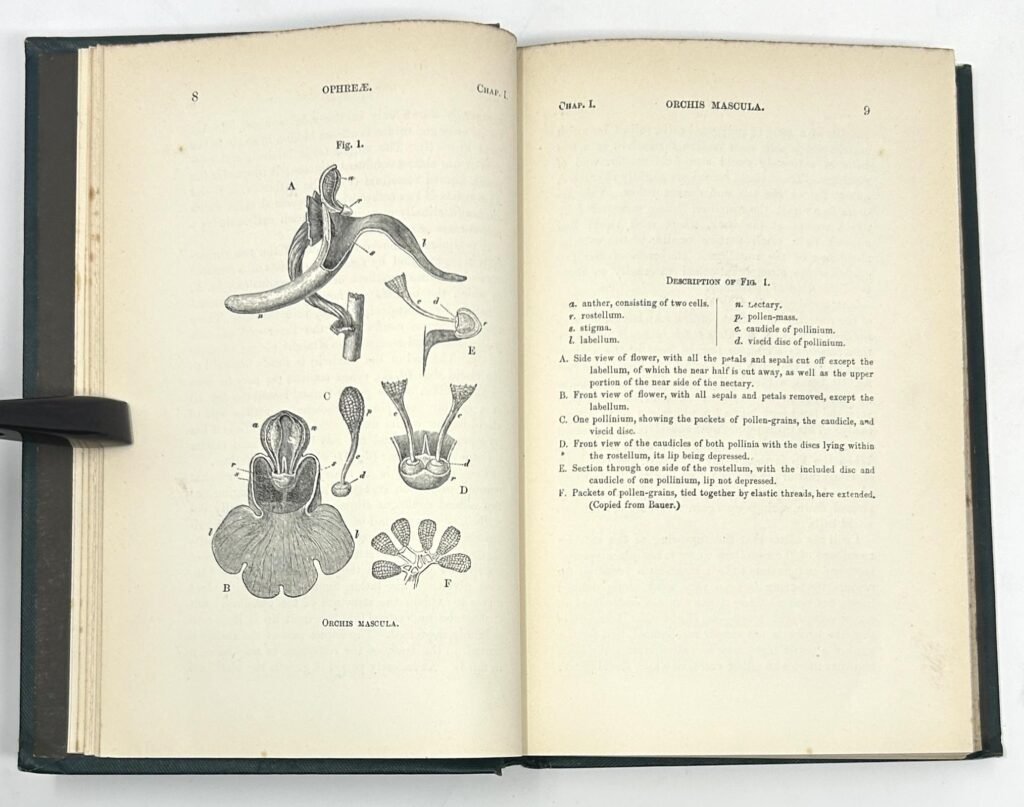
Darwin showed that orchids evolved specific shapes and structures to match the bodies of certain insects. In return, insects carried pollen from one flower to another. This was powerful evidence of co-evolution, where two species influence each other’s development over time.
What made this research so convincing was its precision. Darwin predicted the existence of a moth with an extremely long tongue based solely on the shape of an orchid. Years later, the moth was discovered, proving his point. This kind of prediction strengthened the credibility of evolutionary theory and showed how plant science could reveal deep biological connections.
Darwin’s Greenhouse Experiments and Home Research
You don’t need a massive lab to do meaningful science, and Darwin proved that. Much of his plant research took place in his own home and greenhouse. He grew plants in pots, adjusted their conditions, and observed them daily.
Darwin’s greenhouse experiments allowed him to control variables like light, moisture, and temperature. This level of control helped him isolate causes and effects. For example, by changing the direction of light, he could study how plants responded and moved.
This home-based research also humanizes Darwin. He worked alongside his family, involved his children in observations, and treated science as a shared curiosity. It’s a reminder that scientific discovery doesn’t always happen in distant institutions—it can happen wherever careful observation is possible.
Movement in Plants and Early Plant Physiology
One of Darwin’s most fascinating contributions to plant science was his work on plant movement. In his book The Power of Movement in Plants, he explored how plants bend toward light, respond to gravity, and adjust their growth.
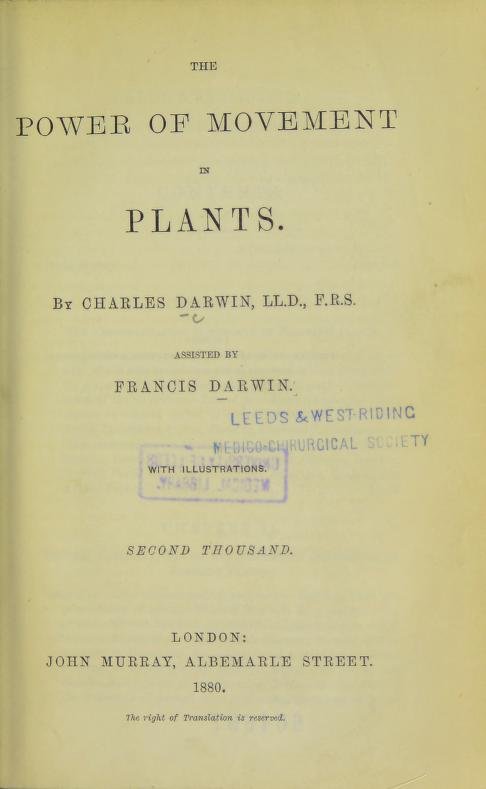
Darwin discovered that plant movement wasn’t random. It was controlled by signals within the plant, even though hormones like auxins hadn’t yet been identified. His observations laid the groundwork for early plant physiology and helped scientists understand how plants sense and respond to their environment.
When you see a plant leaning toward a window today, you’re witnessing a process Darwin helped explain. It’s a quiet example of how his research still connects to everyday life.
Climbing Plants and Structural Adaptation
Darwin also studied climbing plants, such as vines and tendrils. He wanted to understand how plants without rigid stems could reach sunlight by using other structures for support.
He discovered that climbing plants move in slow, circular patterns until they encounter something to cling to. This behavior increases their chances of survival without requiring heavy investment in thick stems. It’s an elegant example of adaptation through natural selection.
These studies showed that plant behavior, while slow, is highly strategic. Plants may not have brains, but they respond to challenges in efficient and flexible ways.
Insectivorous Plants and Nutrient Adaptation
Darwin’s curiosity didn’t stop at traditional plants. He was fascinated by insectivorous plants like sundews and Venus flytraps. These plants grow in nutrient-poor soils and supplement their diet by capturing insects.
Darwin proved that these plants actively digest insects and absorb nutrients from them. This finding challenged the idea that plants were passive organisms. Instead, they were dynamic and responsive, capable of complex interactions with their environment.
Fun Fact
Darwin was so fascinated by carnivorous plants that he once called them “the most wonderful plants in the world.
Plants as Evidence in On the Origin of Species
Although On the Origin of Species is often associated with animals, plants play a key role throughout the book. Darwin used plant examples to explain variation, competition, and adaptation.
Plants were especially useful because their changes could be observed across generations. Darwin showed how slight differences in flowering time, seed production, or growth habits could affect survival. Over long periods, these small advantages added up.
By including plants in his evolutionary arguments, Darwin made his theory more comprehensive and harder to dismiss. Evolution was not limited to a few unusual species—it was a universal process.
Darwin’s Influence on Modern Plant Science
Darwin’s contributions to plant science didn’t end with his lifetime. His work laid the foundations of evolutionary botany, plant ecology, and plant physiology. Modern scientists still cite his experiments and build on his ideas.
Concepts like plant adaptation, co-evolution, and reproductive strategies are central to today’s research in agriculture, conservation, and climate science. When researchers study how plants respond to changing environments, they are continuing a conversation Darwin started more than a century ago.
His scientific legacy also reminds us that careful observation matters. In a world full of fast data and complex technology, Darwin’s slow, thoughtful approach remains deeply relevant.
Charles Darwin’s Place in the History of Plant Science
When we think about famous botanists in history, Darwin deserves a place among them—not because he classified plants, but because he changed how we understand them. He connected botany to evolution and showed that plants could answer some of biology’s biggest questions.
Darwin bridged disciplines. He brought together observation, experimentation, and theory in a way that reshaped plant science. That’s why his work continues to appear in textbooks, research papers, and classrooms around the world.
The Bottom Line
Charles Darwin’s role in plant science is one of the most underappreciated parts of his legacy. Through botanical studies, plant experiments, and careful observation, he helped prove natural selection and transform biology. Plants were not just background players in his work—they were central characters.
By translating complex plant behavior into clear scientific evidence, Darwin showed us that even the quietest organisms have powerful stories to tell. When you look at plants today, you’re seeing living examples of ideas that changed science forever.
********************
If this article sparked your curiosity, take a closer look at the plants around you—because the next big scientific insight might be growing quietly in plain sight.